Designing Our WELL Platinum–Certified New Orleans Studio
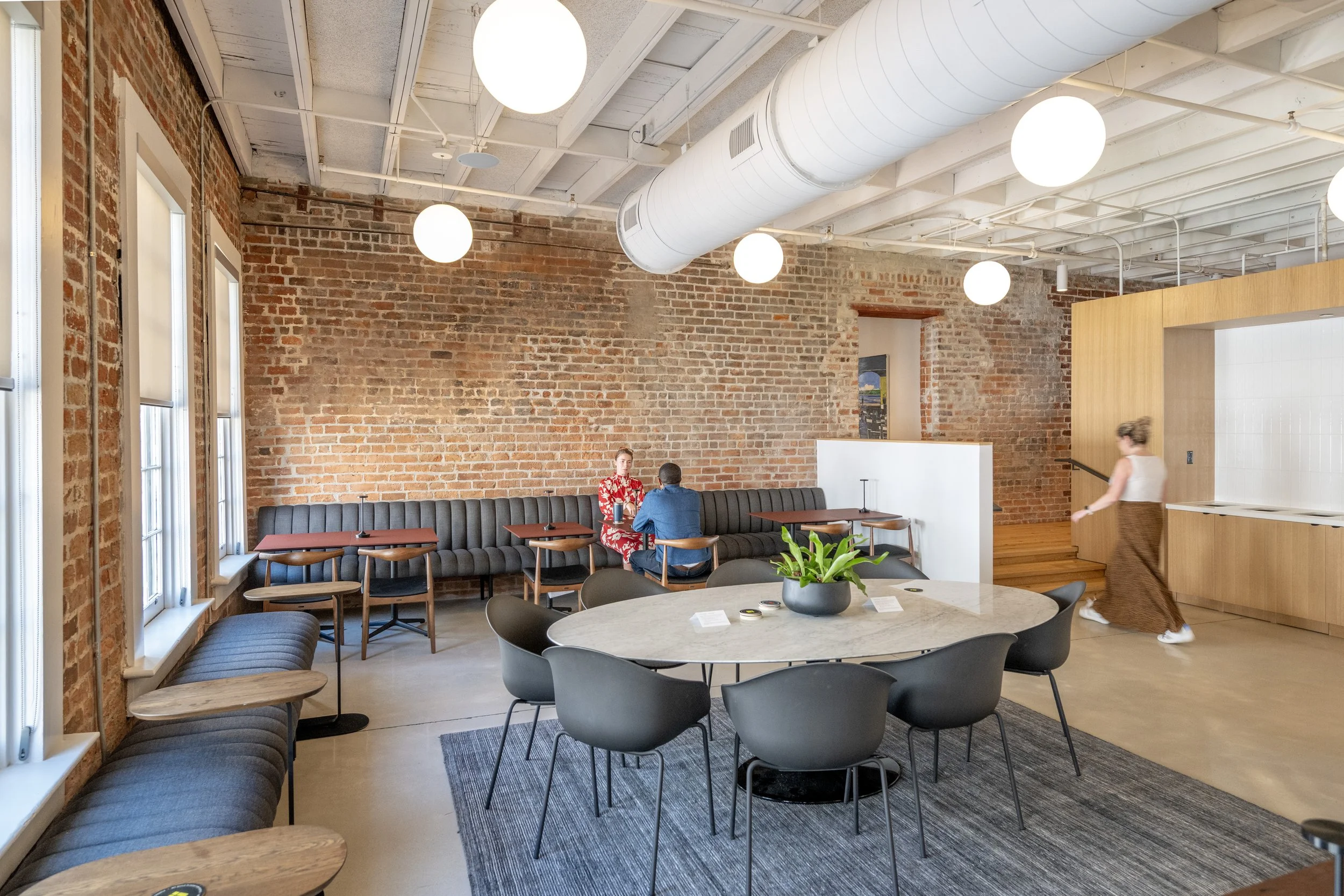
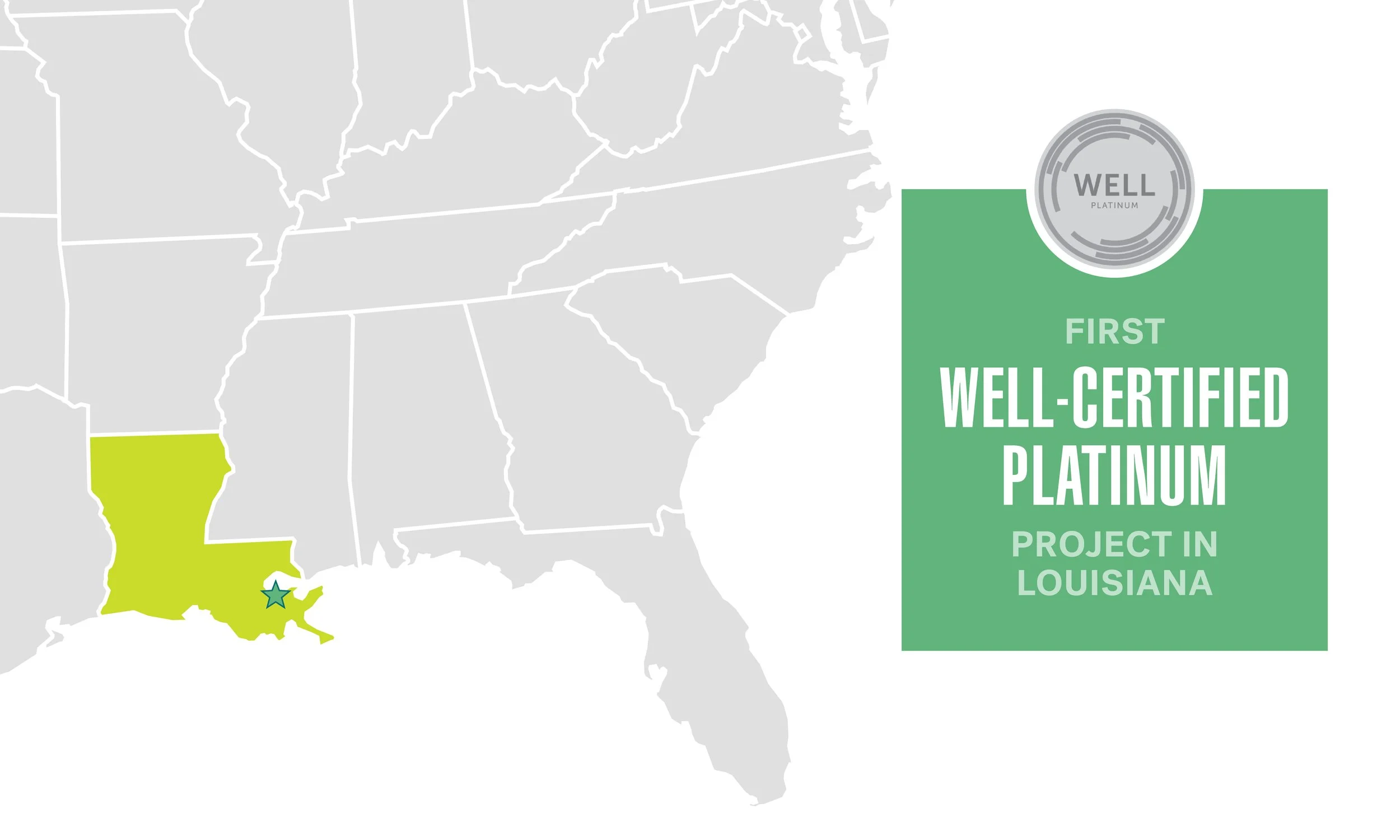
EskewDumezRipple’s New Orleans studio has achieved WELL Platinum Certification through the International WELL Building Institute—the first project in the state of Louisiana to reach this level of certification.
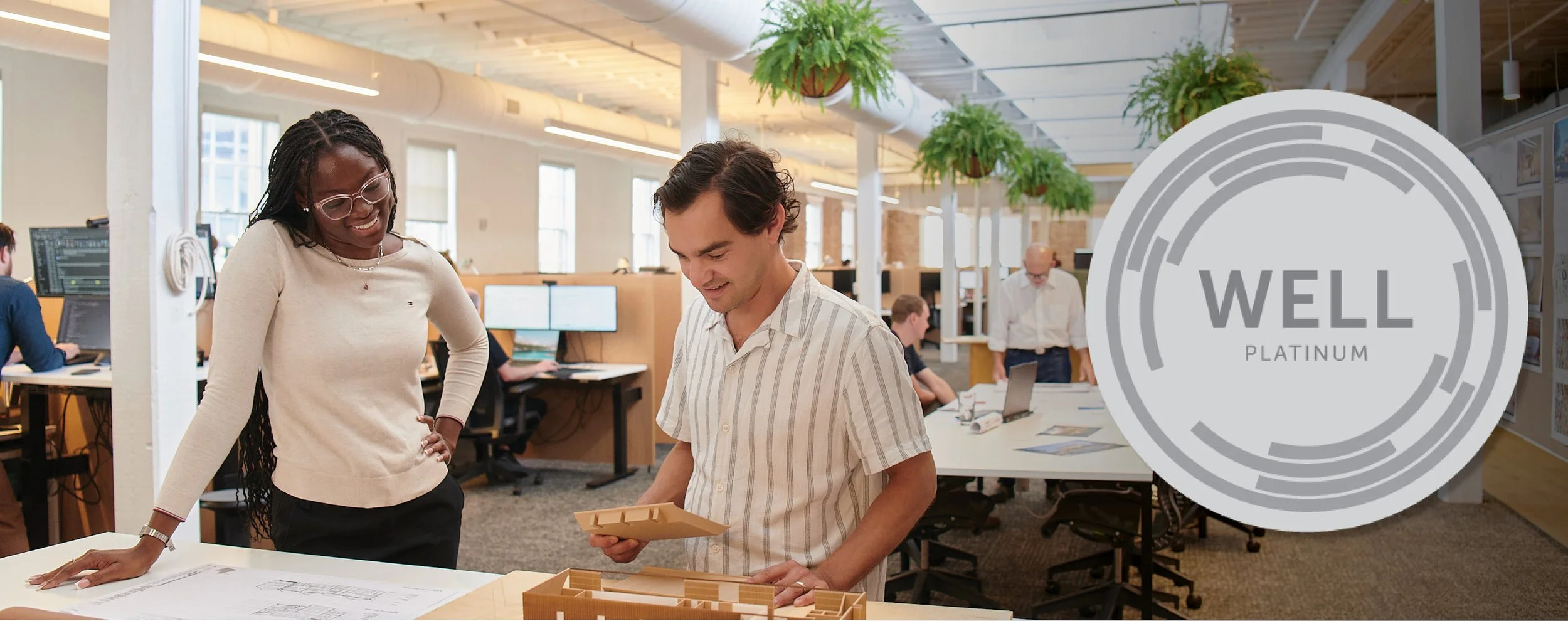
For our firm, this milestone represents an effort to hold ourselves to the same level of care and accountability we bring to our clients’ projects.
After more than 25 years in a sealed, inflexible office environment, we set out to design a workplace that genuinely supports how people feel, focus, collaborate, and restore throughout the day. Pursuing WELL Platinum gave us a rigorous, evidence-based framework to test our assumptions, engage our staff, and hold ourselves accountable to the same human-centered values we bring to our clients’ projects.
What emerged is not just a certified workplace, but a living test case—one that demonstrates how design process, organizational culture, and performance metrics can align to create meaningful, lasting impact.
Click through our full WELL Certification Guide below to explore the principles and design decisions behind our WELL Platinum–certified studio.
WELL as a Design Framework, Not a Badge
From the outset, WELL was never treated as a checklist or a post-design validation exercise. Instead, it functioned as a design lens and operational roadmap, shaping decisions from early planning through daily use.
Using WELL allowed us to:
Translate abstract ideas like comfort, health, and agency into measurable criteria
Test design decisions against nationally recognized performance benchmarks
Evaluate success through both technical data and lived experience
Achieving Platinum—the highest level of certification—required not just meeting requirements, but embedding health, transparency, and accountability into the studio’s DNA.
Engagement as a Starting Point
A defining feature of the project was broad, early engagement across the firm.
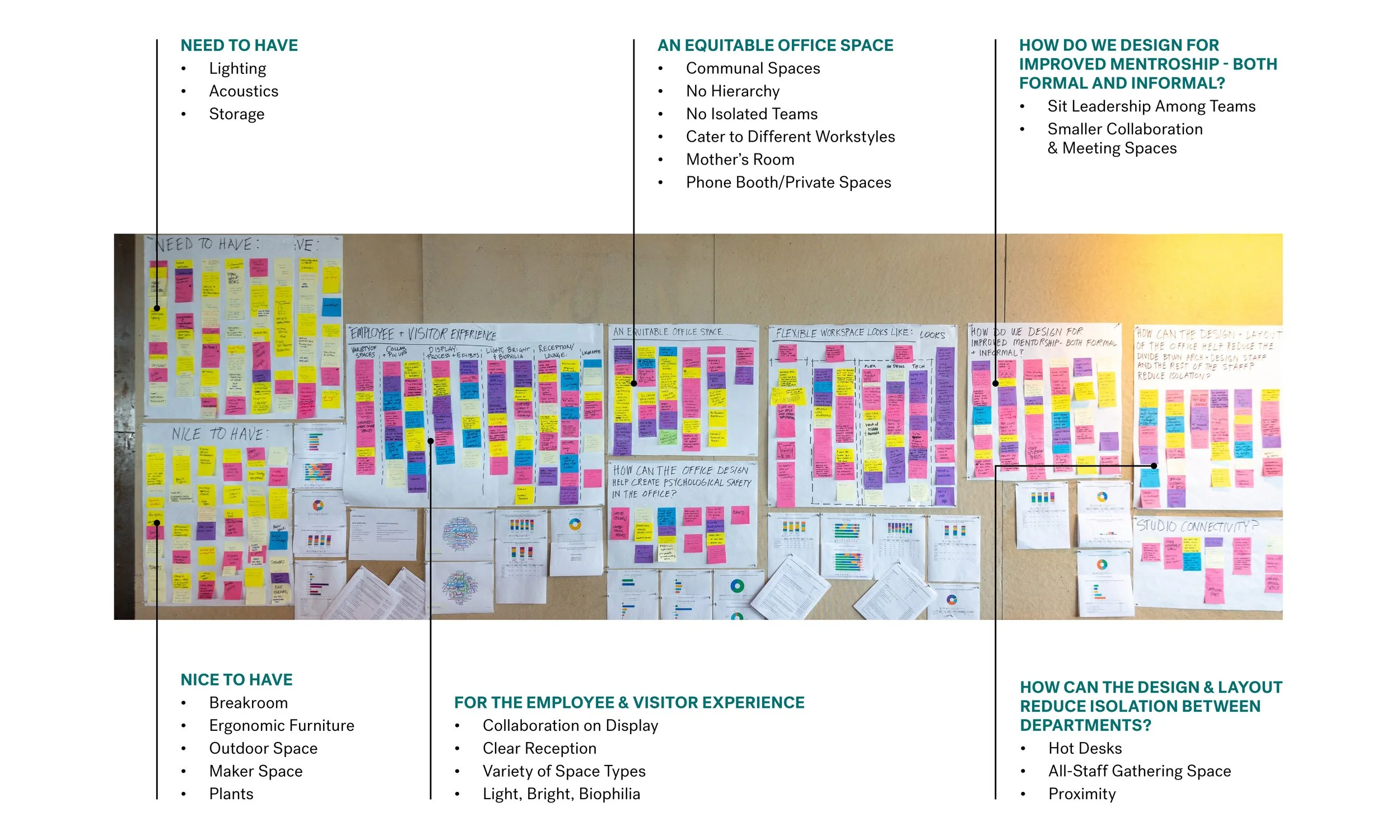
Sticky note exercise completed in the office
Multi-Tiered Surveys and Staff Charrettes
Before layouts were finalized or materials selected, we conducted staff surveys, room utilization studies, and hands-on planning charrettes. Team members were invited to weigh in on how they actually work—where focus happens, where collaboration breaks down, and what conditions help them do their best work.
This feedback directly informed:
Acoustic zoning and separation of loud, mixed, and quiet spaces
Placement of enclosed rooms along the building core to maximize daylight
Integration of restorative spaces and informal collaboration zones
Engaging the studio early ensured the space was shaped around real needs, not assumptions.
Prototyping Comfort and Testing Assumptions
Comfort is deeply personal, and WELL pushed us to treat it as something to be tested, not guessed.
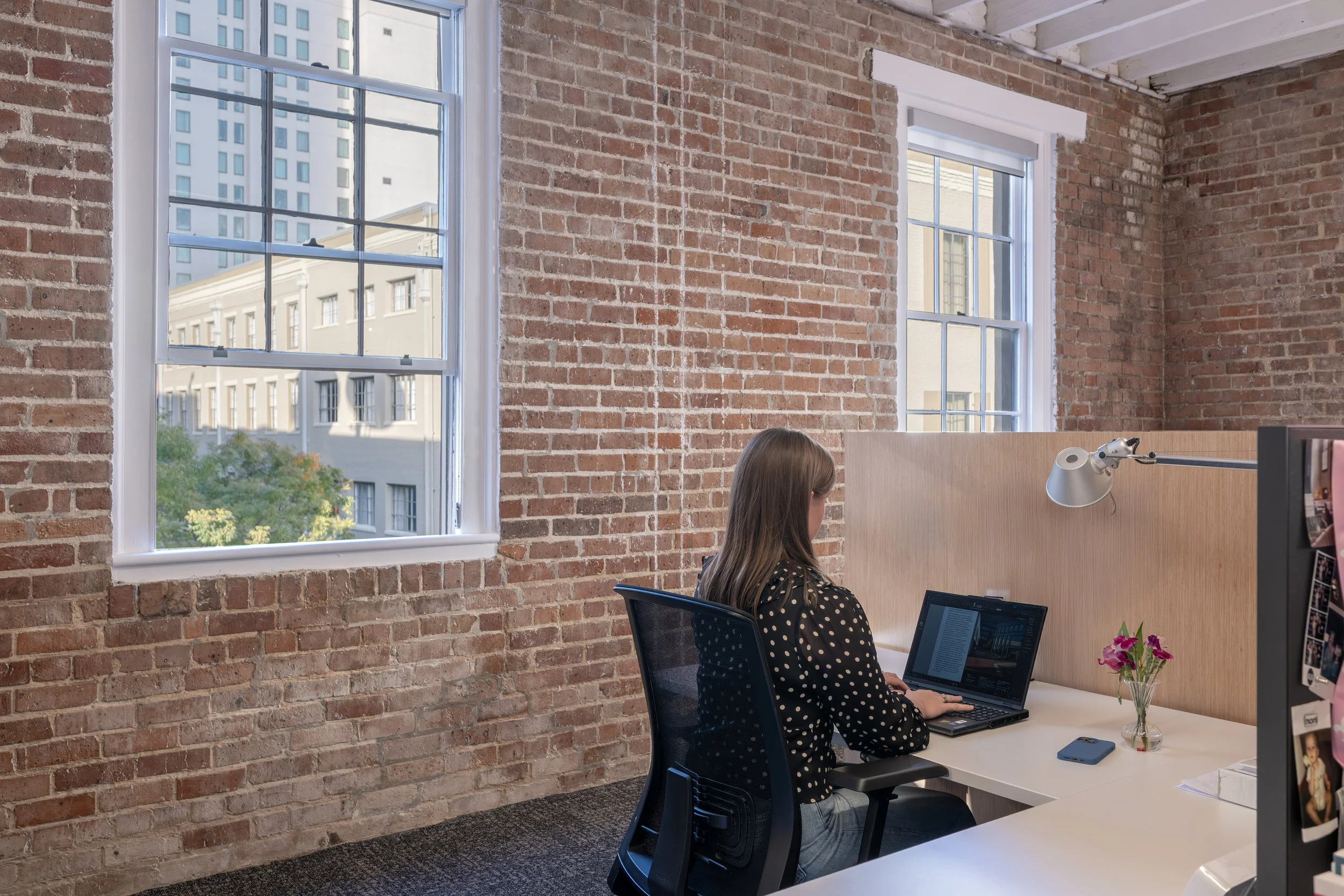
Sit-Tests and Workstation Mockups
Before finalizing furniture and layouts, we conducted sit-tests and workstation mockups to evaluate ergonomics, adjustability, and visual comfort. This hands-on testing allowed staff to experience different setups and provide feedback before decisions were locked in.
These exercises informed:
Selection of height-adjustable desks and fully ergonomic seating
Monitor placement and visual ergonomics standards
Flexibility strategies that support a range of body types and working styles
By validating comfort early, we reduced friction later—and built trust in the process.
Making WELL Visible and Shared
Achieving WELL Platinum required not only strong design decisions, but ongoing awareness and participation.
Transparency Through Data and Communication
Indoor air quality, thermal comfort, and water quality are continuously monitored and shared with staff. Signage, onboarding materials, and internal resources make building performance visible rather than abstract.
This transparency reinforces:
Shared responsibility for a healthy workplace
Trust in building systems and operational decisions
Ongoing accountability beyond certification
WELL is not something the building has; it’s something the studio practices.
View the most current air quality data for our studio below.
View our full WELL Scorecard here.
Culture, Place, & Belonging
Health is not only environmental. It’s cultural, too.
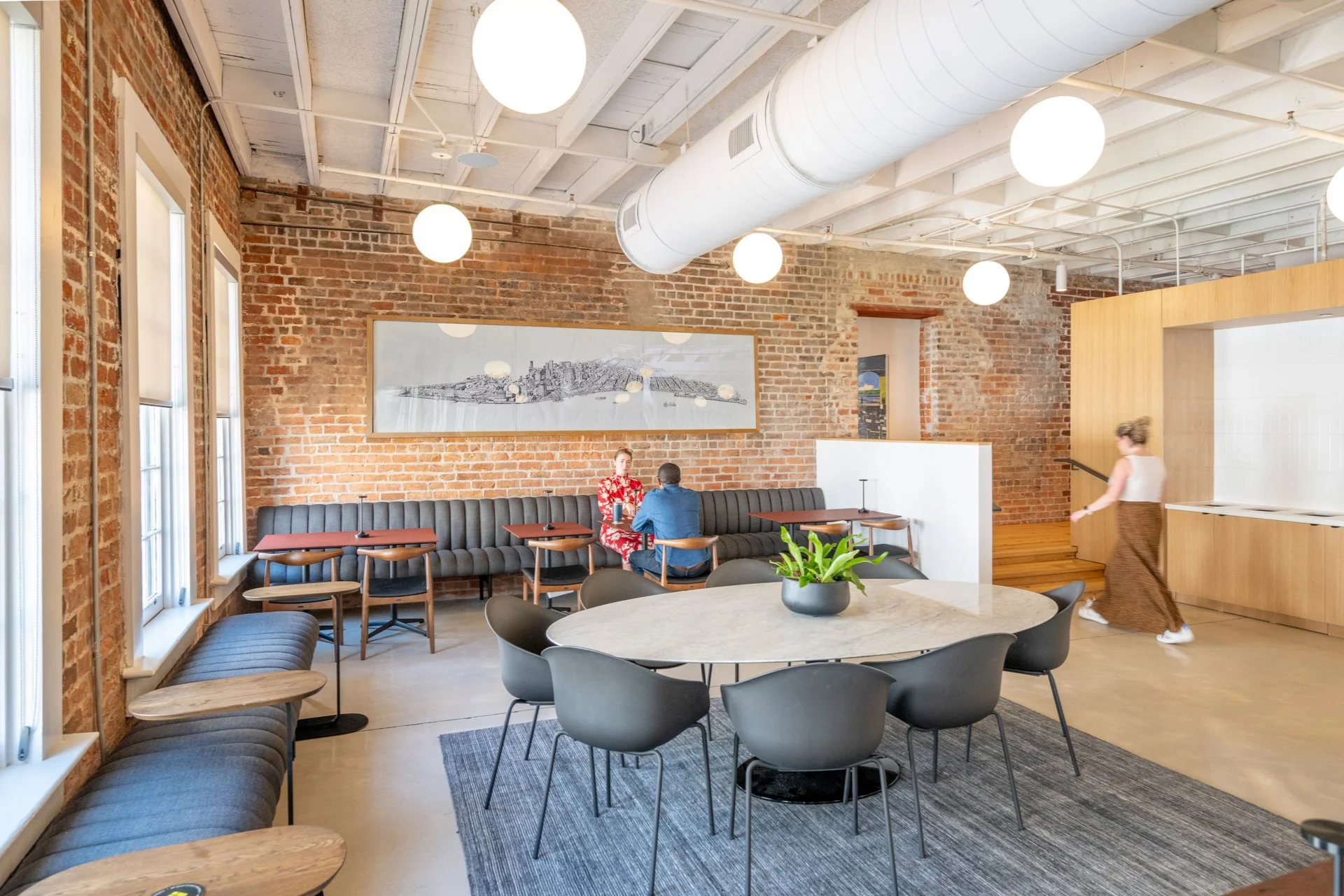
The studio reflects New Orleans through local materials, reclaimed wood, regionally inspired colors, and artwork that references local waterways and landscapes. Spaces like the Neutral Ground café celebrate gathering, informality, and shared experience, while biophilic strategies ensure every regularly occupied seat has a visual connection to nature.
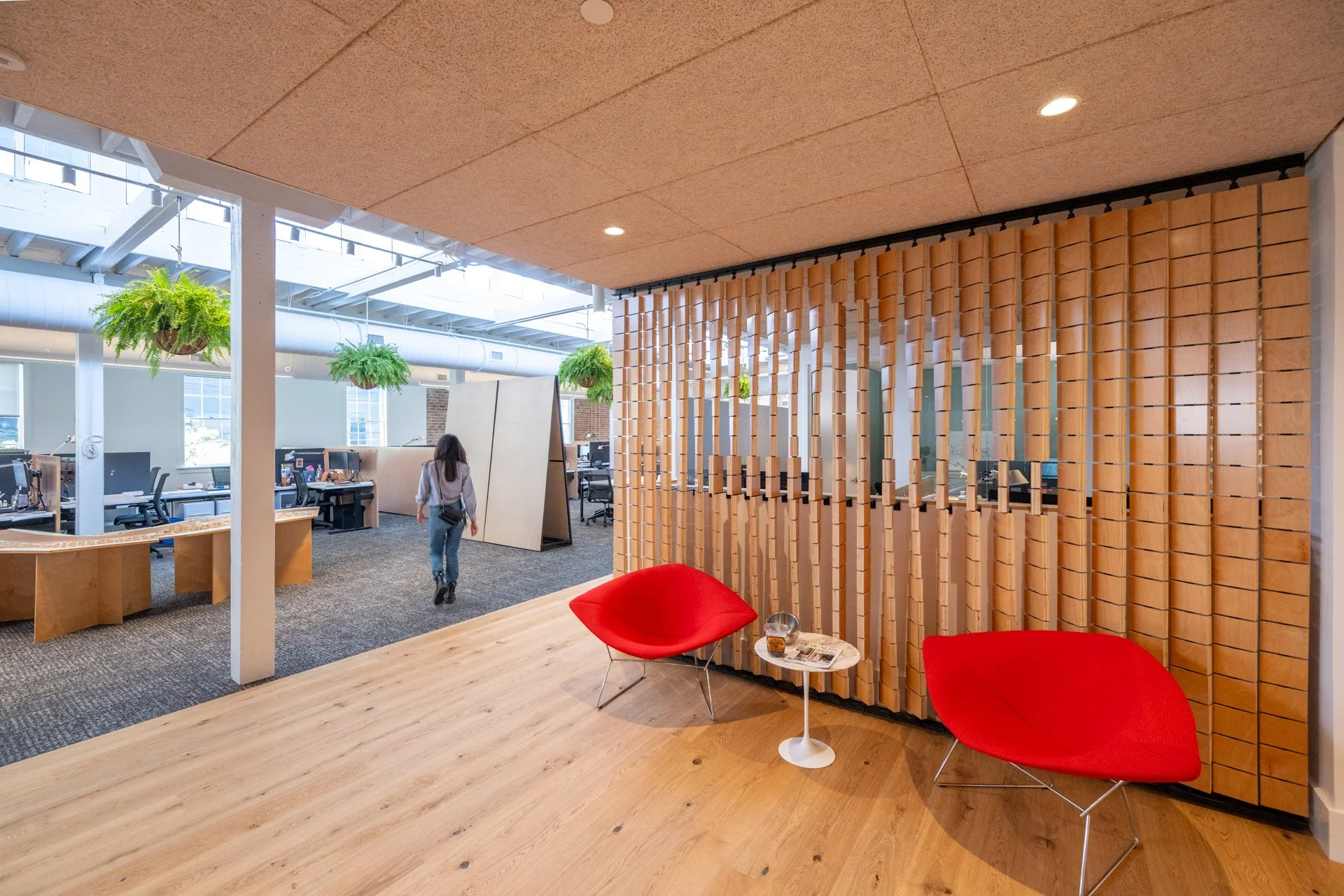
Our “screen wall” at the entry was designed and fabricated in-house after a competition within the firm.
Read more about the screen wall in our Project Case Study below, starting on page 9:
Programs like Coffee with Colleagues, the Day of Service, and internal advocacy initiatives extend well-being beyond the physical space, reinforcing that a healthy workplace is one where people feel connected to each other, to place, and to purpose.
Outcomes That Matter
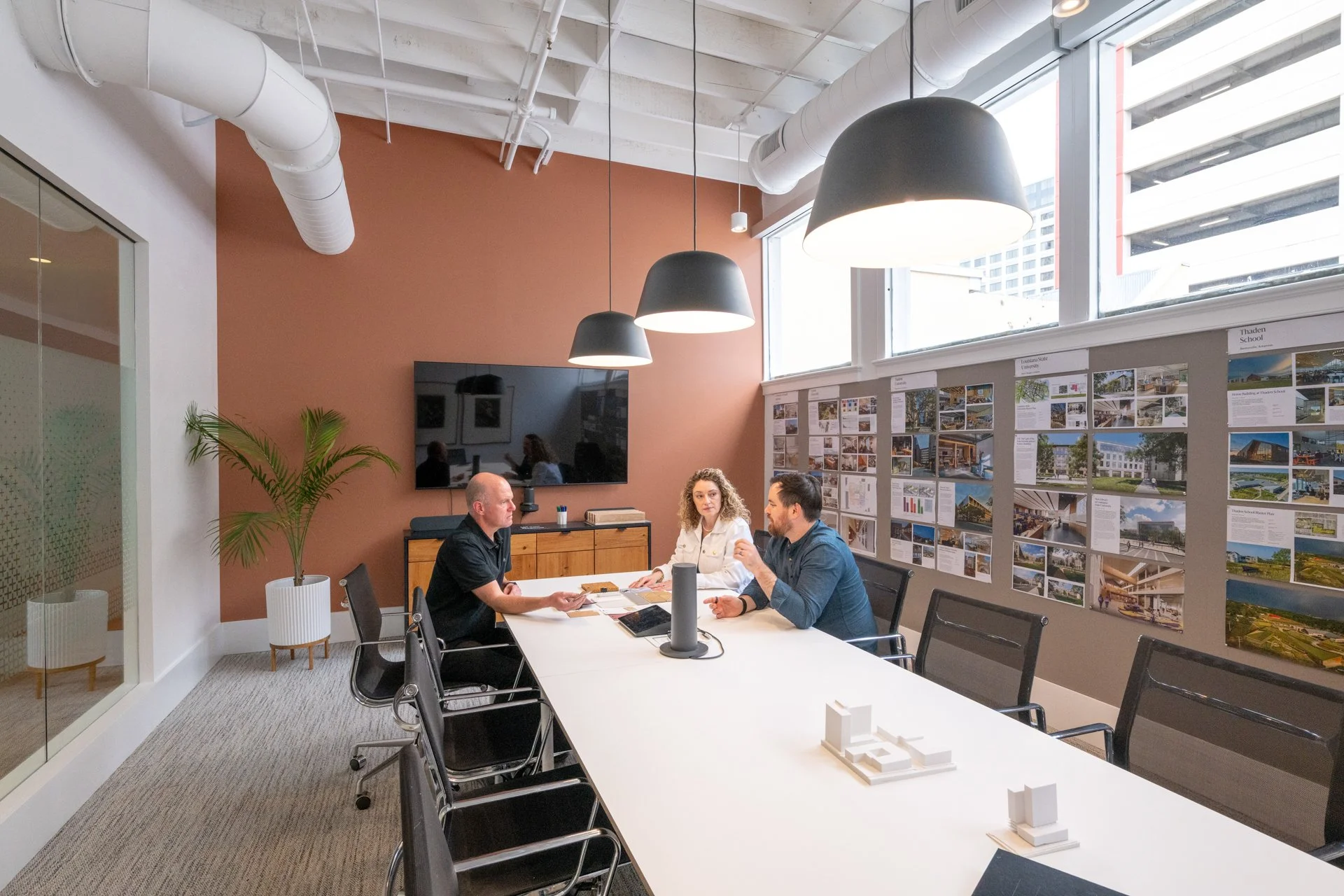
While our time in the new studio has been relatively short, the impacts of pursuing WELL Platinum have been immediate and tangible.
Post-occupancy feedback shows:
Significant improvements in thermal comfort and acoustic satisfaction
Greater access to daylight and views
Increased appreciation for user control and flexibility
These outcomes reinforce what we believe deeply: comfort enables better work—and environments designed around people support creativity, focus, and long-term well-being.
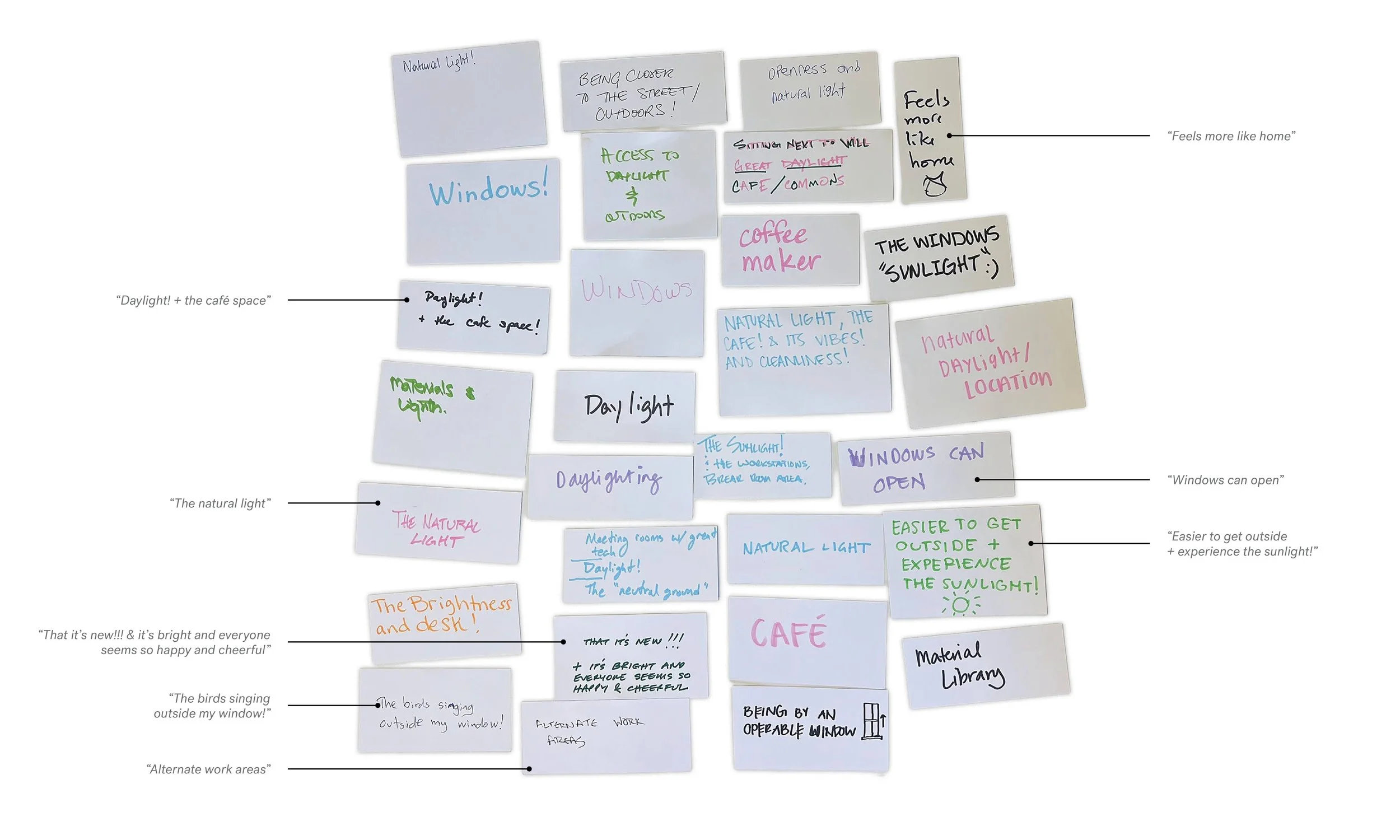
See our firm’s responses to the question:
”What is your favorite part about working in the new studio?”
Becoming Louisiana’s first WELL Platinum–certified project was not an end goal, but instead a byproduct of committing to process, engagement, and performance.
Our studio serves as both a workplace and a learning tool, allowing us to bring firsthand experience to our clients, collaborators, and the broader design community. By testing ourselves against the highest standard of health-focused design, we strengthen our ability to advocate for environments that truly support the people who use them.