Designing With Purpose: 2026 Day of Service
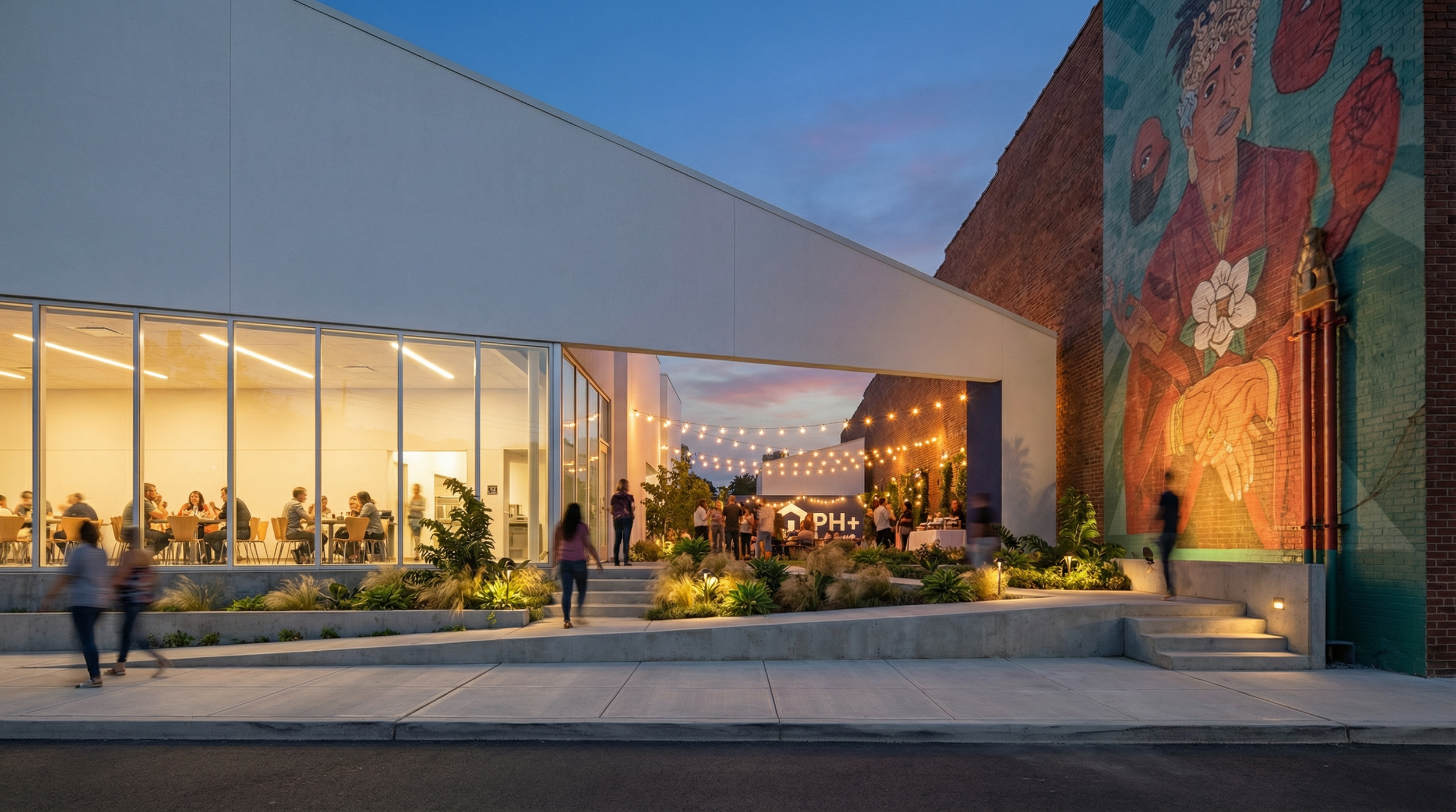
On January 16, 2026, EskewDumezRipple marked its twelfth annual Day of Service in honor of Martin Luther King Jr.’s legacy. What began years ago as a way to leverage our professional skills in service of the civic realm has grown into a firmwide effort to support community-focused organizations through design.
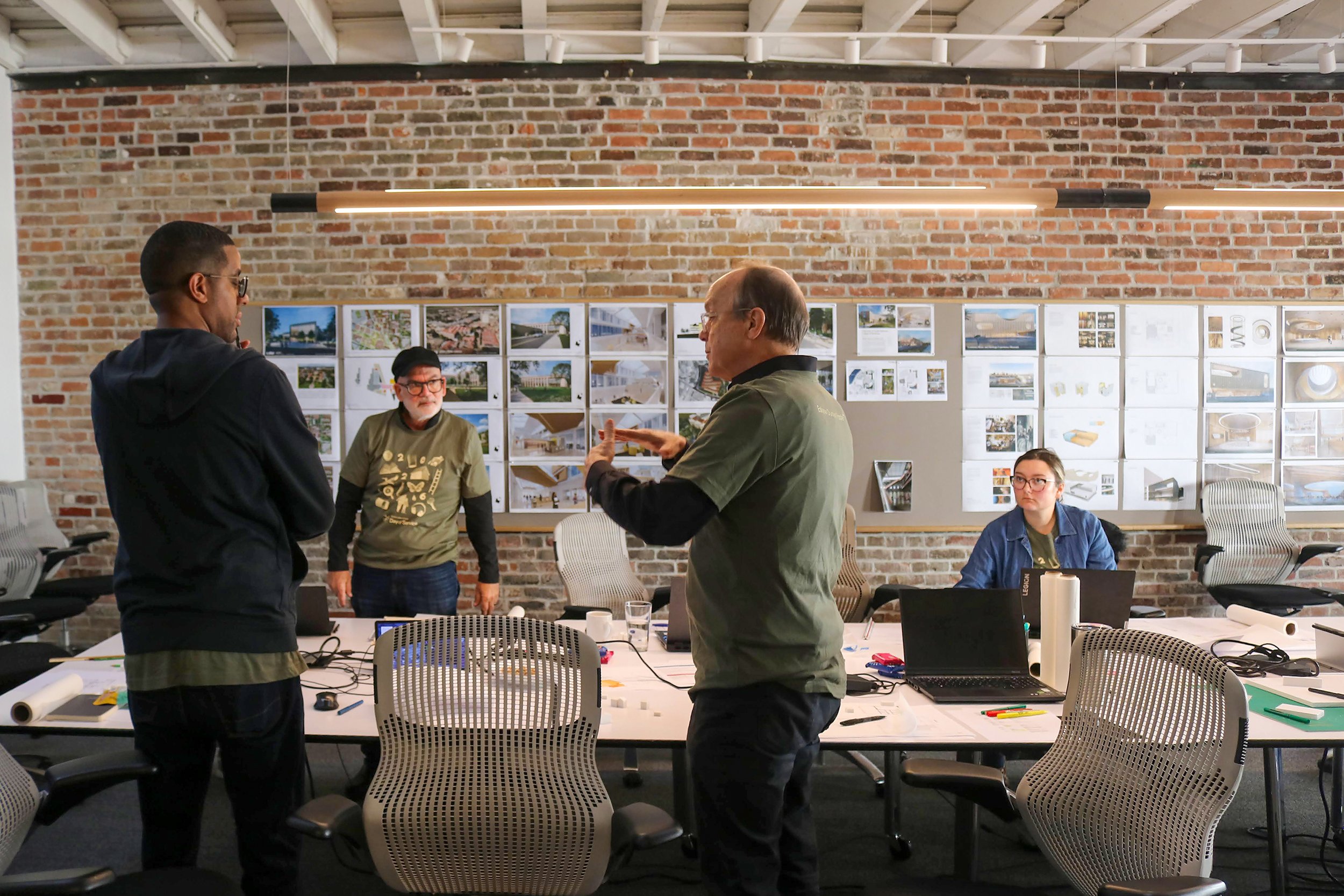
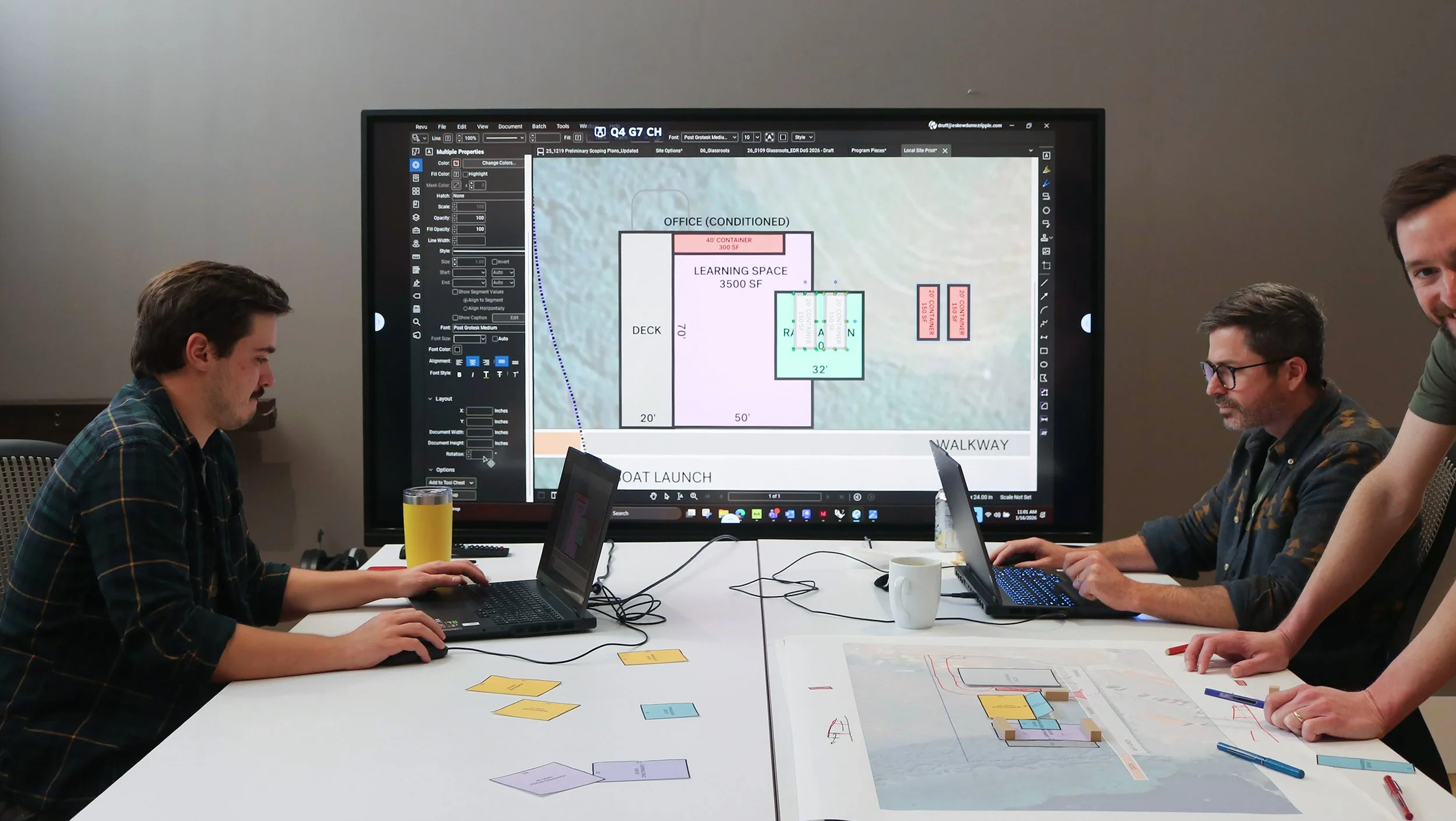
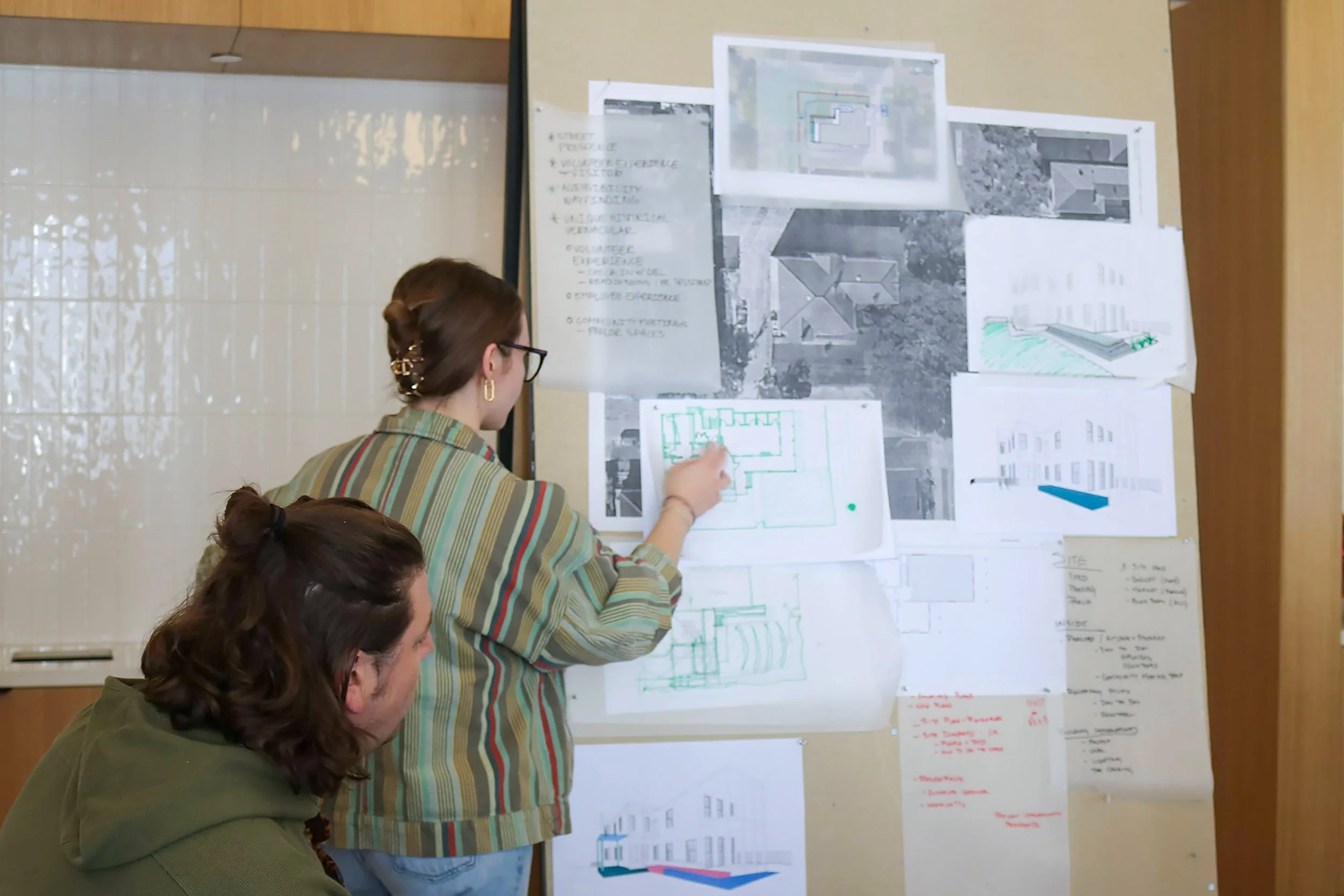
This year’s Day of Service brought together staff across teams to partner with nonprofit organizations working on issues ranging from housing stability and survivor support to environmental resilience, accessibility, and education. Each project was shaped through collaboration with our partners, responding to their missions, challenges, and long-term goals.
Plus: This was our first Day of Service in our new studio!
This year, we partnered with the following nonprofit organizations as part of the 2026 Day of Service:
Each organization brought a distinct mission and set of challenges, shaping the focus of the work undertaken throughout the day.
In addition to our nonprofit partners, we were supported by industry collaborators who helped extend the impact of the work. Broadmoor provided cost estimating services for projects that required it, and Sherwin-Williams generously donated paint for the NOCHI mural project.
The work shared below reflects the range of organizations we supported in 2026. Some projects resulted in hands-on, built outcomes, while others focused on visioning and planning efforts that will guide future work. Together, they represent a shared commitment to equity, community engagement, and the belief that design can be a meaningful tool for positive change—well beyond a single day.
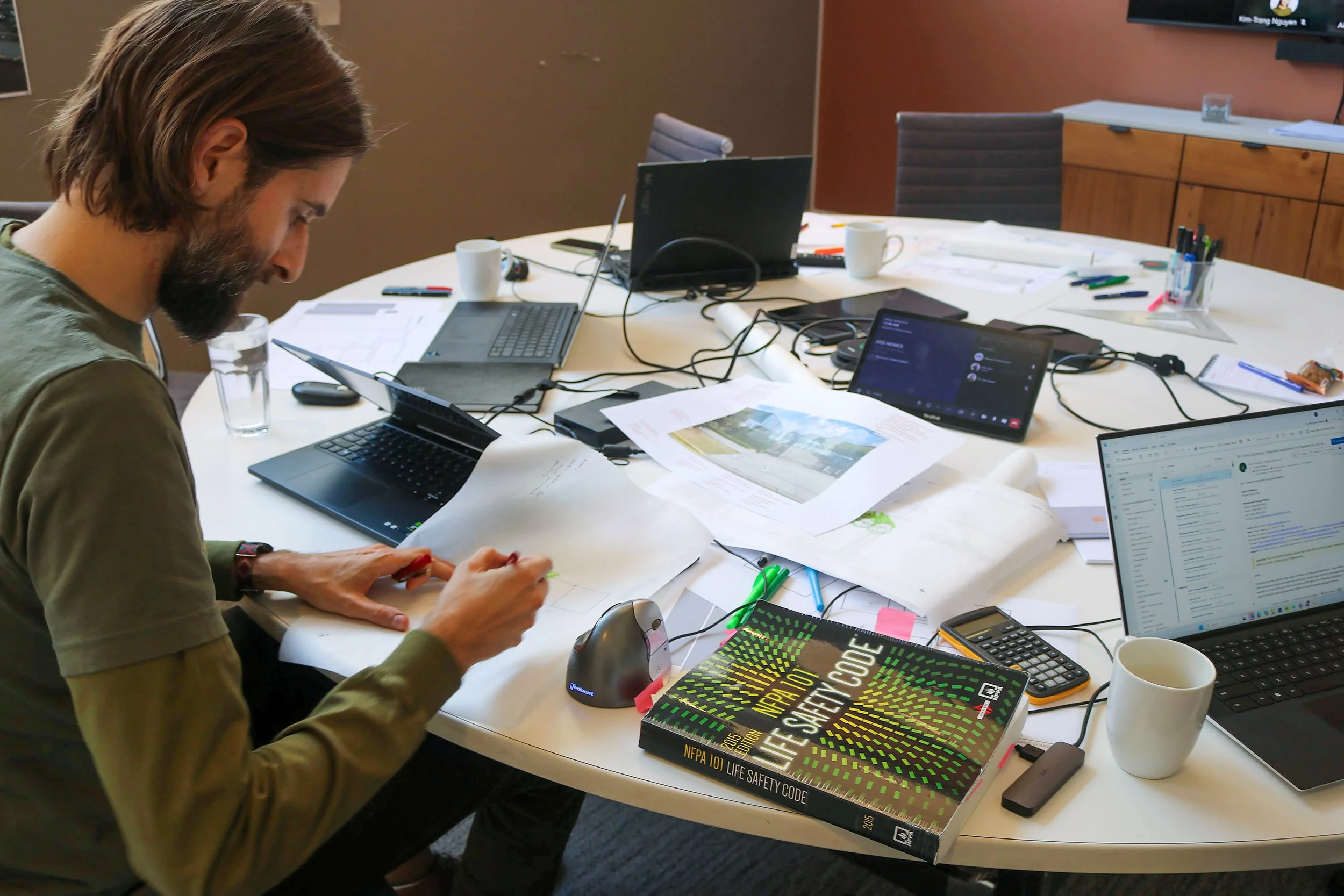
NOCHI

Project Partner
New Orleans Culinary and Hospitality Institute (NOCHI)
Their Mission: The New Orleans Culinary & Hospitality Institute (NOCHI) is a 501(c)(3) nonprofit organization committed to providing affordable, accessible, and high-quality culinary and hospitality education. Through intensive, industry-focused certificate programs, NOCHI supports workforce development while fostering an inclusive and equitable learning environment for a diverse community of students pursuing careers in New Orleans’ hospitality industry.
Project Focus
Alumni impact, storytelling, student inspiration, and recruitment
The Challenge
NOCHI sought a way to visibly celebrate the success of its alumni network and make the outcomes of its programs tangible to current and prospective students. While alumni are working across New Orleans and beyond, their collective impact was not clearly reflected within the physical environment of the campus. The challenge was to create a permanent, engaging installation that could communicate alumni reach, reinforce pride within the NOCHI community, and serve as a recruitment and storytelling tool—while integrating seamlessly into an active academic setting.
The Project
For the 2026 Day of Service, the design team conceived, designed, and executed a large-scale alumni mural located along a prominent third-floor corridor within NOCHI’s campus. The mural features a stylized, abstracted map of New Orleans, with graphic pathways extending outward to represent the professional journeys of NOCHI graduates working throughout the region.
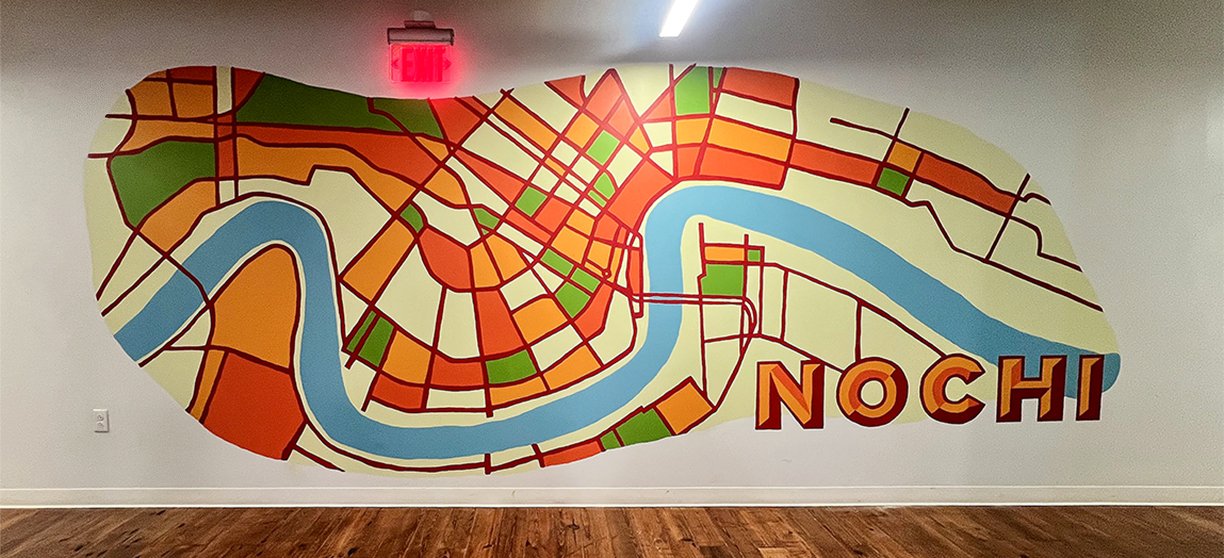
Finalized mural after our Day of Service team finished up! The graduates’ photos will be added by NOCHI’s team later.
The Process
The project moved from concept to installation through a highly collaborative, hands-on process. The design team developed original sketches and graphic studies before finalizing a mural composition that balanced clarity, flexibility, and visual impact. To efficiently transfer the design to the wall, the team used augmented reality tools—projecting the mural layout directly onto the surface to establish precise outlines and color zones.
This approach functioned like a large-scale paint-by-numbers system, enabling multiple team members to contribute simultaneously while maintaining accuracy and quality control. Alumni markers were fabricated as laminated, removable elements to support future updates without altering the mural itself.
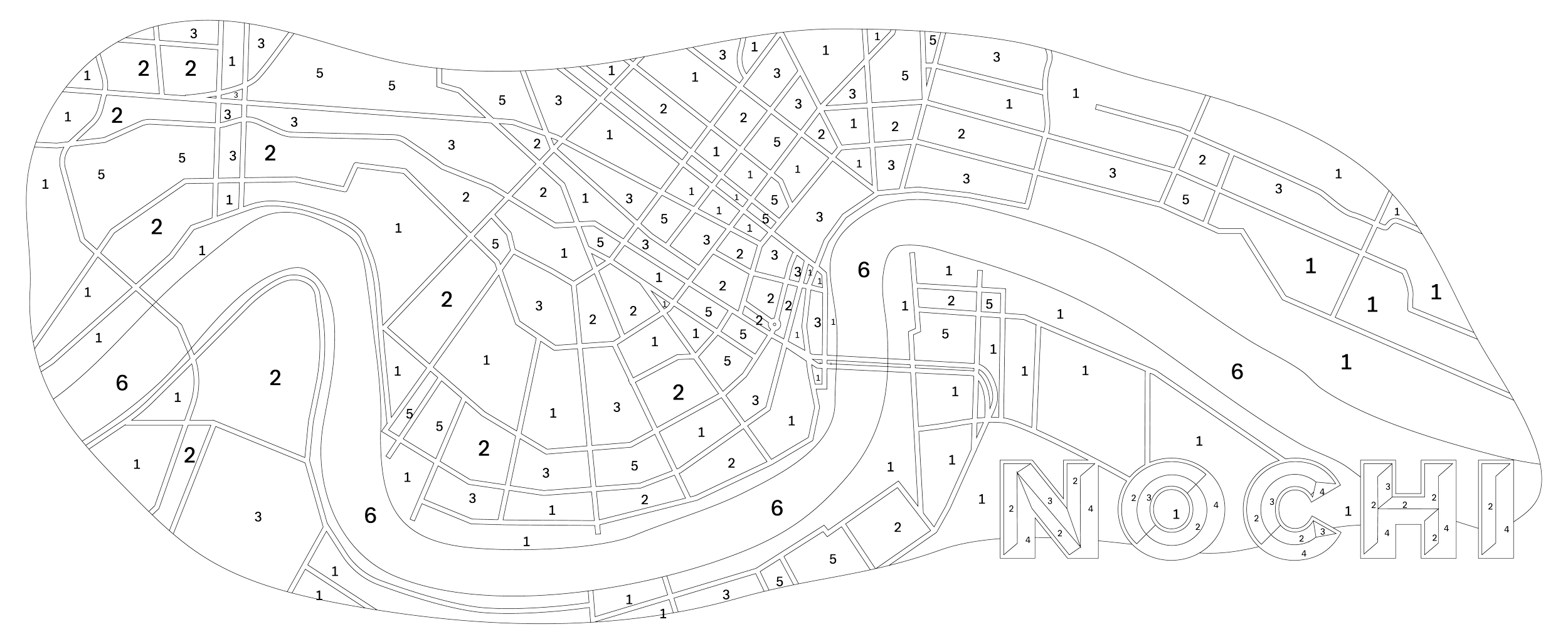
Paint-by-numbers design transferred onto wall via augmented reality software on Meta headset.
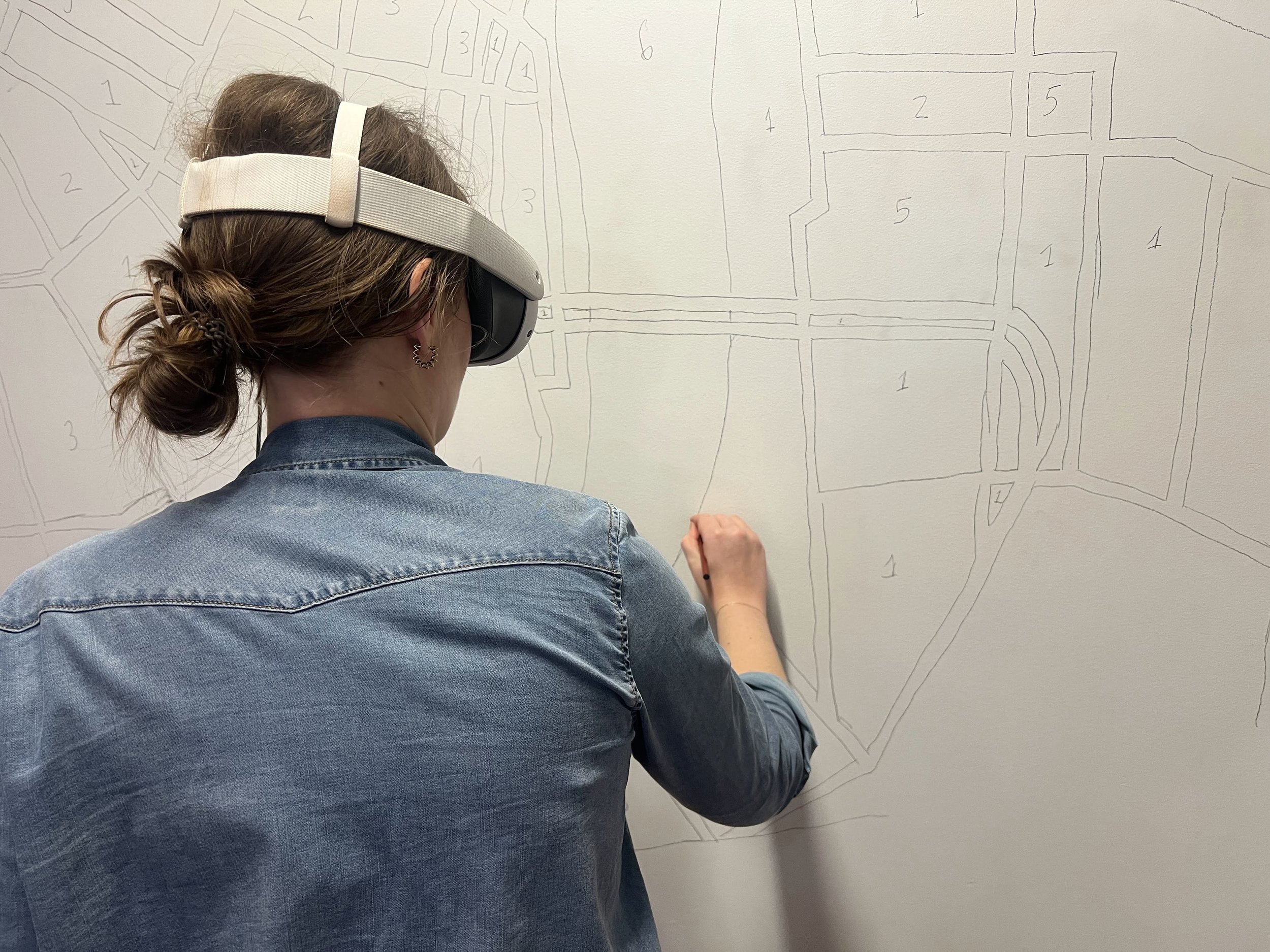
Team Leader Rhiannon transferring design onto wall at NOCHI
The completed mural serves as a lasting visual narrative of NOCHI’s impact—connecting education to real-world outcomes, inspiring current students, and reinforcing the campus as a place where learning, community, and professional opportunity intersect.
Paint for the project was generously donated by Sherwin-Williams.
The Team
- Rhiannon Hare — Team Leader
- Hussein Alayyan — Project Manager
- Kijuan Poland
- Jenifer Navard
- Michael Mantese
- Emma Ward
- Jeannine Ford
- Andy Redmon
- Kyle Dormoy
- Whitney Dumas
- Alison Toussaint-LeBeaux
- Travis Jore
- Matt Kymes
People’s Housing+
Project Partner
People’s Housing+
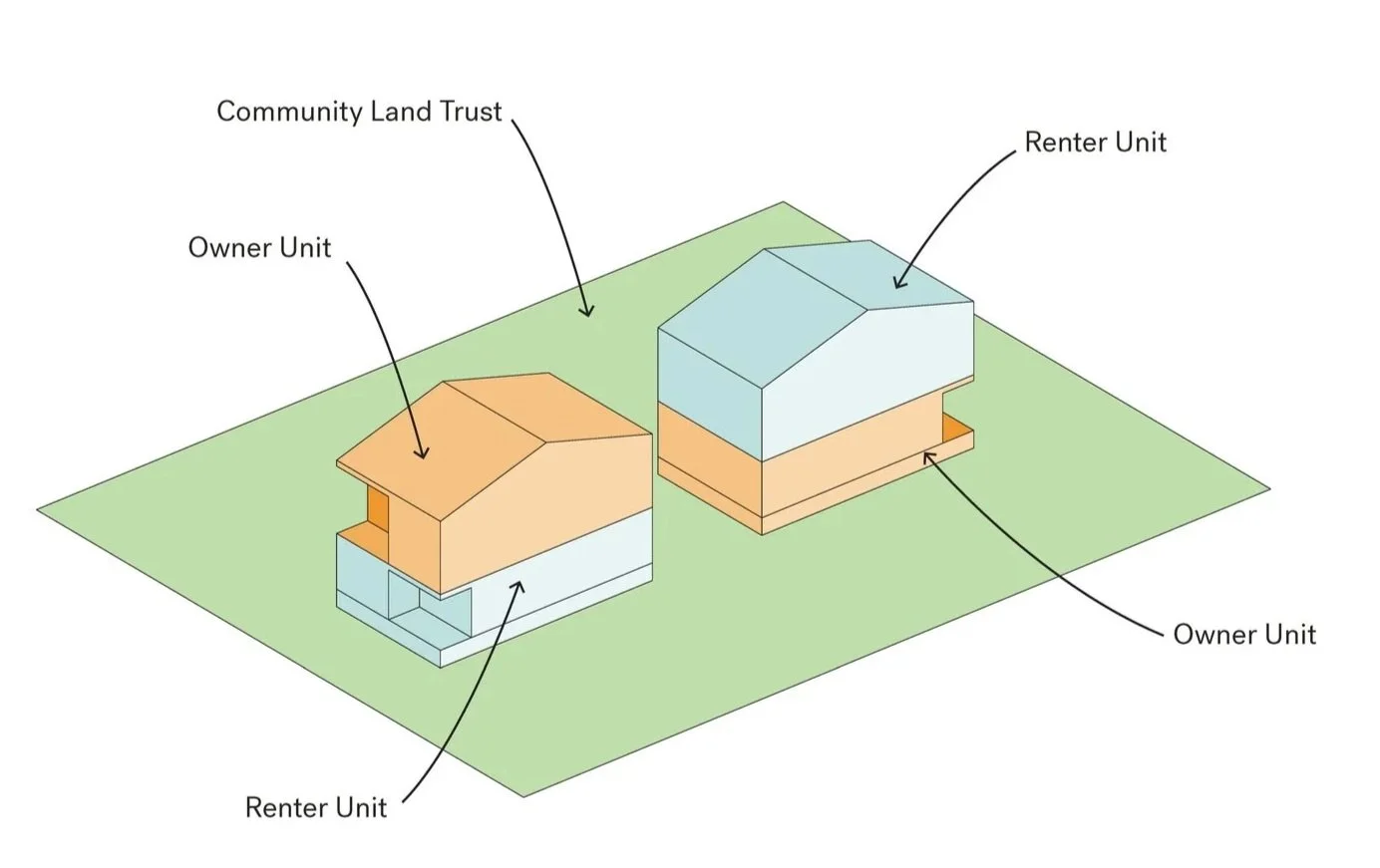
Community Land Trust Model
Their Mission: People’s Housing+ is a Black-led nonprofit organization working to address New Orleans’ affordable housing crisis and the widening racial wealth gap that continues to displace low- to moderate-income families. Through a community land trust (CLT) model, the organization advances a resident-led vision of the city—one that supports permanently affordable housing while creating pathways for long-term stability, homeownership, and generational wealth.
Project Focus
Affordable housing, community wealth-building, resident-led development, and neighborhood-centered mixed-use spaces
The Challenge
As housing costs rise and development pressures intensify across New Orleans, People’s Housing+ is working to expand access to permanently affordable housing while strengthening its organizational capacity and community presence. The organization identified an opportunity at 3300 LaSalle Street to rethink how housing, workspace, and community resources could coexist on a single site—supporting both residents and the nonprofit’s long-term mission. The challenge was to explore a development approach that balances affordability, density, zoning constraints, and accessibility, while remaining grounded in People’s Housing+’s CLT-based model.
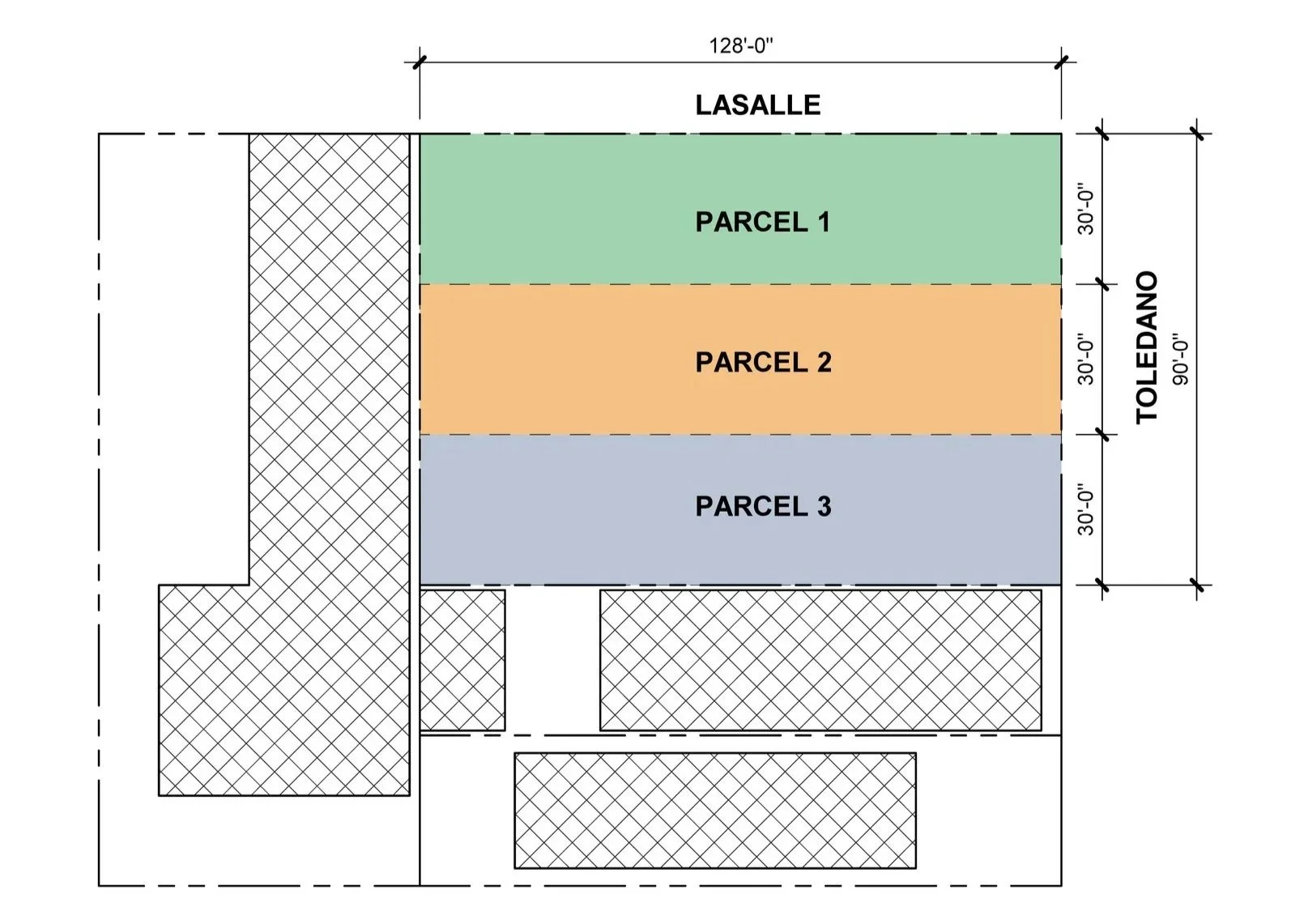
Parcel division of lot
The Project
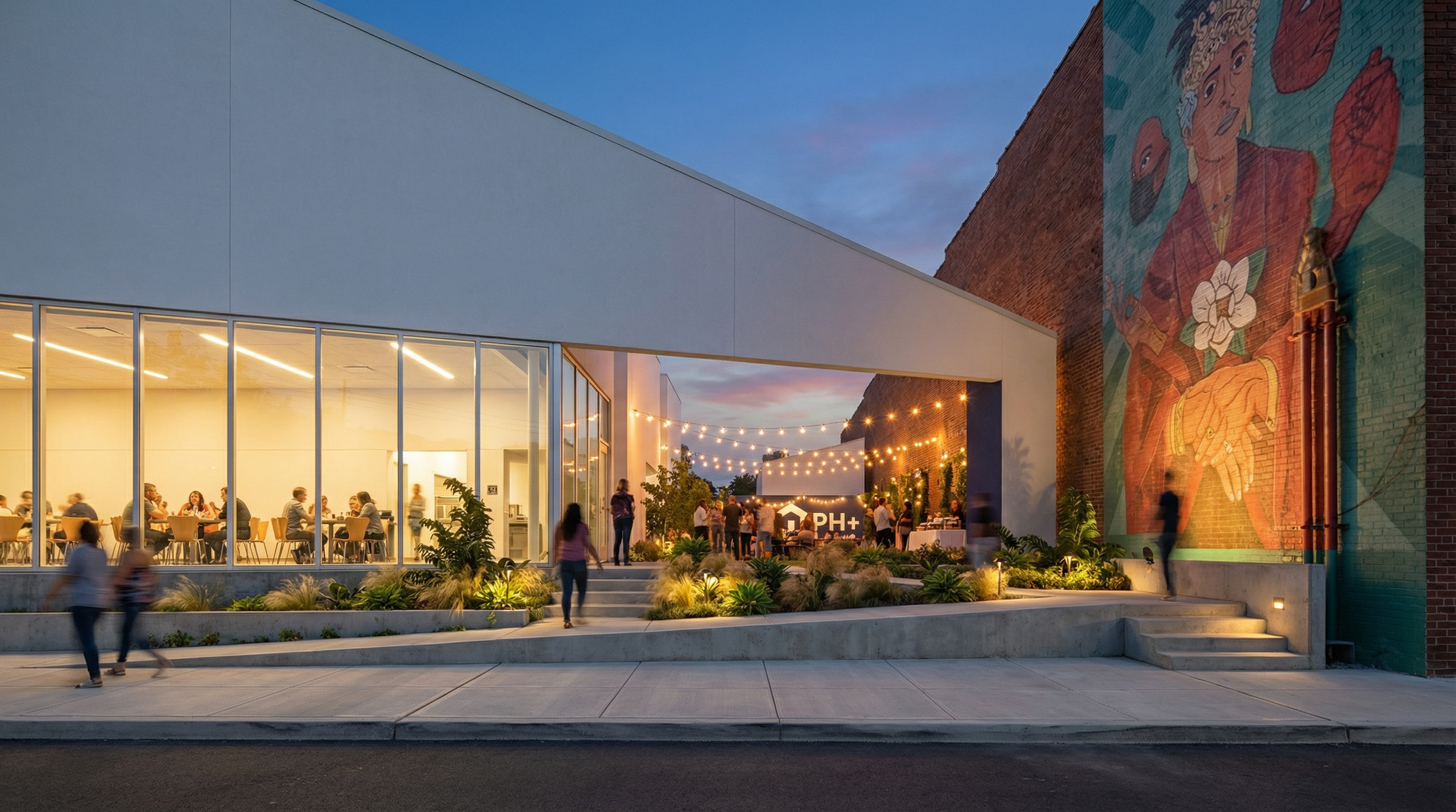
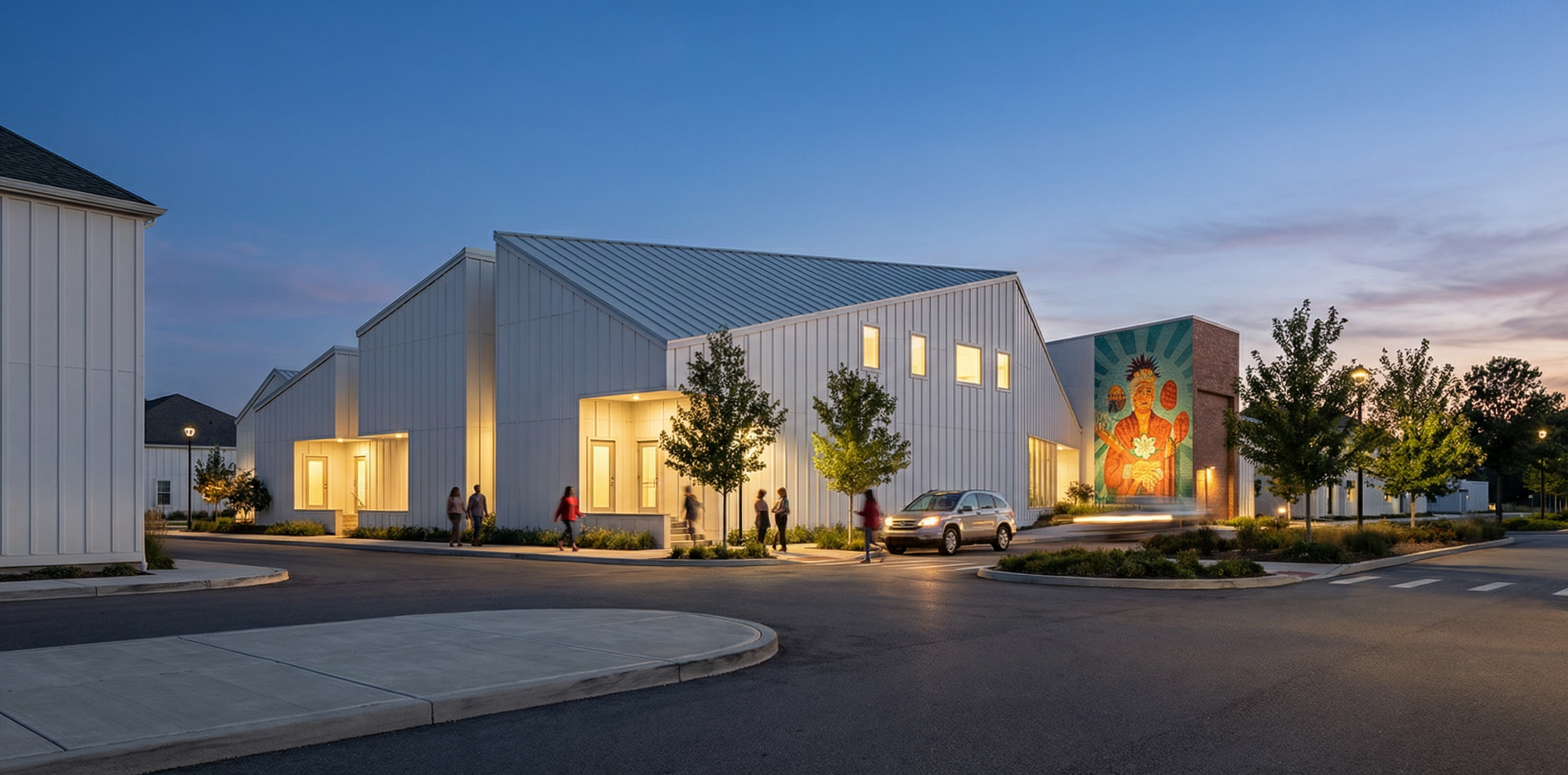
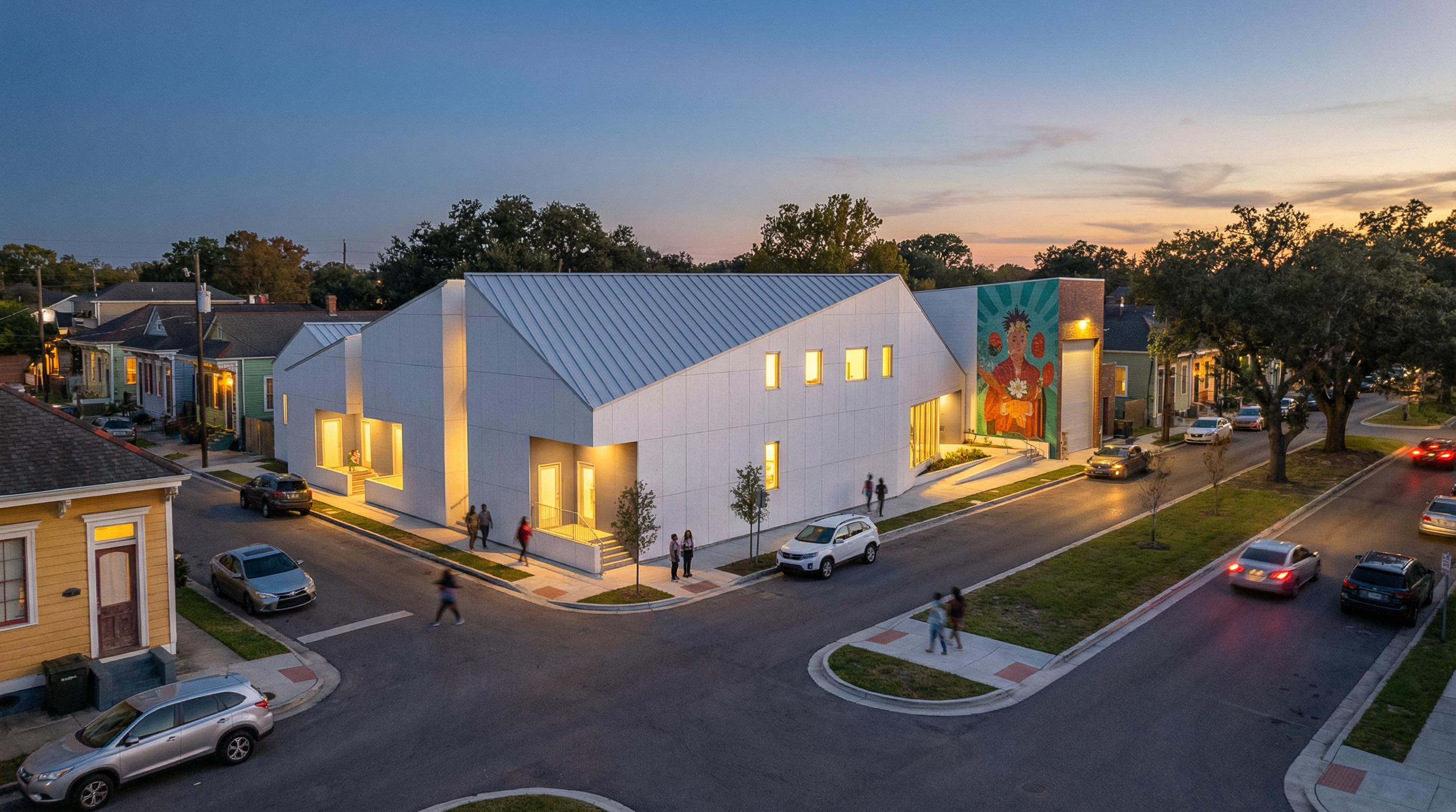
For the 2026 Day of Service, the design team developed a conceptual vision for a mixed-use site at 3300 LaSalle Street that combines Small Multi-Family Affordable (SMFA) housing with a community-facing ground-floor space and a dedicated headquarters for People’s Housing+. The proposal integrates multiple duplex units alongside a flexible community center designed to host classes, meetings, and events, with office space for PH+ located above.
The housing component builds on People’s Housing+’s “CLT Double Down” model—an evolution of the traditional New Orleans double that allows first-time homeowners to build equity while maintaining permanent affordability through capped appreciation. The community and office spaces were envisioned as visible, welcoming assets that reinforce PH+’s role as both a housing provider and neighborhood partner.
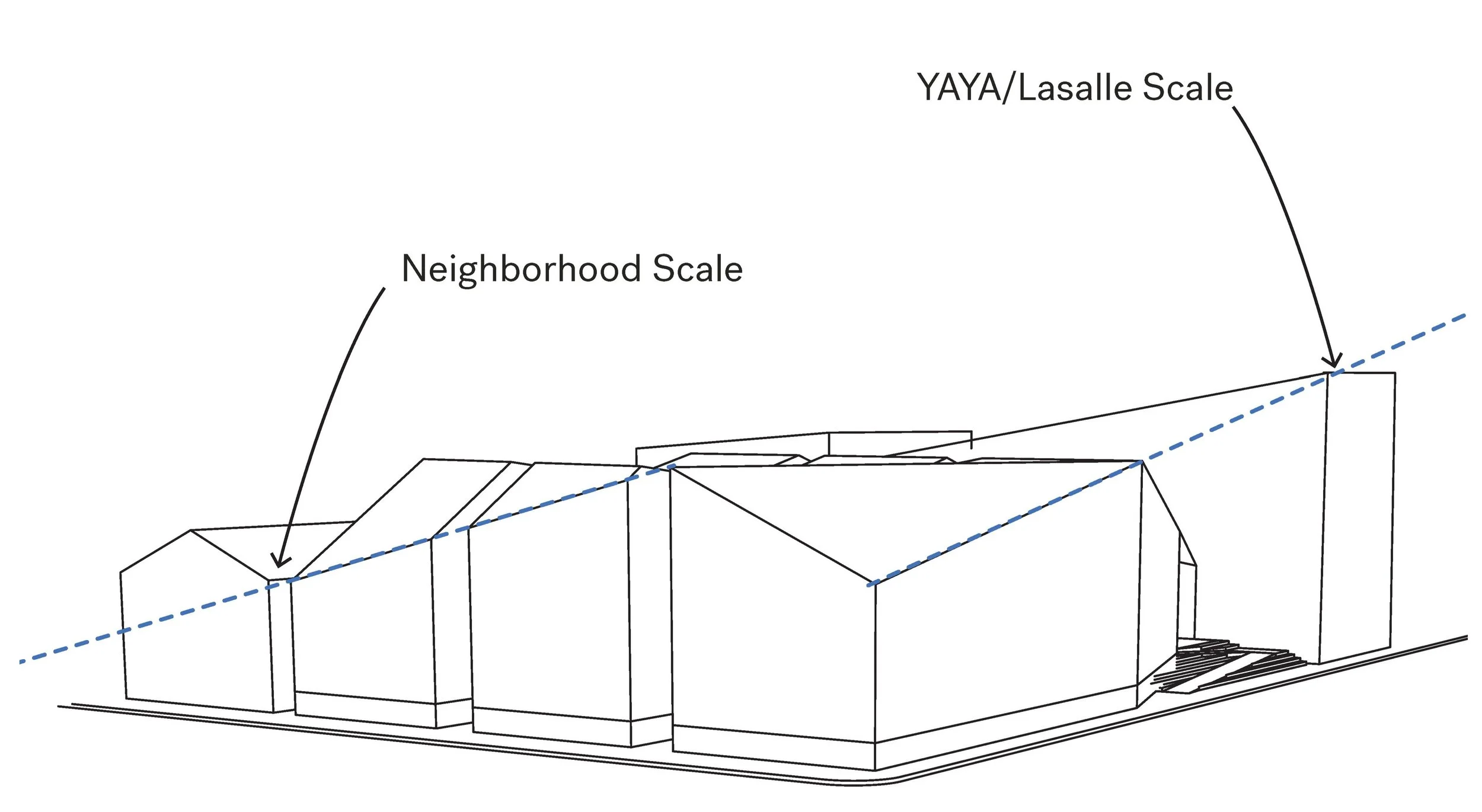
Contextual Massing - Massing Diagram
The Process
The Day of Service team approached the project through a feasibility-driven design process that combined site planning, zoning analysis, and massing studies. Working within HU-B1 zoning constraints, the team explored parcel subdivision strategies, allowable density, and building configurations that could accommodate residential, office, and community uses without triggering additional parking or accessibility requirements.
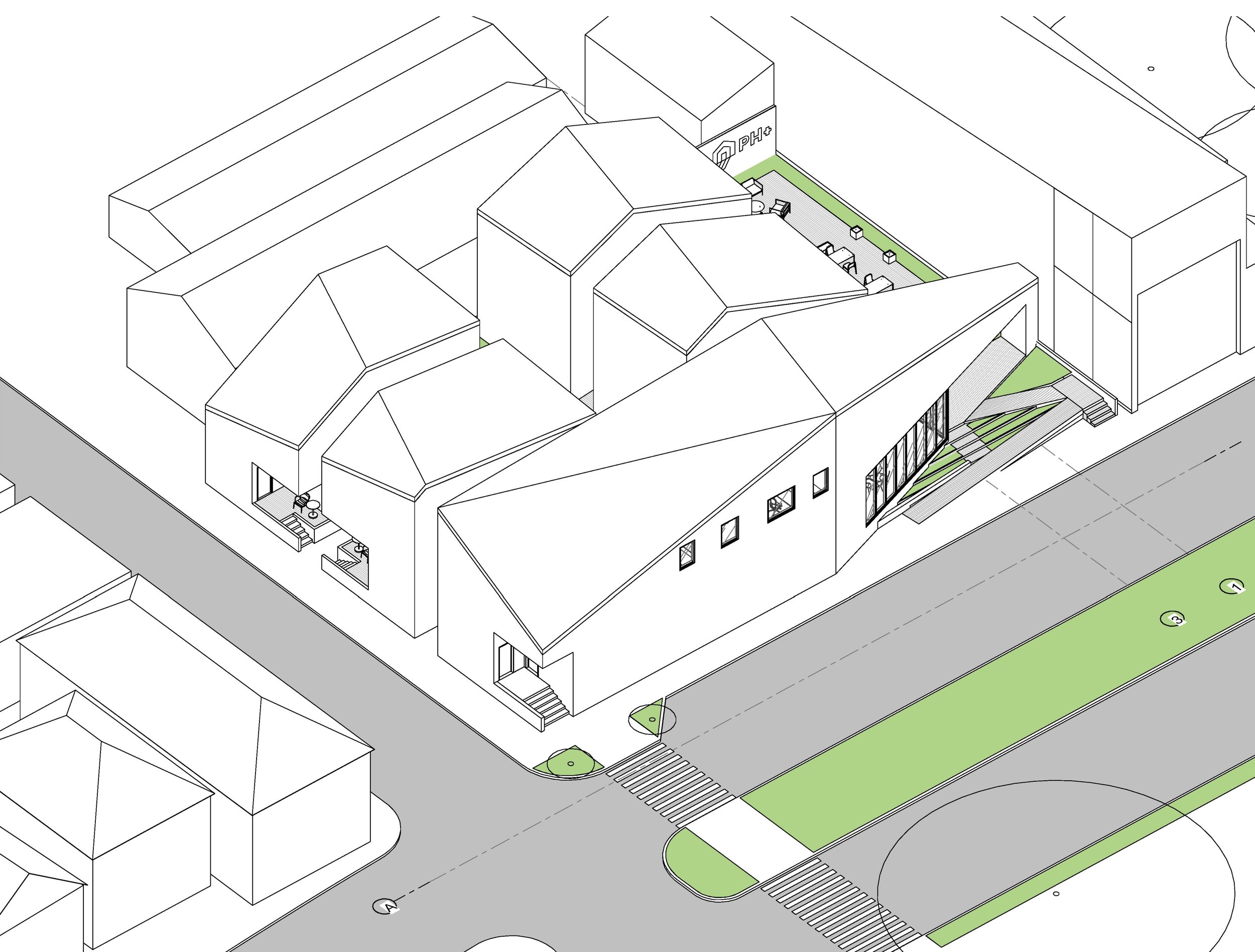
Contextual Massing - Project Isometric
Conceptual floor plans and massing studies tested how housing units, shared outdoor space, and public-facing programs could be organized to support safety, accessibility, and long-term adaptability. Throughout the process, the design prioritized clarity, flexibility, and scalability—providing People’s Housing+ with a set of diagrams, studies, and visualizations that can be used to guide future conversations with partners, funders, and city agencies as the project continues to evolve.
The Team
- Katie Nguyen — Project Manager
- Chris Pietsch — Team Leader
- Caroline Garfield
- Will Netter
- Steve Dumez
- Z Smith
- Amanda Rivera
- Michelle Simms
Glassroots
Project Partner
Glassroots
Their Mission: Glassroots is a Chalmette-based environmental organization and partner to Glass Half Full that advances glass recycling, environmental education, and nature-based infrastructure solutions across Southeast Louisiana. By transforming discarded glass into sand and gravel, Glassroots supports coastal restoration, stormwater management, and disaster resilience while strengthening local ecosystems and community stewardship.
Project Focus
Environmental education, circular resource systems, coastal restoration, and climate resilience
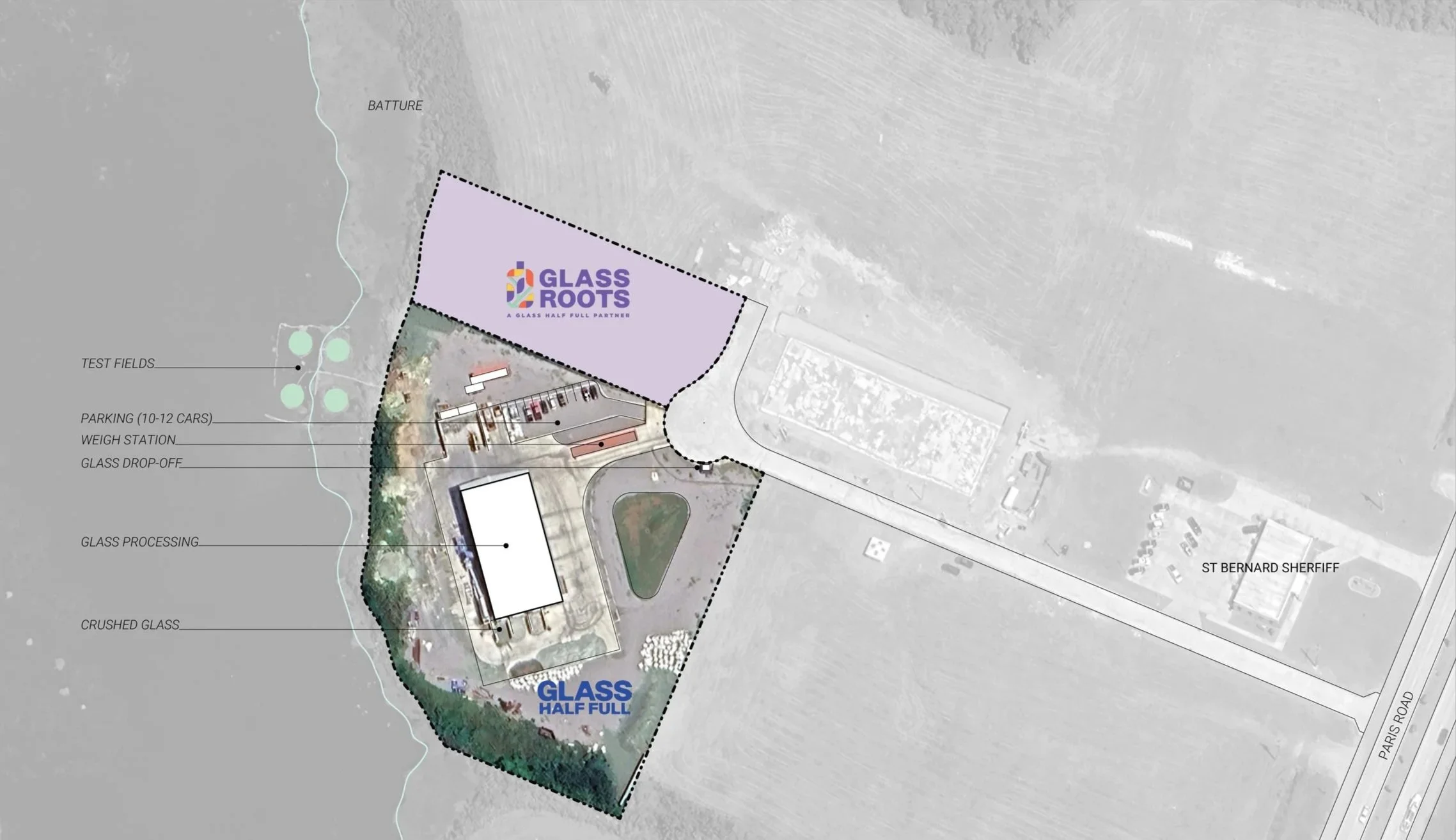
Existing site conditions
The Challenge
As coastal loss and flooding intensify across Southeast Louisiana, Glassroots is working to expand its capacity for hands-on environmental education while continuing its core work of glass recycling and restoration. The organization identified a need for a dedicated, on-site education hub—one that could support learning, volunteer engagement, and public programming while demonstrating sustainable systems in action. The challenge was to envision a facility that could operate affordably, respond to a highly exposed coastal environment, and embody Glassroots’ mission of turning waste into a regenerative resource.
The Project
The design team developed a conceptual master plan for a new Glassroots education and operations hub in Chalmette. The proposal centers on an open-air learning pavilion designed to accommodate up to 30 students and volunteers, supported by a small conditioned office, composting restrooms, storage, and an educational rain garden filled with recycled glass aggregate. A boat launch and kayak storage area were also incorporated to support eco-tours, restoration work, and invasive species removal efforts.
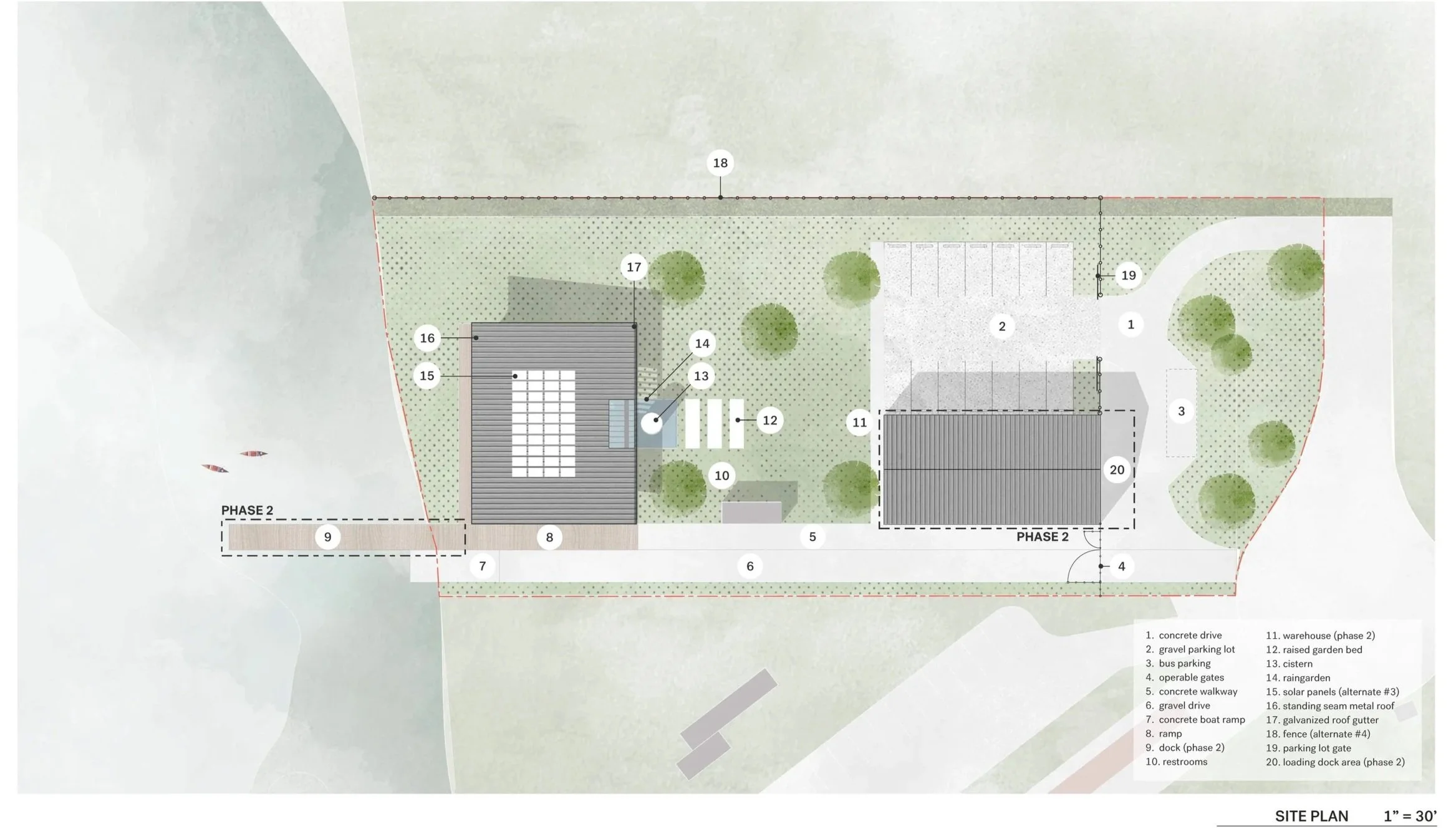
Proposed Site Plan
The project was envisioned as a phased development, with an initial focus on education and demonstration spaces, followed by a future warehouse and processing facility to support Glassroots’ growing recycling and restoration operations. Throughout, the design reinforces Glassroots’ mission by making environmental systems—stormwater management, material reuse, and off-grid infrastructure—visible and accessible to the public.
The Process
The project team approached the project through a combination of site analysis, program development, and climate-responsive design strategies. Working within the constraints of an industrial-zoned, flood-prone site, the team developed a plan that prioritizes passive ventilation, shading, and durability. The open-air learning pavilion was designed for thermal comfort using operable shading elements, large-diameter ceiling fans, and orientation strategies that reduce heat gain while maximizing airflow.
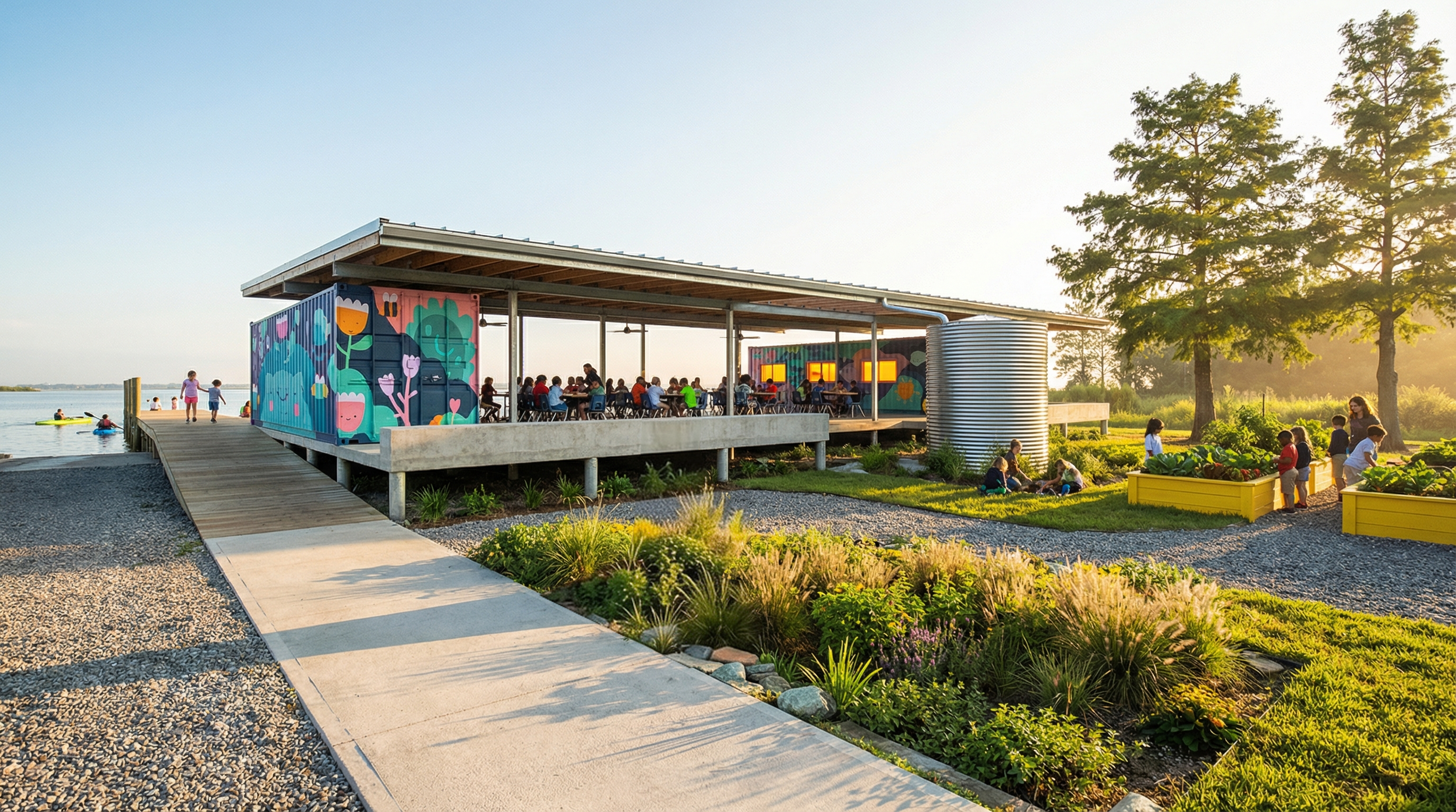


To align with Glassroots’ sustainability goals, the proposal includes off-grid systems such as a rooftop solar array with battery storage, rainwater collection, and low-impact wastewater solutions. Repurposed materials—including shipping containers for office and storage uses and recycled glass integrated into paving and landscape elements—underscore the organization’s commitment to circular resource systems. The result is a cohesive vision that balances practicality, environmental performance, and education, providing Glassroots with a flexible framework to guide future fundraising, partnerships, and implementation.
The Team
- Daniel Ruff — Team Leader
- Mike Johnson — Project Manager
- Jose Alvarez
- Haley Robinson
- Mark Hash
- Zach Chance
- Sam Lindley
- Joan Declet
My Sister’s Place
Project Partner
My Sister’s Place
Their Mission: My Sister’s Place is a nonprofit organization dedicated to sheltering, supporting, and empowering survivors of domestic violence and their children. With more than four decades of service, the organization provides a full continuum of care—from emergency shelter to transitional and permanent housing—alongside counseling, case management, advocacy, and education aimed at breaking cycles of violence and supporting long-term stability and independence.
Project Focus
Safe housing, survivor-centered design, operational efficiency, and healing-focused environments
The Challenge
Survivors of domestic violence often arrive at shelter during moments of acute crisis, relying on short-term housing that must balance safety, dignity, privacy, and functionality. My Sister’s Place identified several opportunities within its existing facilities to improve both residential units and staff support spaces—ensuring environments could better accommodate survivors and children while also supporting the day-to-day work of counselors, administrators, and case managers. The challenge was to explore design strategies that enhance comfort, privacy, and flexibility without compromising safety or operational requirements.
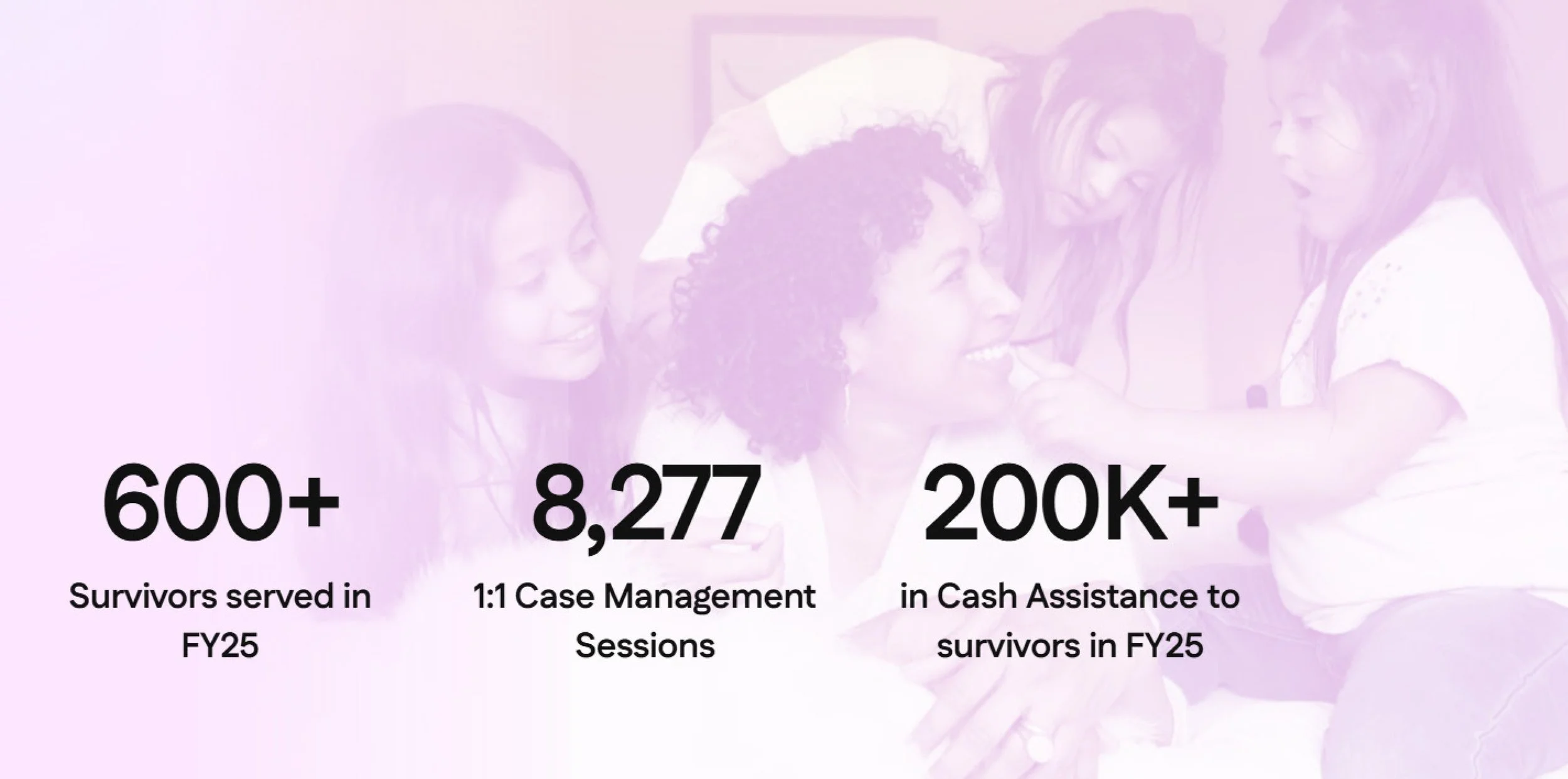
Impact numbers from My Sister’s Place
The Project
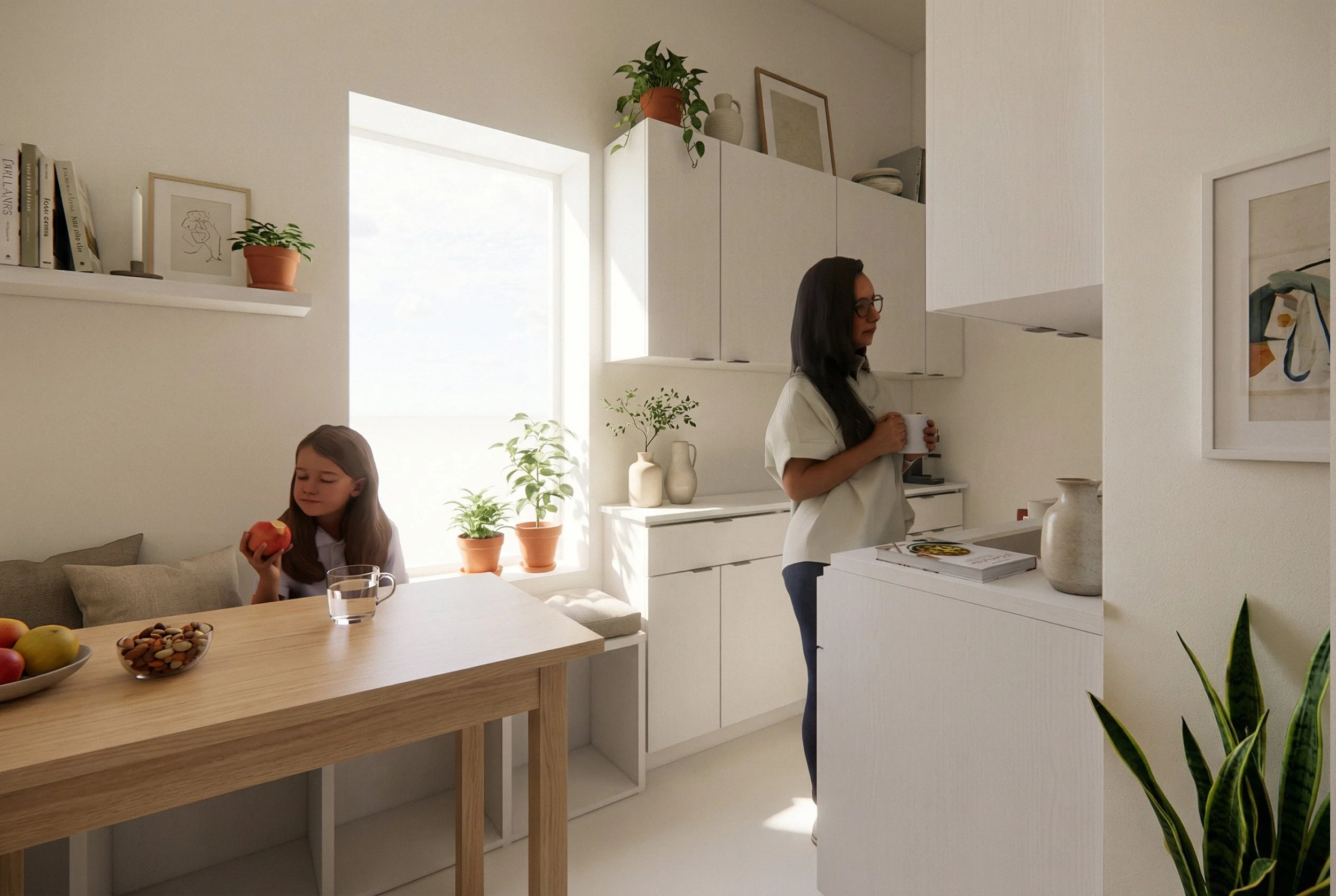
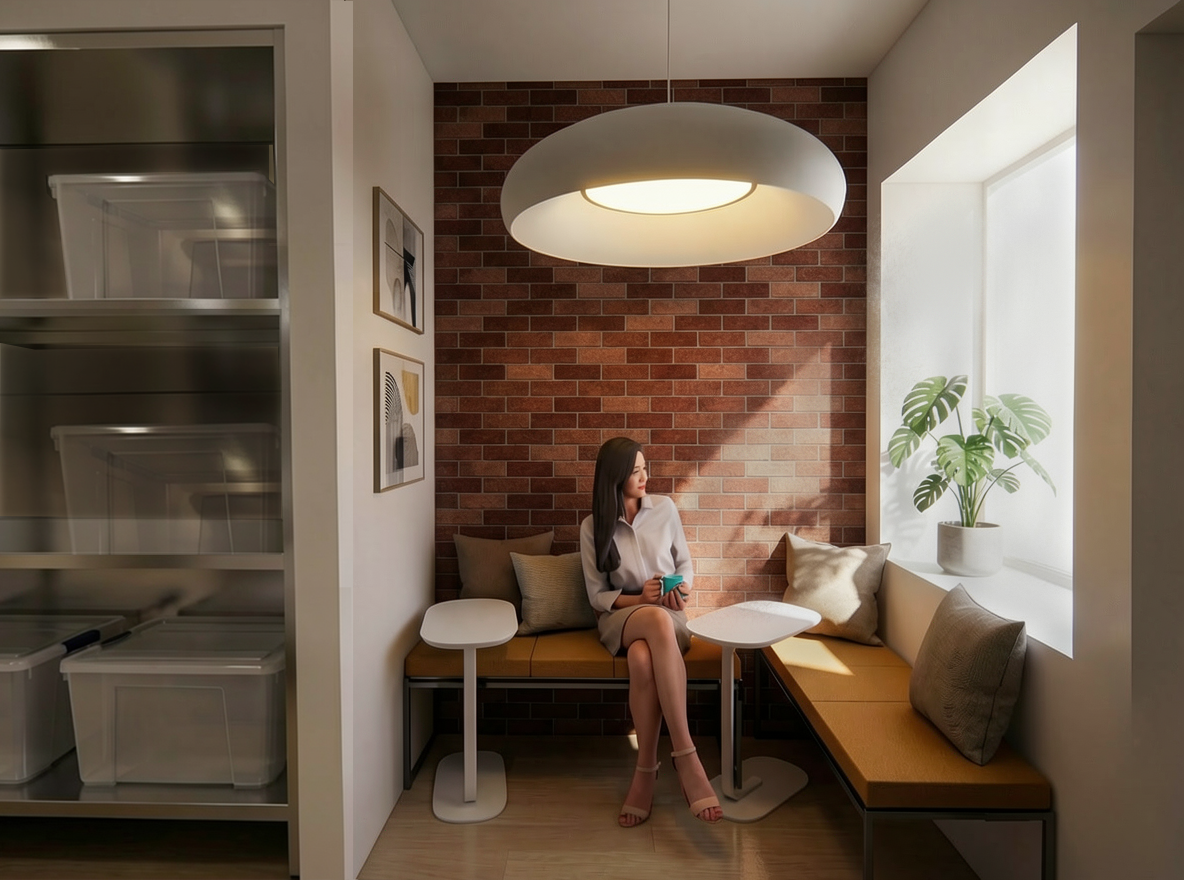
For the 2026 Day of Service, the design team developed a comprehensive set of conceptual renovations addressing three key areas: residential units, office and storage spaces, and acoustic performance within private counseling areas. Residential studies explored how an existing unit could be thoughtfully reconfigured into two smaller units—a one-bedroom and a studio—providing increased flexibility while maintaining the same level of comfort, storage, and amenity found in other housing units.
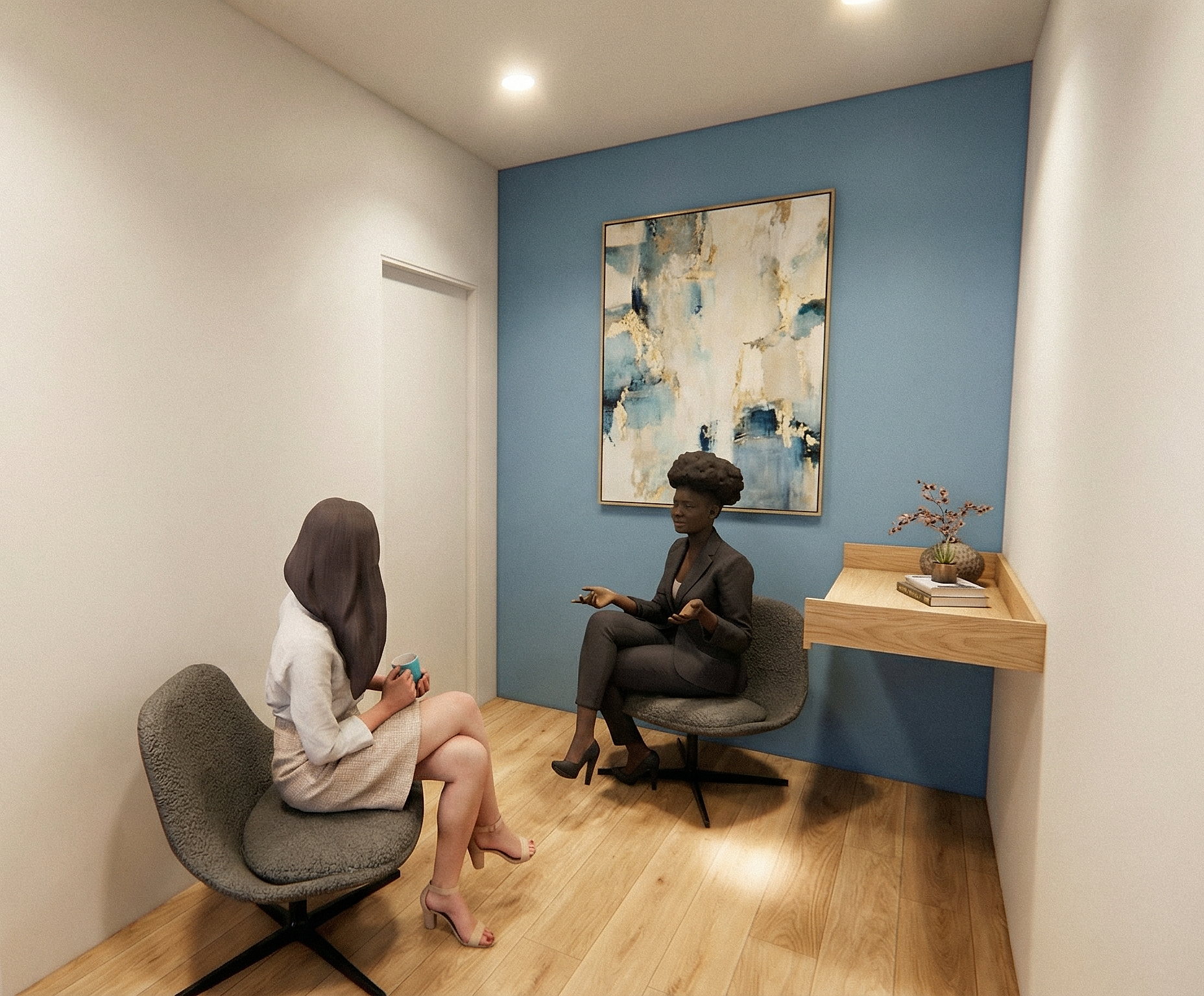
In parallel, the team developed design options for converting underutilized areas into private offices, phone booths, and expanded storage to better support confidential conversations and administrative needs. Throughout, the project prioritizes calm, residential-scale interiors, durable materials, and flexible layouts that can adapt to changing needs over time.
The Process
The Day of Service team approached the project through detailed documentation of existing conditions, program analysis, and phased design options ranging from minimal to moderate intervention. Conceptual plans and vignettes tested multiple approaches to unit layouts, millwork, storage integration, and furniture placement, ensuring each option could be evaluated for cost, constructability, and impact.
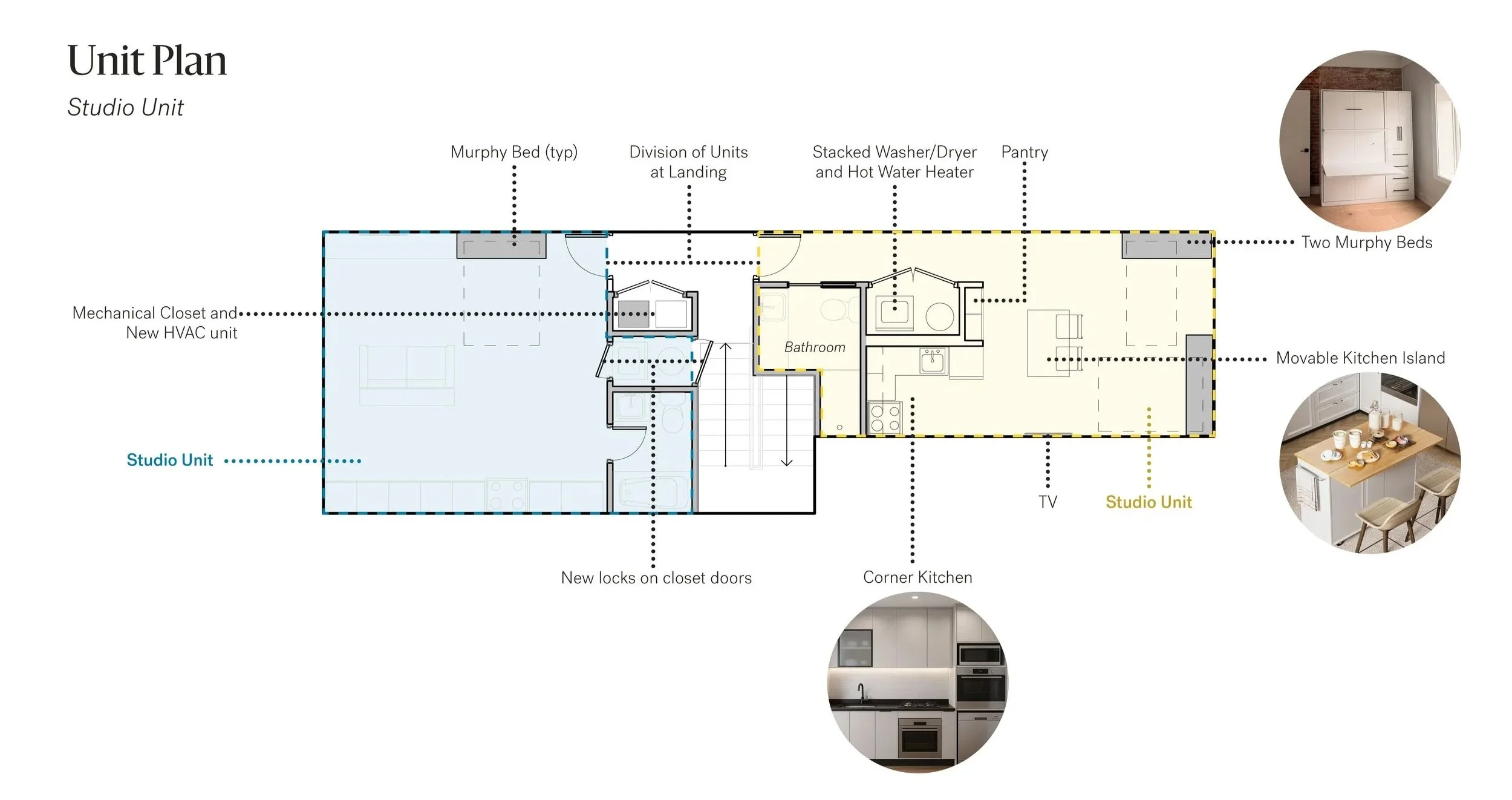
Example floor plan of a Studio Apartment Unit
Acoustic studies focused on improving speech privacy in counseling and office spaces through targeted interventions such as extending partitions to full height or introducing acoustic wall panels, solutions designed to enhance confidentiality without major structural changes. The resulting package provides My Sister’s Place with a clear, flexible roadmap for future implementation, supporting fundraising, grant applications, and phased execution while centering survivor safety, dignity, and well-being at every scale.
The Team
- Regina Davis — Project Manager
- Camille Kreisel — Team Leader
- Marta Fenollosa
- Aïda Ayuk
- Roshell Grant Wesley
New Orleans Women & Children’s Shelter (NOWCS)
Project Partner
New Orleans Women & Children’s Shelter (NOWCS)
Their Mission: New Orleans Women & Children’s Shelter (NOWCS) is uniquely dedicated to serving homeless families, helping women and their children transition from homelessness and poverty to stability and self-sufficiency. The organization provides comprehensive support services with a strong track record of long-term success, serving a population made up primarily of women of color.
Project Focus
Family stability, trauma-informed design, outdoor play and gathering spaces, and climate-responsive environments
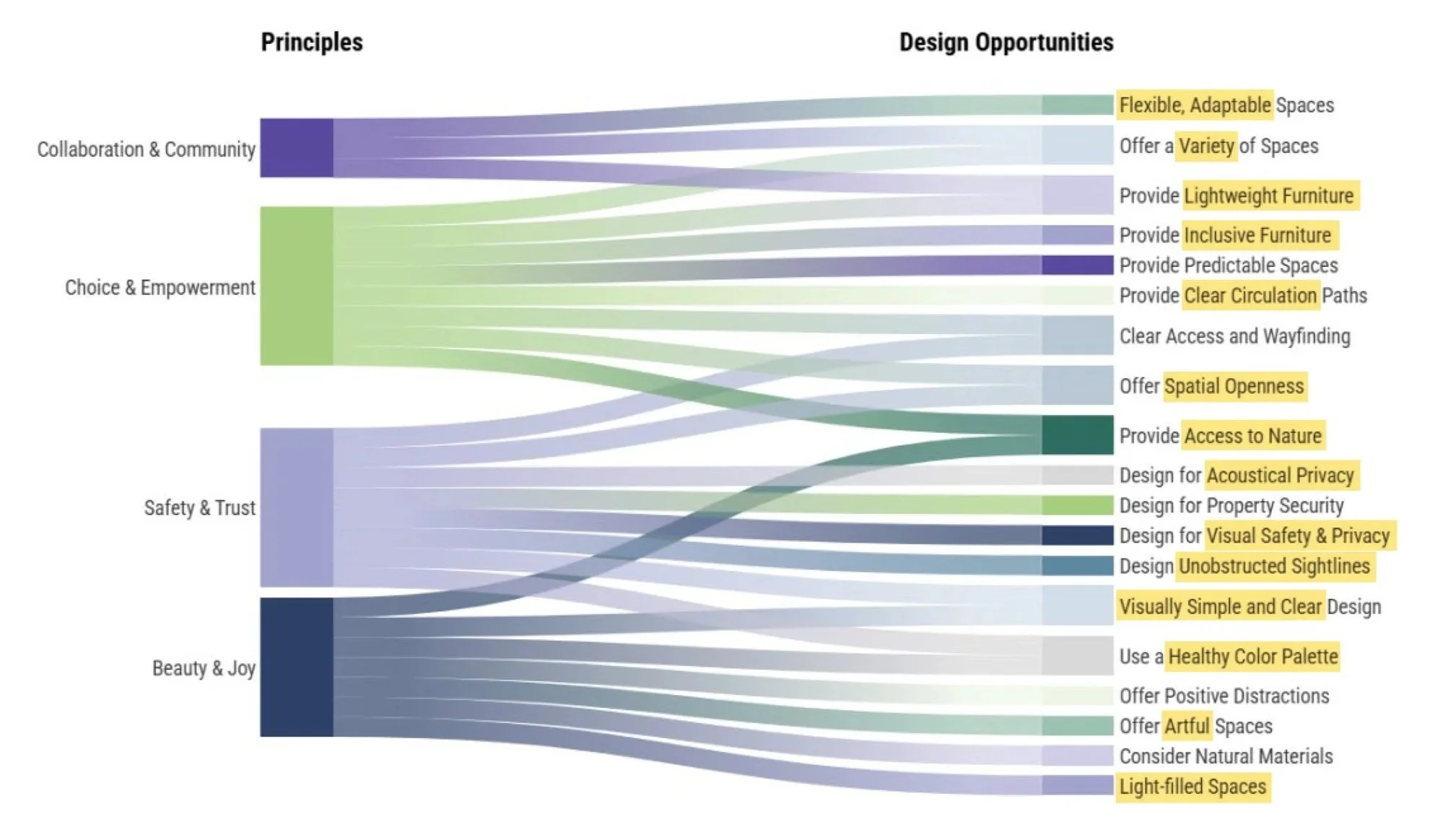
Research - Trauma-informed design
The Challenge
Families experiencing homelessness require environments that do more than provide shelter; they must support healing, dignity, and daily life while accommodating a wide range of ages, activities, and support services. NOWCS identified challenges related to outdoor space usability, heat exposure, stormwater management, and privacy, as well as interior limitations that constrained flexible programming for residents. The challenge was to envision improvements that could enhance comfort, safety, and adaptability without disrupting ongoing operations or triggering costly regulatory thresholds.
The Project
For the 2026 Day of Service, the design team developed a comprehensive vision package focused on transforming underutilized exterior and interior areas into a safe, flexible “mini campus” environment for families. Central to the proposal is the creation of a protected outdoor courtyard designed as a shaded, enclosed garden—providing space for play, learning, and community gathering while reducing heat and flooding impacts.
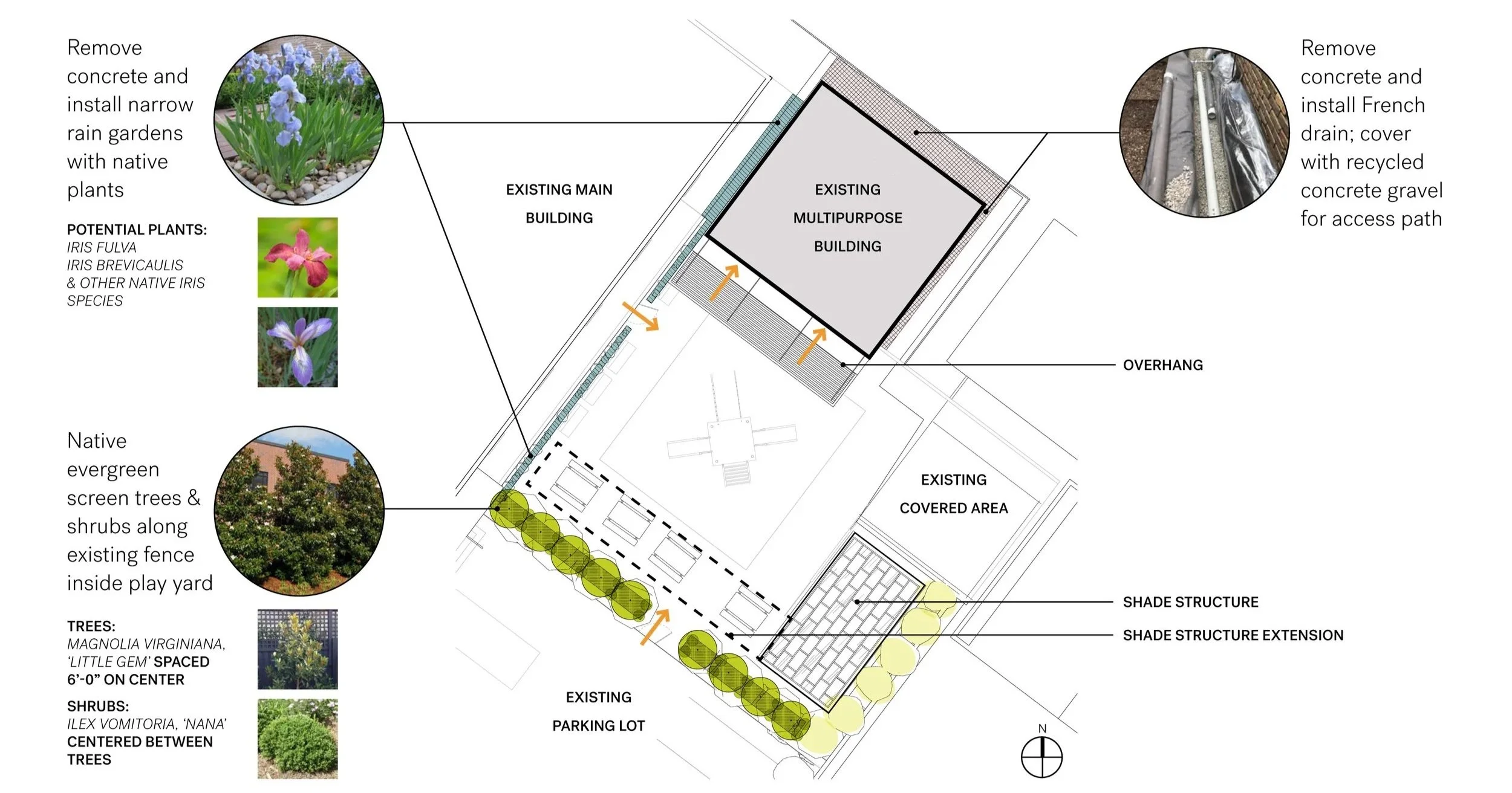
Proposed Site Plan: Making room for water, growing & building shade, and creating privacy
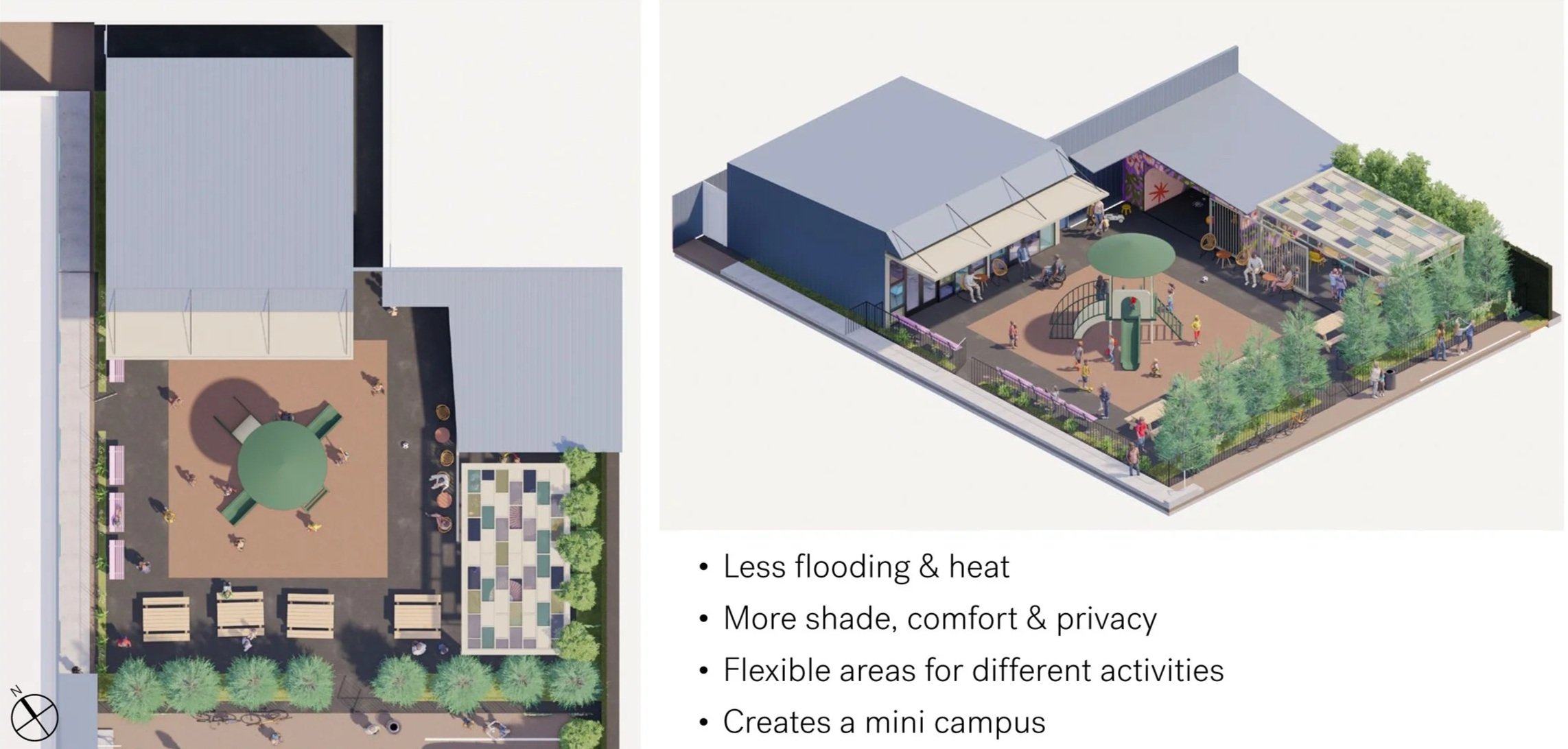
Proposed Site Design: A Secret Garden (safe, enclosed, flexible)
The exterior vision includes strategies for removing excess paving, introducing rain gardens and improved drainage, adding shade structures, and planting native vegetation to enhance comfort and privacy. Interior concepts focus on reimagining a multipurpose space as a light-filled, adaptable environment that can support dining, after-school activities, meetings, and emergency sheltering, using modular furniture and movable partitions to allow spaces to evolve throughout the day.

Furniture plan for multi-purpose room
The Process
The Day of Service team approached the project through a trauma-informed and climate-responsive design lens, grounded in research, existing conditions analysis, and regulatory feasibility. Design strategies were guided by principles of safety, choice, and empowerment—prioritizing clear circulation, visual simplicity, acoustic comfort, and access to daylight and outdoor space.
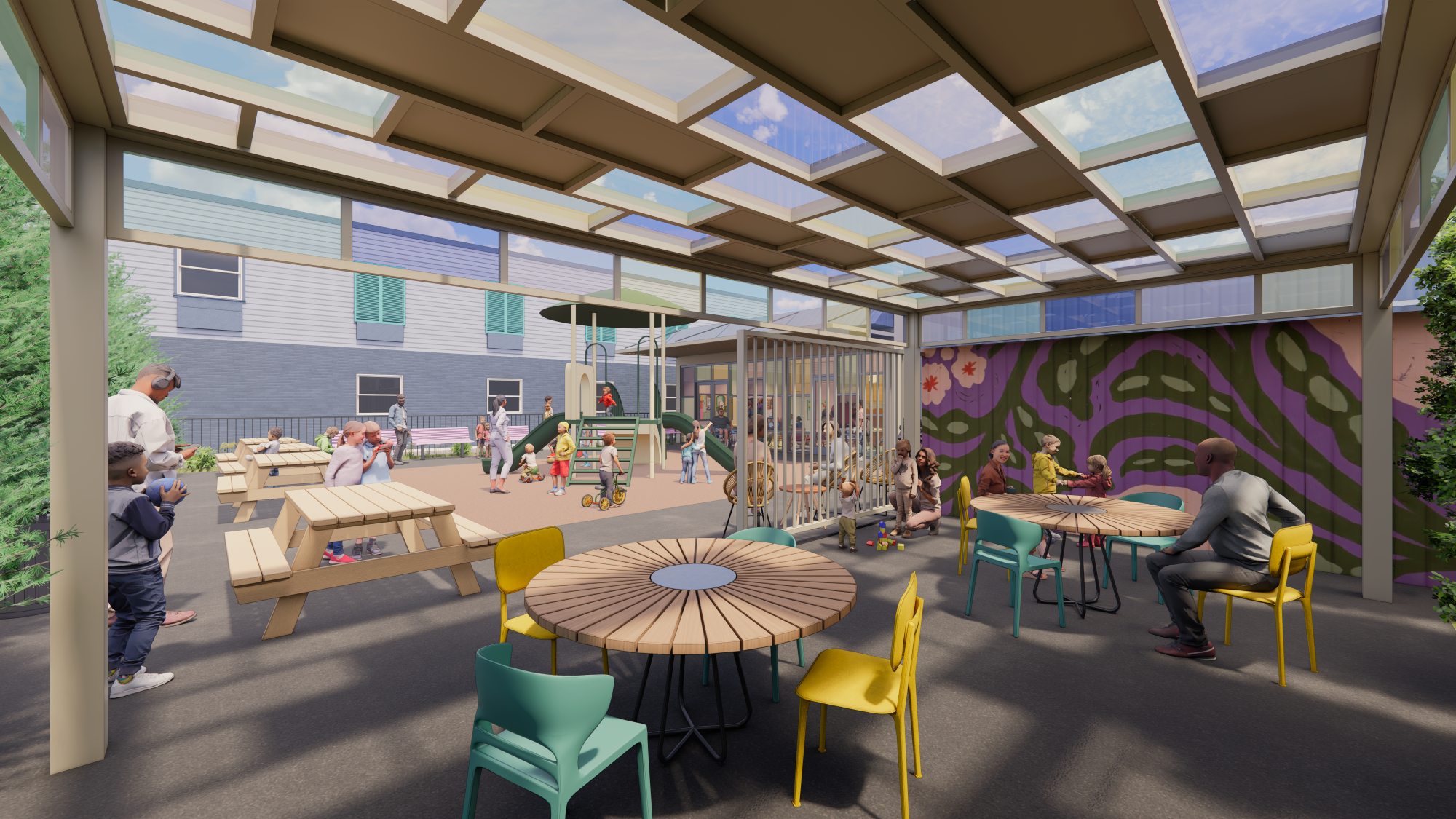
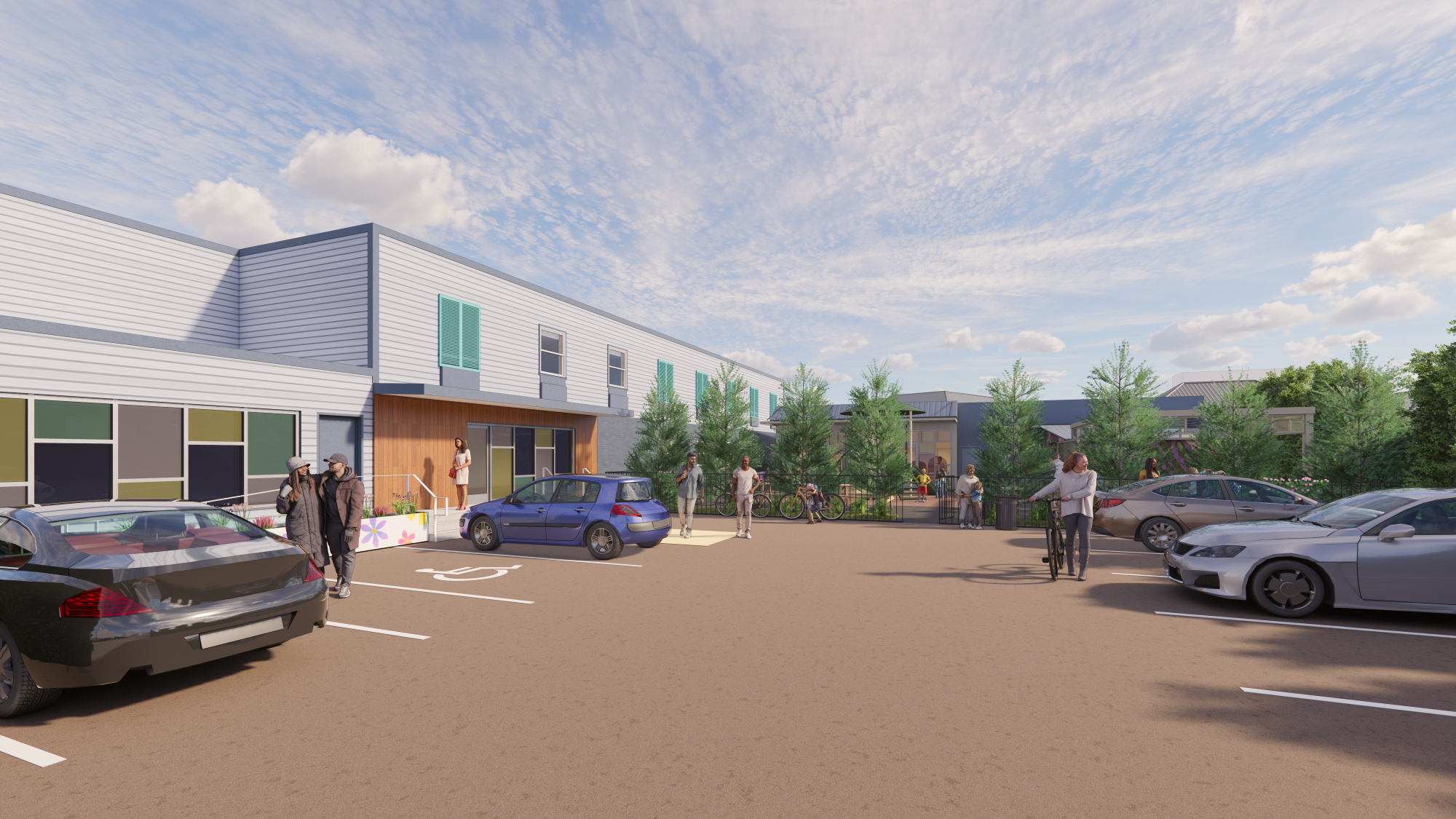
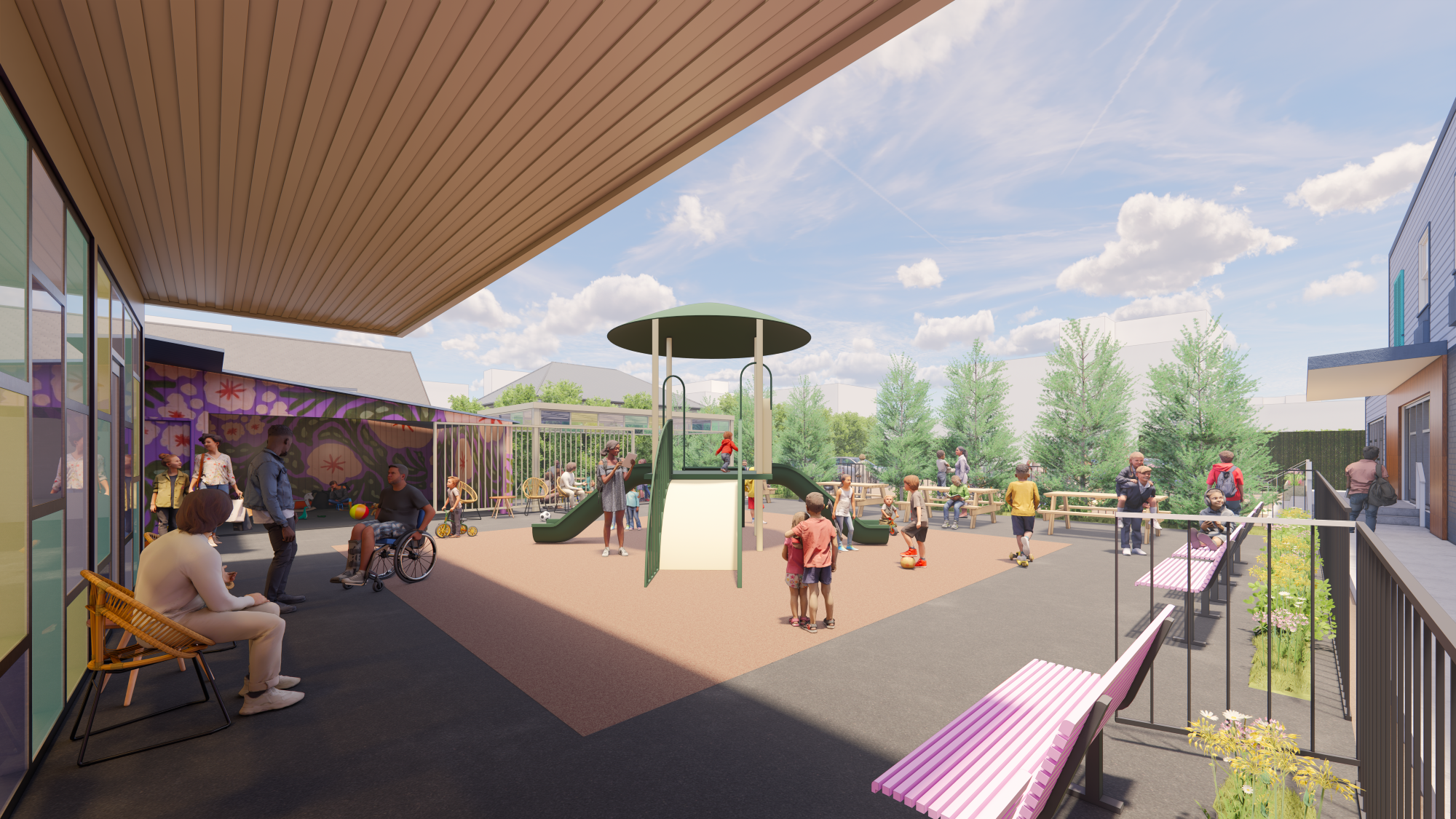
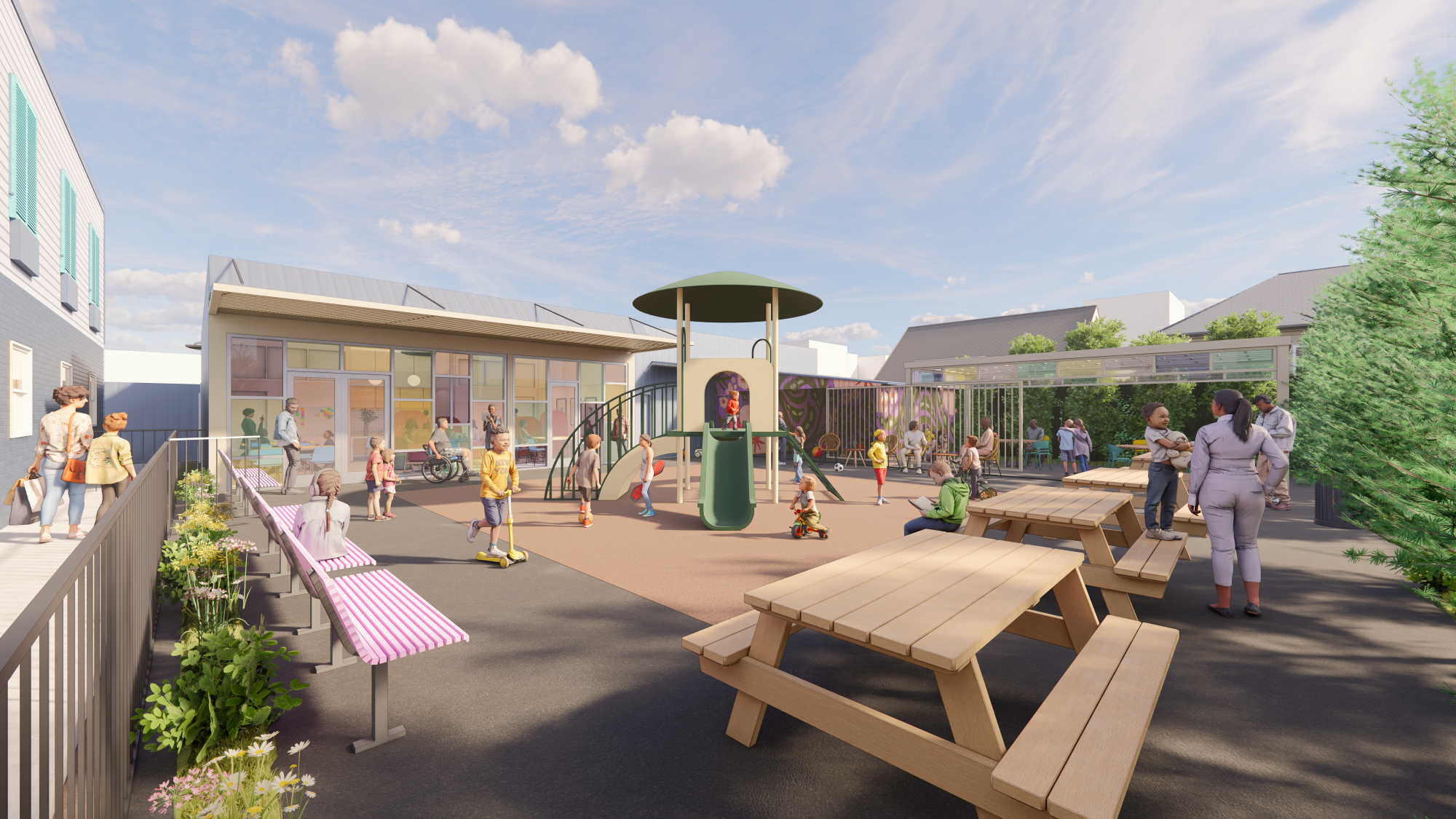
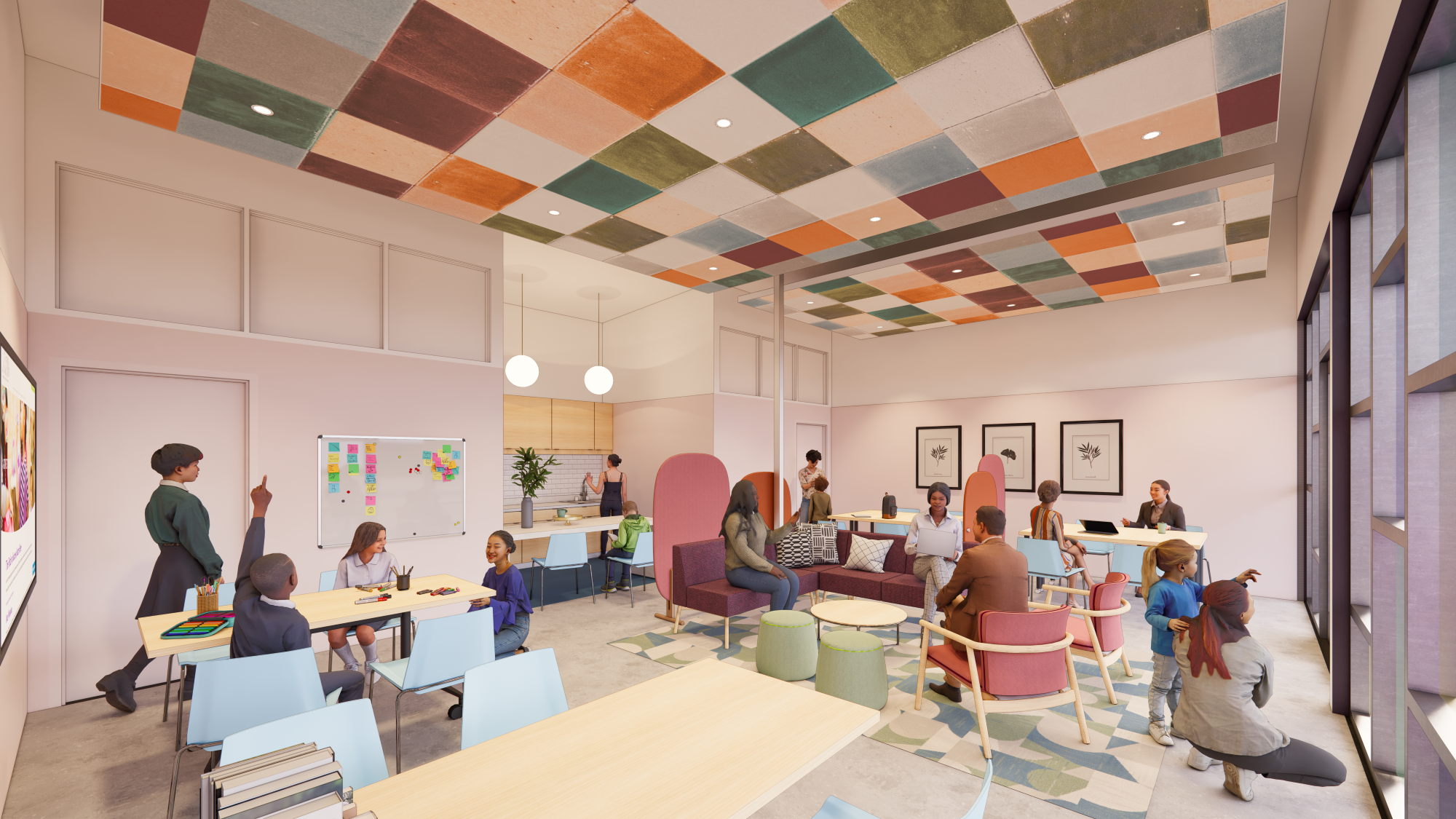
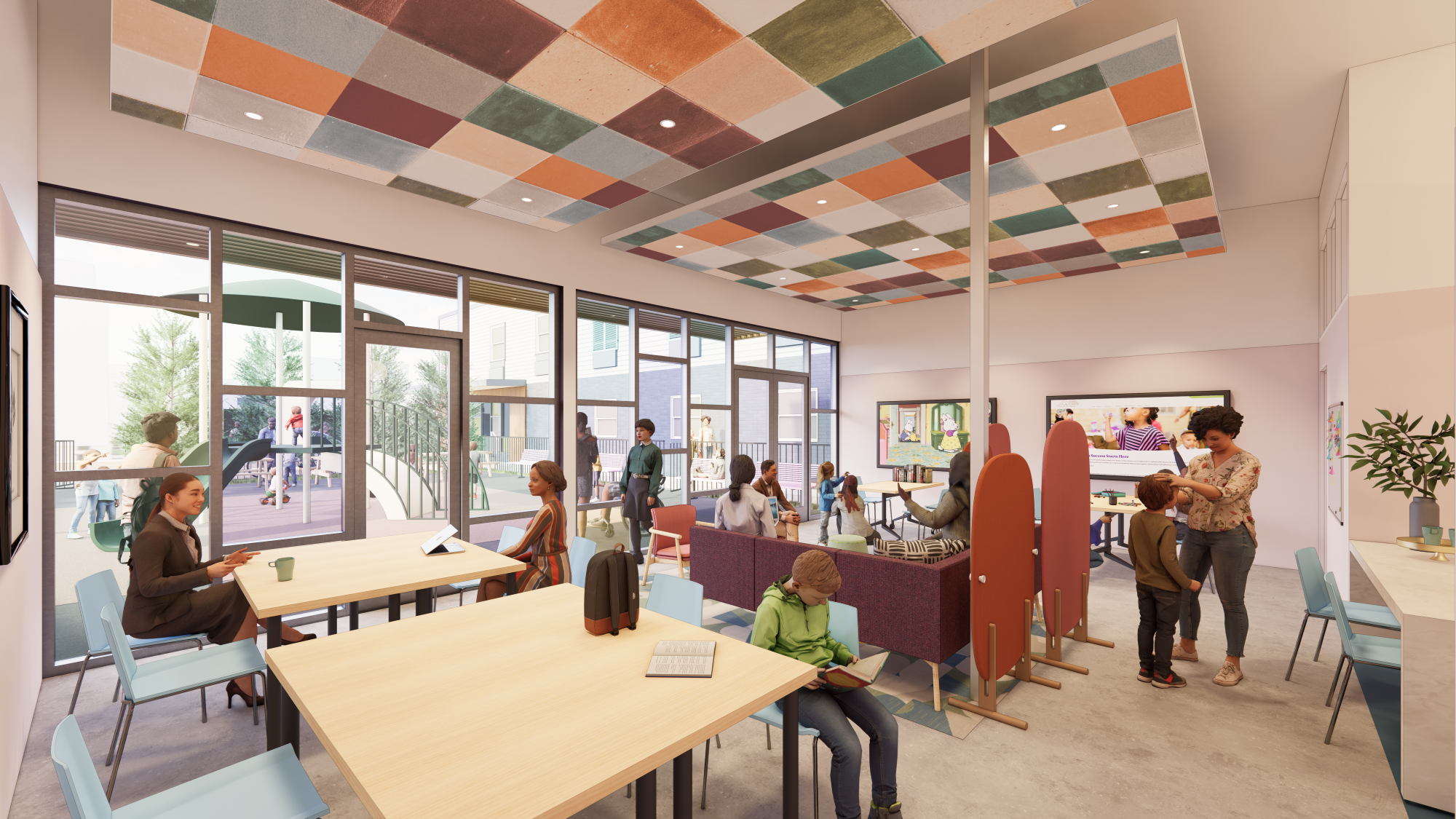
Conceptual site plans, interior layouts, perspectives, and preliminary cost modeling were developed to help NOWCS understand potential phasing, budget ranges, and implementation pathways. The resulting vision package provides a flexible roadmap that NOWCS can use for fundraising, grant applications, and future planning—supporting the organization’s mission to create safe, supportive environments where families can stabilize, heal, and move forward together.
The Team
- Aidan Taylor — Team Leader
- Thom Smith — Project Manager
- Jill Traylor
- Christopher Jackson
- Cynthia Dubberley
- Kristin Davis
- Michelle Carroll-Barr
- Kim Nguyen
WRBH Radio

Project Partner
WRBH 88.3 FM - Reading Radio For the Blind & Print Impaired
Their Mission: WRBH is a nonprofit radio station dedicated to providing free, accessible spoken-word programming for blind, low-vision, and print-impaired individuals. Founded in 1982 by blind mathematician Dr. Robert McClean, WRBH is the only 24-hour FM reading radio service in the United States, turning printed news, literature, and information into sound for listeners in Greater New Orleans and beyond.
Project Focus
Accessibility, inclusive communication, community engagement, and long-term organizational sustainability
The Challenge
WRBH operates out of a historic building at 3606 Magazine Street that has served the neighborhood for more than a century. While the building supports the station’s essential broadcast operations, many spaces were not designed for the level of volunteer activity, public engagement, and community use the organization supports today. WRBH identified the need to reimagine both its interior spaces and surrounding grounds to better serve volunteers and staff, welcome the public, and support new revenue-generating opportunities—while preserving the building’s historic character and ensuring long-term resilience.
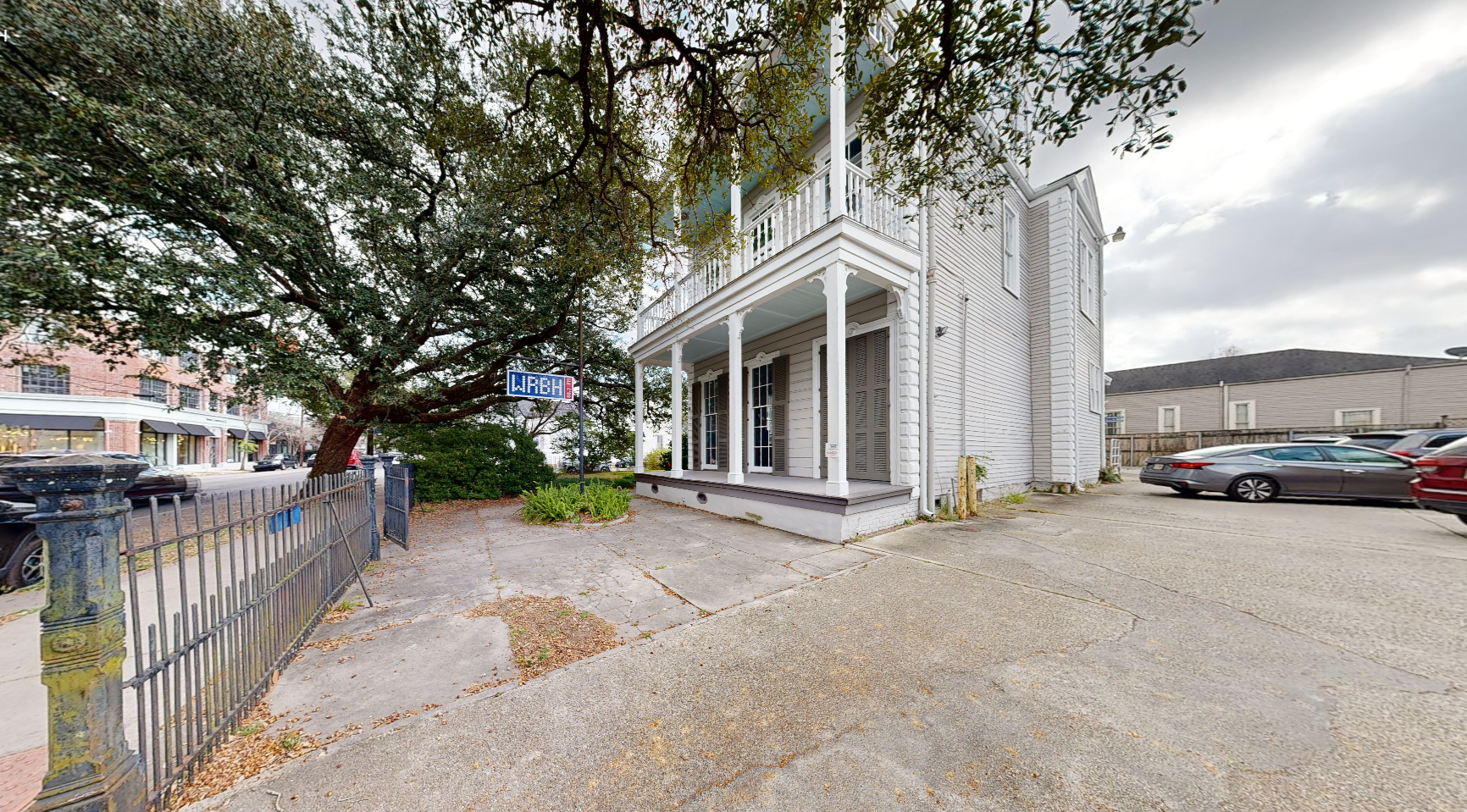
Existing entry to WRBH’s Headquarters and site conditions
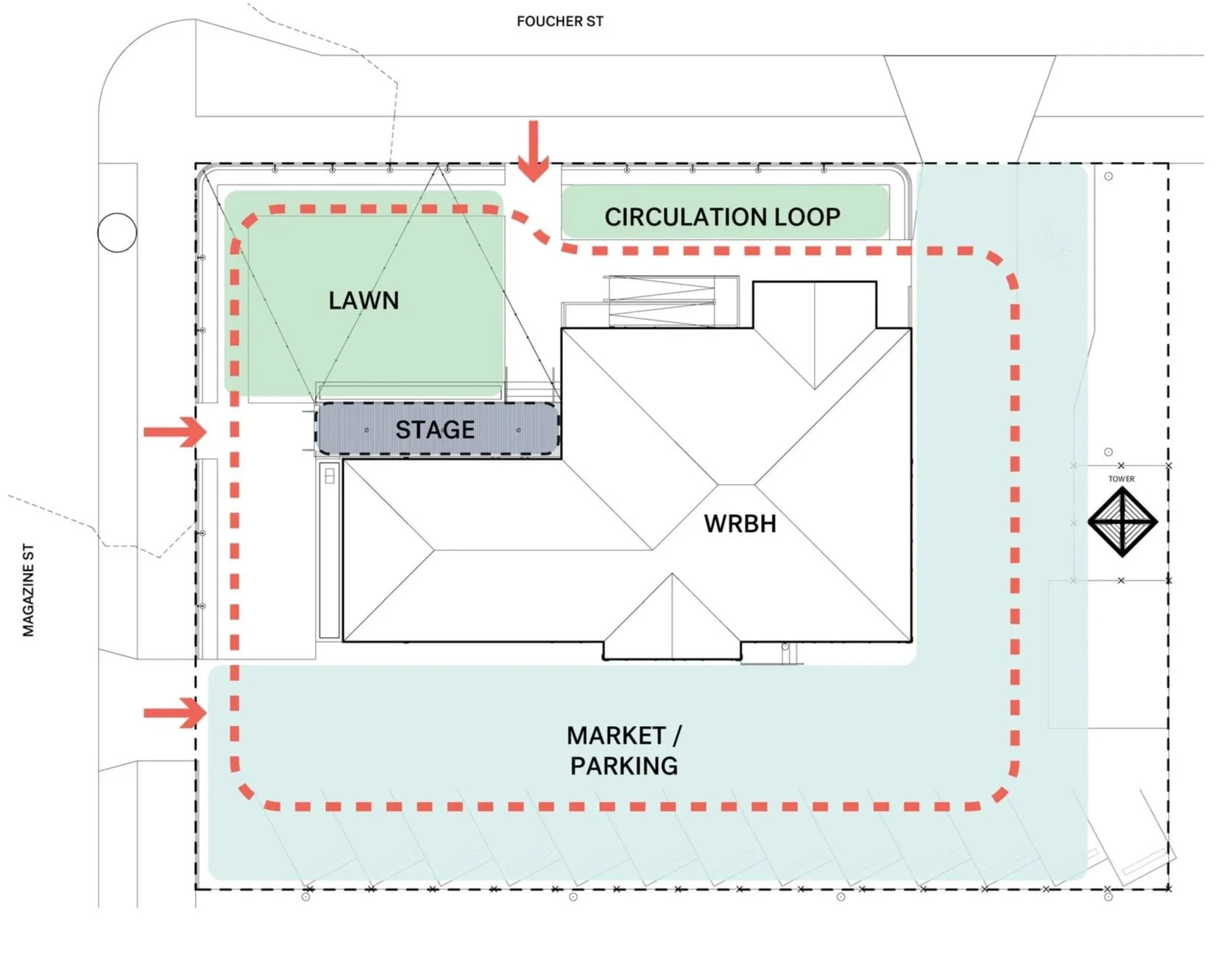
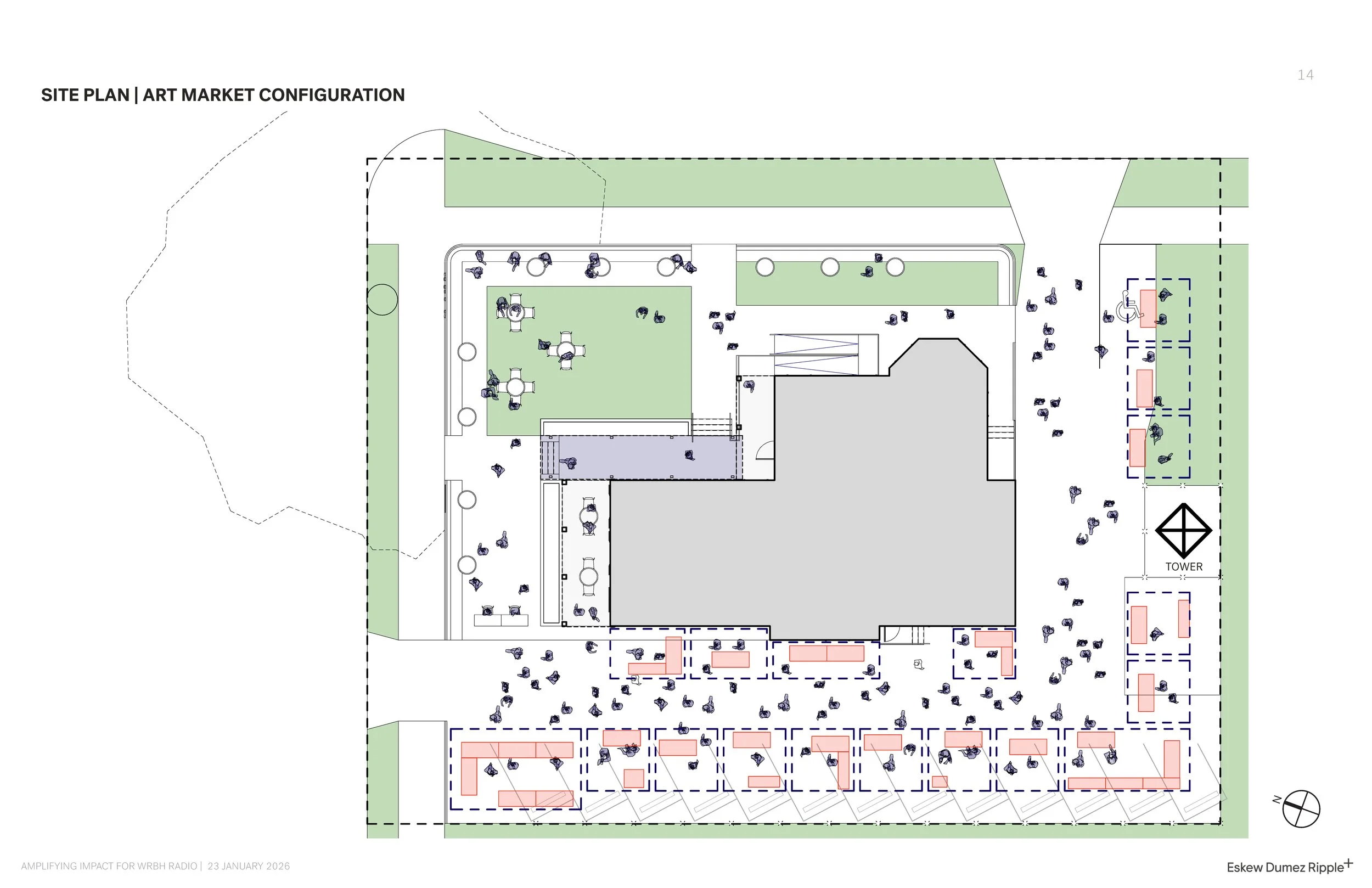
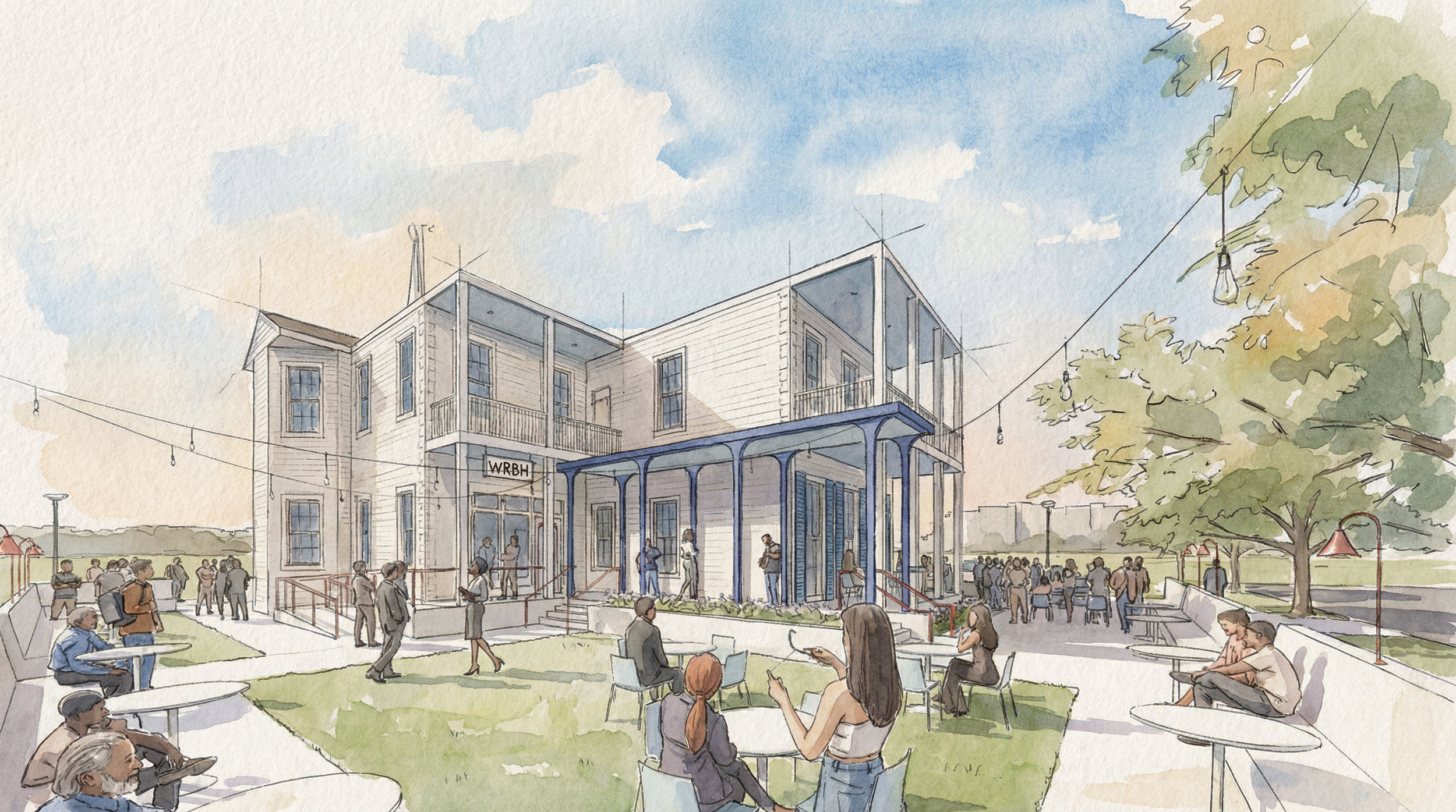
Exterior improvements to activate the grounds. Dotted red line indicates the interconnectedness of the “loop” created by these improvements
The Project
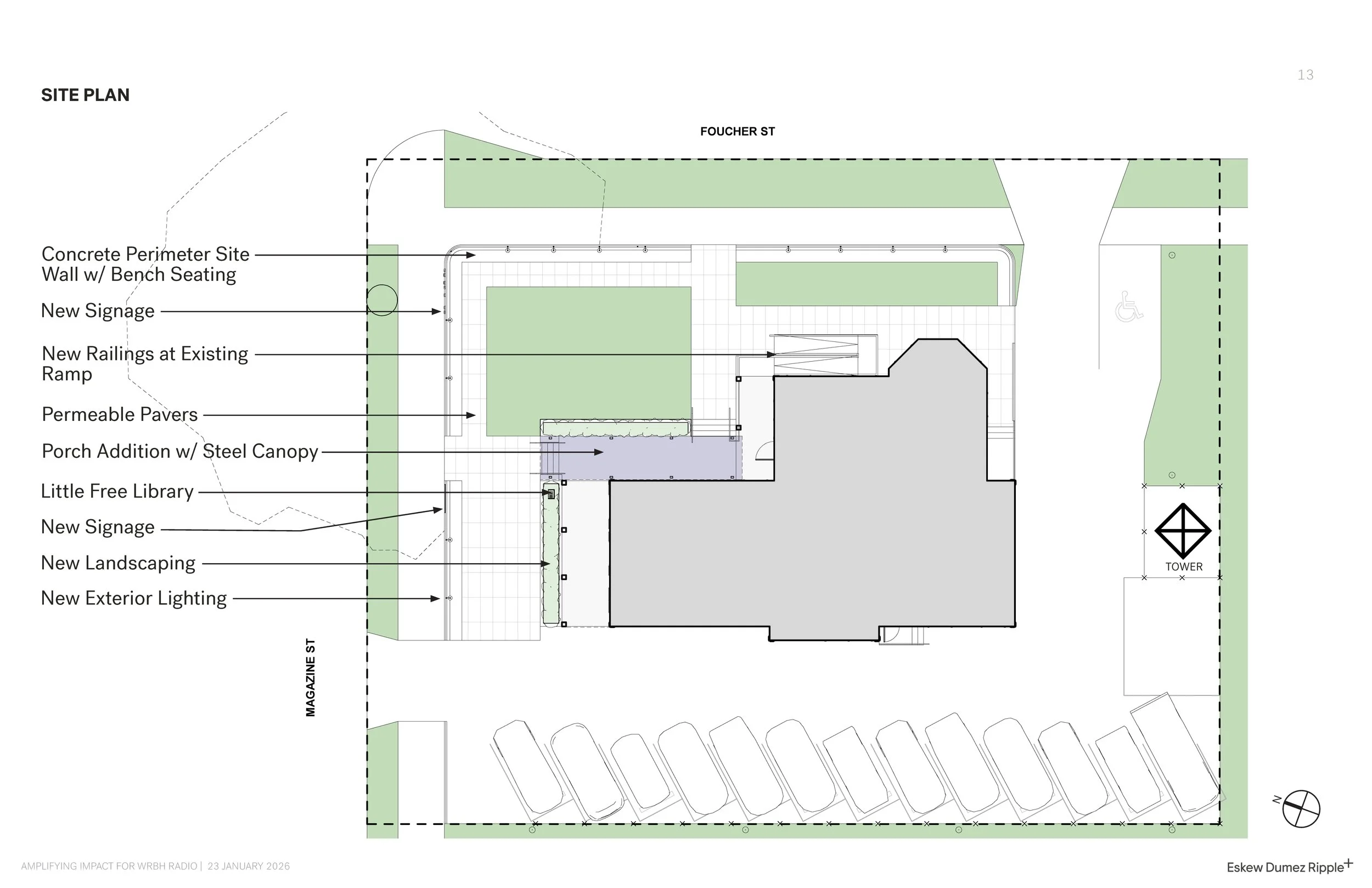
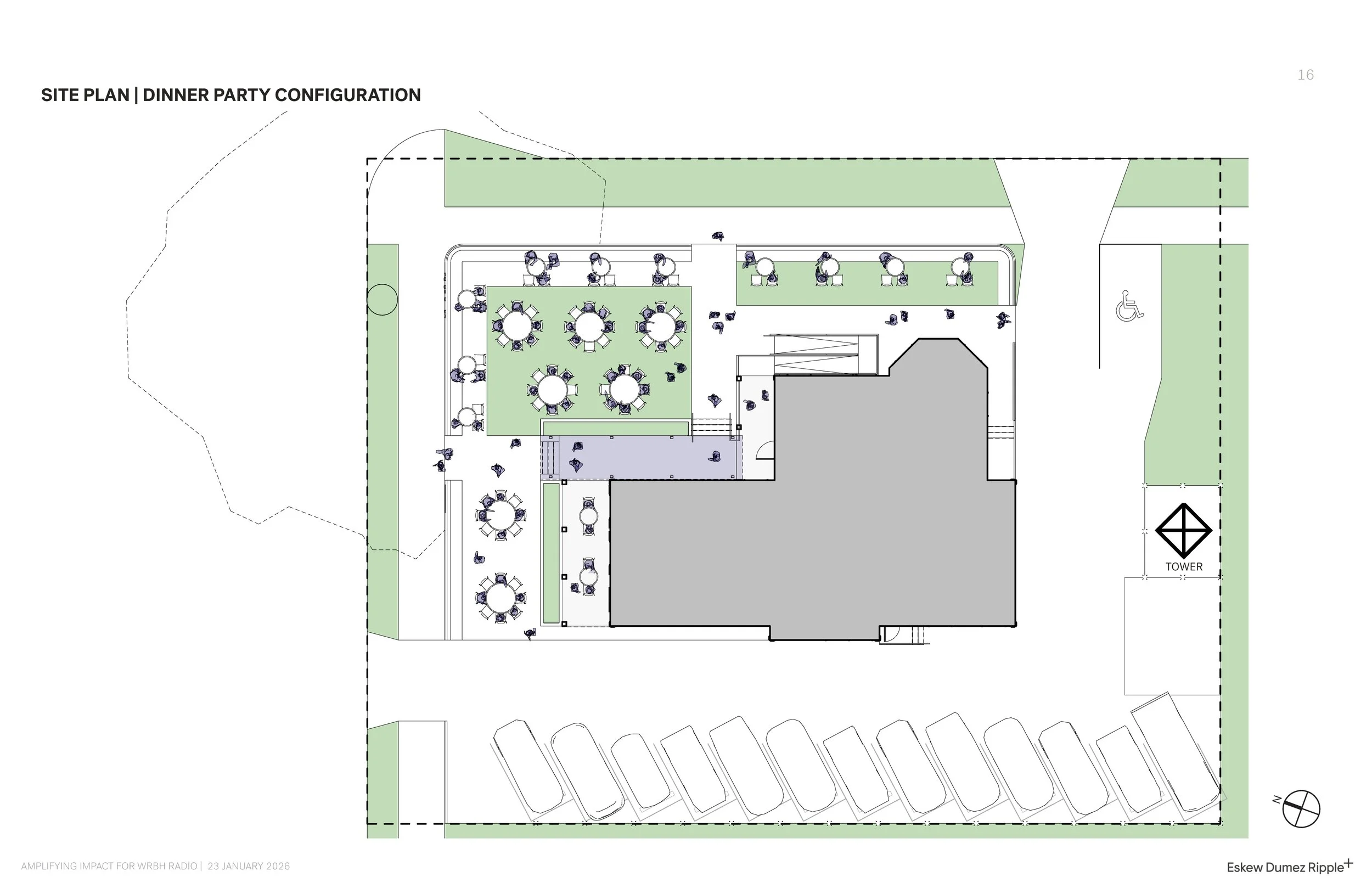
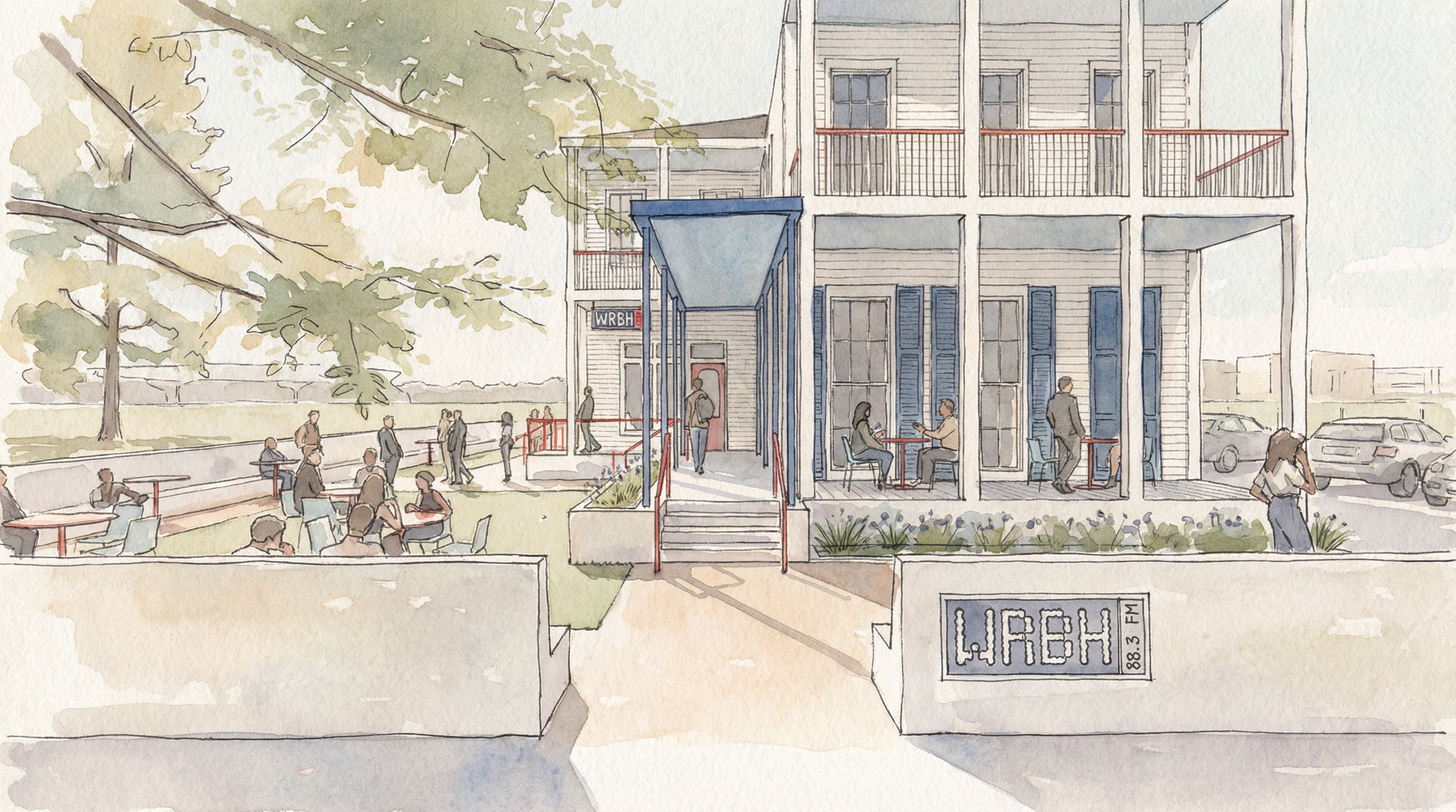
For the 2026 Day of Service, the design team developed a comprehensive vision for revitalizing WRBH’s building and site as a seamless indoor–outdoor community asset. The proposal repositions the station not only as a broadcast center, but as a welcoming civic space that can host neighborhood meetings, cultural events, live broadcasts, and educational programming.
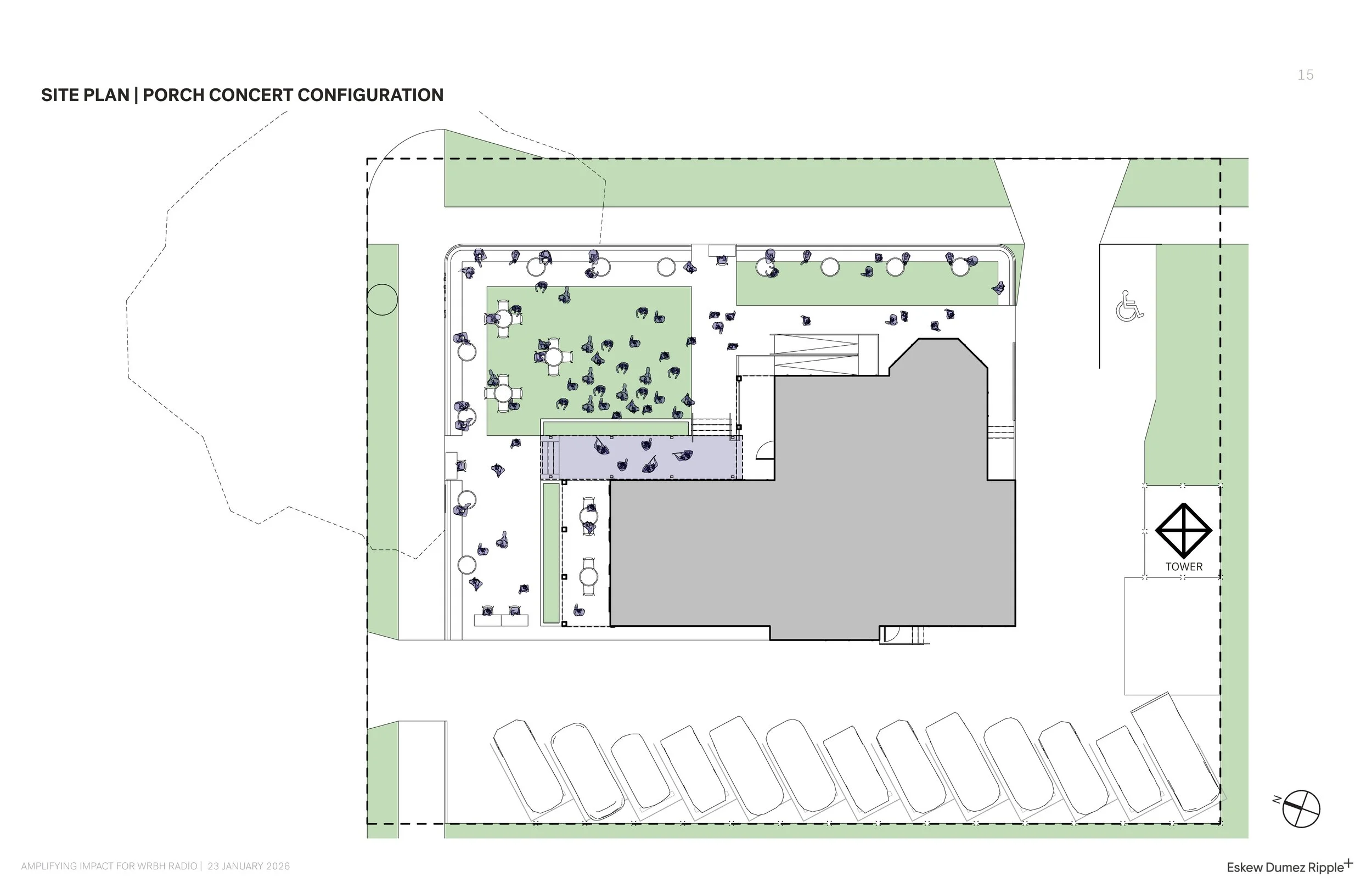
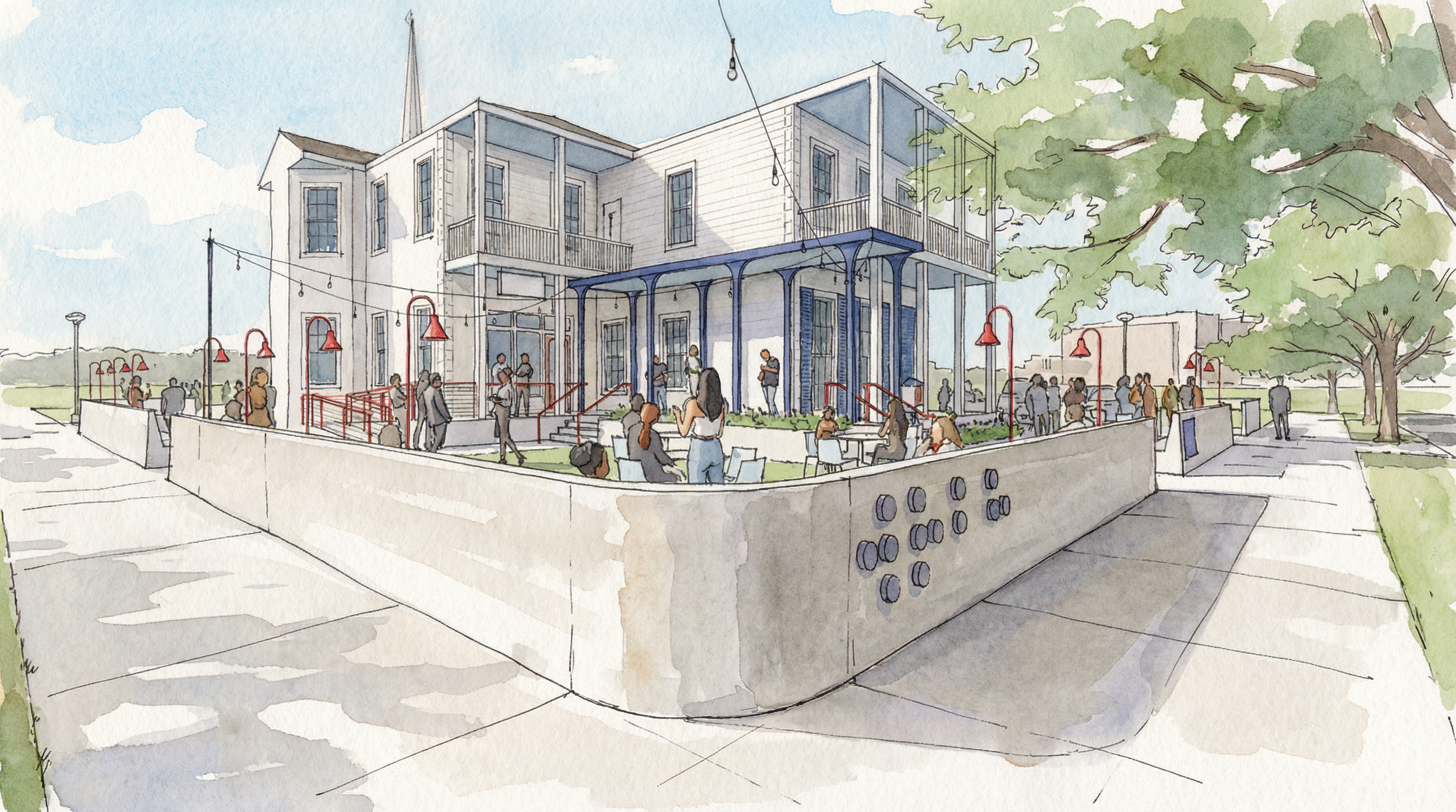
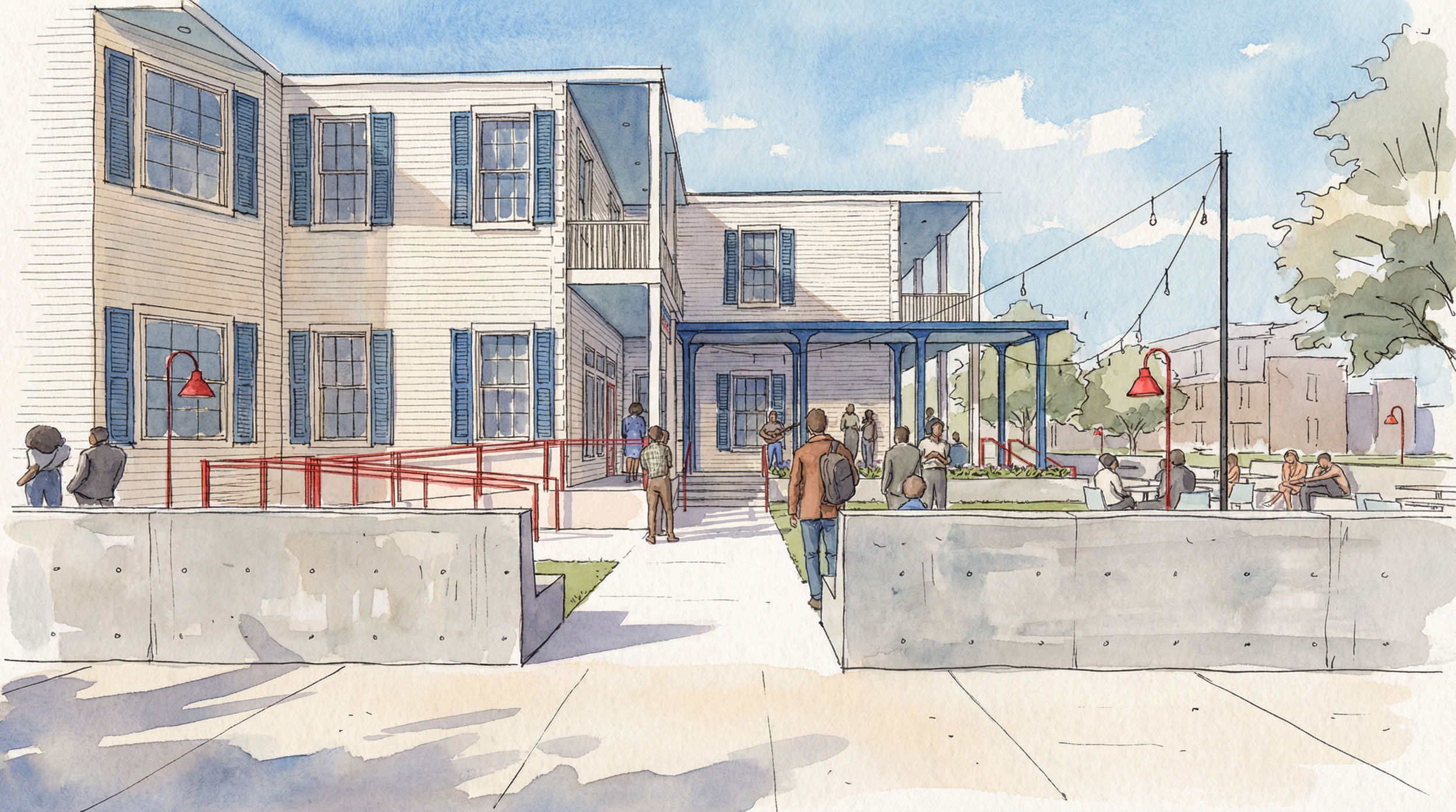
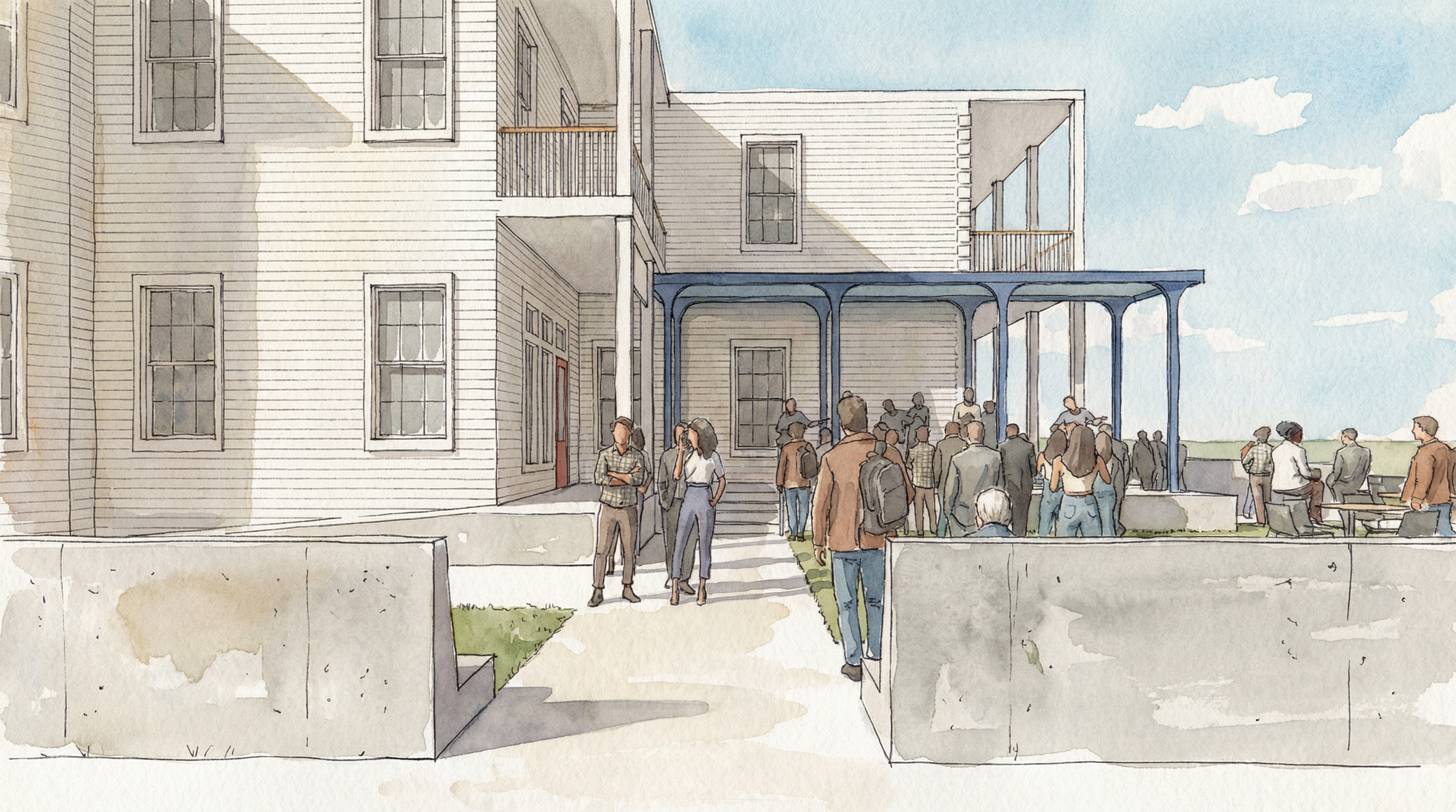
Key elements of the vision include activating the grounds as a flexible event loop connecting the front yard, side yard, and parking area; introducing a new seat wall and integrated signage to strengthen WRBH’s presence along Magazine Street; and adding an entrance canopy that doubles as a small performance stage for porch concerts and public gatherings. Together, these interventions extend WRBH’s mission beyond the studio walls, allowing programming to be experienced both on-site and on-air.
The Process
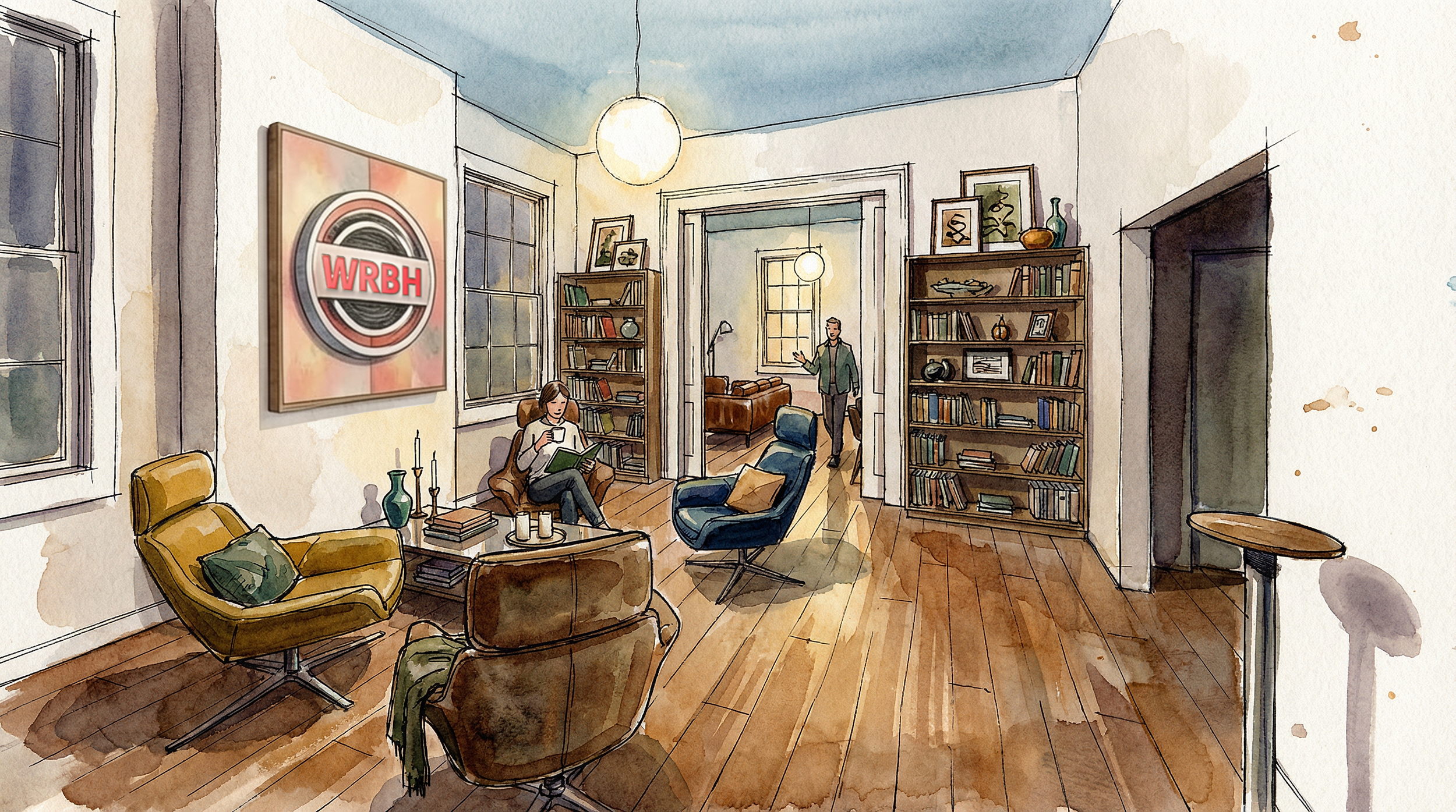
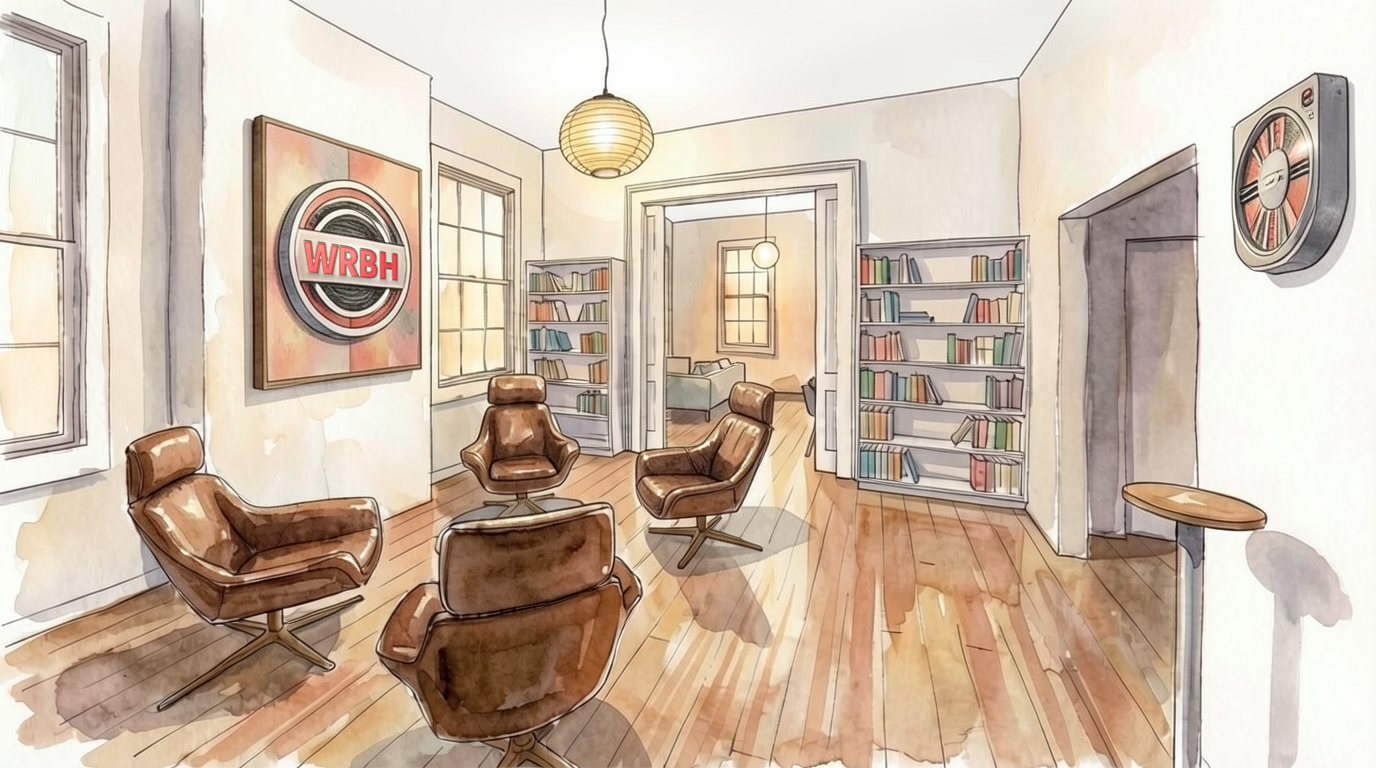
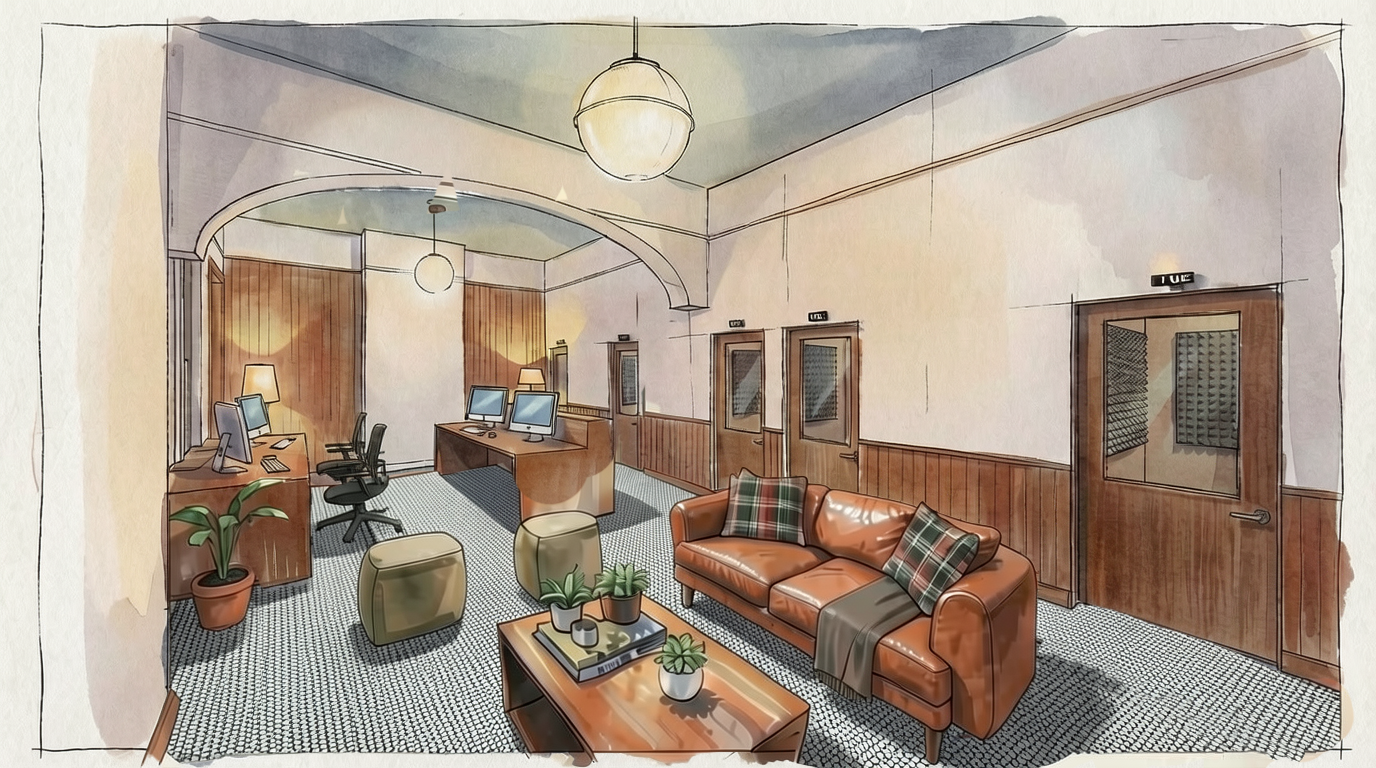
The Day of Service team approached the project through an integrated planning and feasibility lens, combining site planning, historic preservation considerations, interior reconfiguration, and operational analysis. Interior improvements focus on reorganizing production spaces to reflect evolving broadcast technology, refreshing existing recording booths, and introducing new podcast and media studios designed for professional use and community rental. Flexible parlor spaces, improved volunteer check-in, and additional support spaces allow the building to transition smoothly between daily operations and public events.
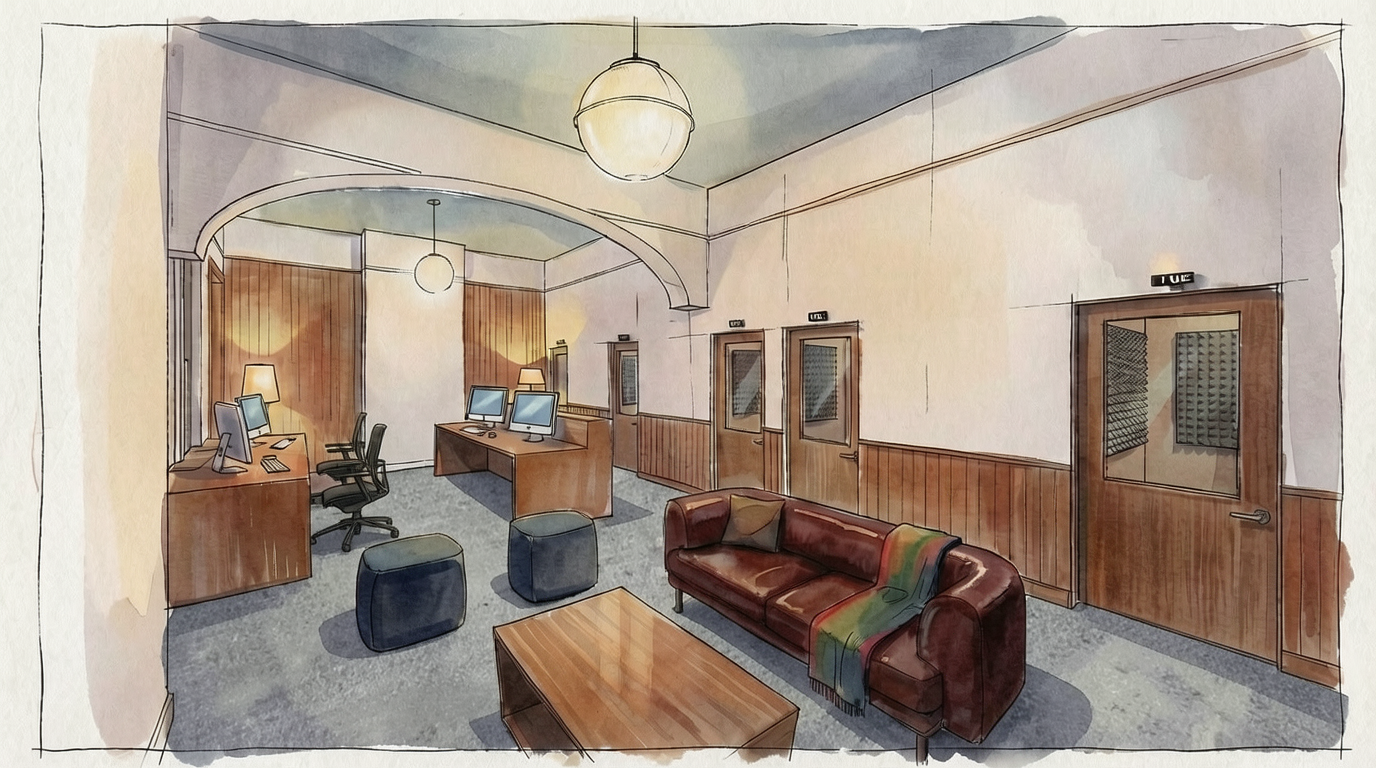
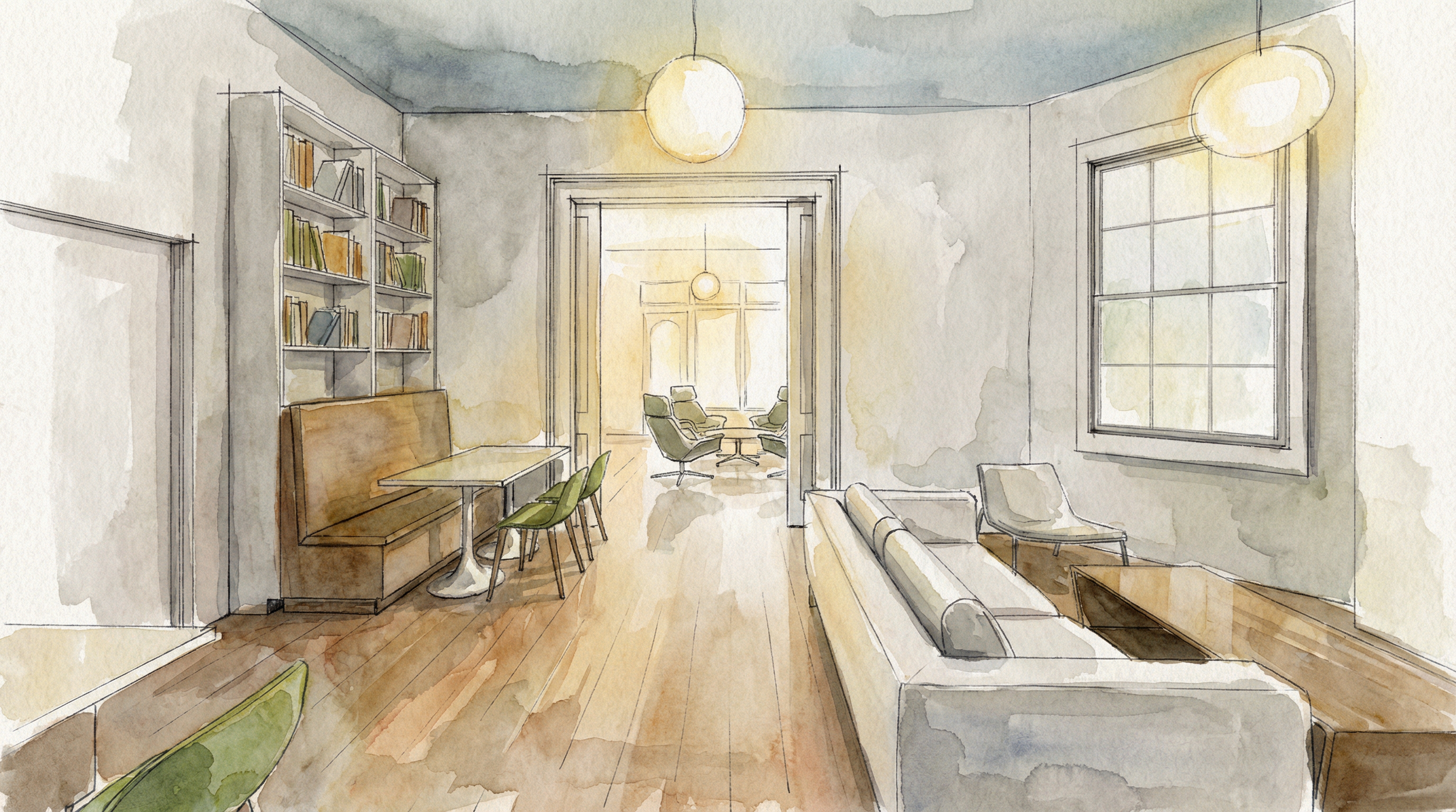
Interior Concept & Mood
Vintage feel
Moody palette
Historical elements
Playful patterns
Bold textures
Throughout the process, the design prioritizes accessibility, adaptability, and long-term sustainability. The proposal is structured to support phased implementation as funding becomes available, with consideration given to grant opportunities and state and federal historic tax credits. The result is a clear, actionable framework that aligns WRBH’s physical environment with its mission—strengthening its ability to serve listeners, support volunteers, and remain a vital community resource for decades to come.
The Team
- Ian O’Cain — Project Manager
- Ashlen Davis — Team Leader
- Tyler Guidroz
- Christian Rodriguez
- Rainey Charbonnet
- Mignon Antoine
- Nathan Petty
- Jack Sawyer